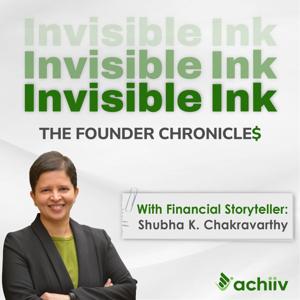
Invisible Ink

Invisible Ink

By Shubha K. ChakravarthyBusinessEntrepreneurshipManagement
Download on the App Store

Invisible Ink episodes

  • Ep 90: Why Strong Ideas Fail: Invisible Risks That Kill Startups, With John Harbison
    In this episode, John Harbison, veteran angel investor and longtime member of Tech Coast Angels, joins Shubha K. Chakravarthy to deliver a masterclass on how investors actually think about risk, founders, and funding decisions. Drawing on decades of experience as a founder, board member, and investor, John breaks down why every startup carries multiple dimensions of risk—and why the winners are those who score, prioritize, and actively mitigate them rather than deny them.

    Check out his hard-won insights on:
    1. The 30-minute scoring exercise that quietly predicts which startups won’t survive
    2. Why a company with “balanced” risk can be more dangerous than one with obvious red flags
    3. The founder response that instantly shifts an investor from skeptical to interested
    4. The one signal that collapses multiple risk categories at once
    5. Why “we have no competitors” is worse than you think
    6. The subtle way founders lose credibility during competitive analysis
    7. The coachability test founders don’t realize they’re taking in every meeting
    8. The board dynamic that multiplies outcomes — and the one that destroys them
    9. The winning company that only worked because they abandoned their original pitch early
    10. The difference between pivoting wisely and panicking after one data point
    11. The personality trait that saved six doomed companies — and killed six others
    12. The financing contingency one experienced CEO refused to build — and what happened next
    13. Why you don’t need most of the room to believe in you (and why that changes how you should pitch)
    and much more!
    1 hr
  • Ep 89 - Fundraising Mistakes That Kill Great Startups: Terms, Dilution, and What Founders Miss, With Benjamin David Novak
    In this episode, Benjamin David Novak, Partner at Morgan Lewis and veteran angel investor with Delaware Crossing Investor Group pulls back the curtain on how startup financing actually works behind closed doors. Wearing both hats as a venture attorney and an active investor, Ben delivers a candid masterclass on deal structure, term sheets, SAFEs, cap table traps, and the strategic thinking founders must adopt long before they ever sign their first check.

    Check out his engaging views on:
    1. Why the default early fundraising path founders copy can accidentally shut them out of whole investor groups
    2. The one SAFE detail founders almost never model, then discover the hard way at the first priced round
    3. Why “simple” fundraising paperwork can create the most painful misunderstandings later
    4. The difference between raising what you can get vs raising what actually gets you to the next value jump
    5. The most common term sheet mistake founders make because they are relieved to finally have one
    6. Two questions that tell you if your round is a real bridge or just buying time
    7. What angels mean when they say “we don’t do SAFEs” and why founders misread it
    8. Why trying to get “creative” on terms usually backfires even when you think you are being smart
    9. The reputation mistakes founders make during a raise without realizing it
    10. The cap table problem that looks fine on paper until a Series A lead starts doing the math
    11. What it actually means to “run a process” as a founder without acting like an investment banker
    12. The investor diligence step founders skip, then regret once the board dynamic kicks in
     and much more!
    1 hr 9 min
  • Ep 88 - What 60,000 Startups Reveal About Founder Equity, Control, and Survival, With Peter Walker
    In this episode of Invisible Ink, Peter Walker, Head of Insights at Carta, joins Shubha Chakravarthy to cut through startup hype with real data from 60,000 startups and 3,000 venture funds. Peter is one of the most sought after data experts in the world of startups, and his posts and reports on the latest startup data are widely anticipated and read.

    In this episode, Peter shares his thoughtful, data-driven take on:
    1. Why venture capital became the default path for founders and why the data says that assumption is quietly breaking down
    2. The single cap table decision made at incorporation that can make a company effectively unfundable years later
    3. Why academic and deep tech founders systematically misjudge equity tradeoffs and the early signal investors notice immediately
    4. The uncomfortable truth about advisor equity and how well intentioned generosity quietly hollows out founder ownership
    5. What Carta’s data reveals about how much equity actually matters and where founders obsess over the wrong numbers
    6. Why SAFEs feel founder friendly early and how they quietly reshape ownership when it is too late to undo
    7. The cap table red flags investors rarely say out loud but almost always notice
    8. Why most startup employees never make money on their equity even when the company does well
    9. The counterintuitive metric that matters more than revenue in the earliest days and how it aligns an entire company
    10. Why fundraising treated as a long slow conversation almost always fails and what disciplined founders do instead
    11. The myth of founders being pushed out by VCs and what actually determines who stays in control
    12. The hardest mindset shift founders must make to survive the journey long before outcomes exits or valuations are known
    and much more!
    1 hr 18 min
  • Ep 87 - Selling Into US Healthcare: A Practical Guide for Startups, With Dr. Krista A. Bragg
    In this episode of Invisible Ink, Krista Bragg, Founder and CEO of KB Kinetics joins Shubha Chakravarthy to unpack what it really takes for startups to sell into the U.S. healthcare system. Krista offers a ground-truth view of healthcare from the inside—at a moment when hospitals face historic financial pressure, workforce shortages, and shrinking margins.

    The conversation explores where real opportunities exist for founders, how health systems actually make buying decisions, why pilots often fail, and what healthcare leaders expect from AI-enabled solutions.

    Krista shares practical, experience-based insights on:
    1. The hidden financial crisis inside U.S. healthcare systems—and how it radically changes what gets bought (and what doesn’t)
    2. Why most hospital leaders don’t care about “AI” and what they actually want solved when startups walk through the door
    3. The biggest near-term opportunities for healthcare founders, and how to leverage them
    4. The single fastest way to get rejected by a health system and how smart founders plan around it
    5. Why clinicians must stay in the loop—and how ignoring one stakeholder can kill an otherwise great product
    6. How to  avoid pitching the wrong customer and missing the real decision-maker
    7. The common pilot mistakes that leave startups stuck in “zombie mode” with no path to revenue
    8. What healthcare leaders actually mean by “value”—and the metrics that move C-suite decisions today
    9. Why payer, provider, and employer incentives often conflict—and how founders can choose the right go-to-market lane
    10. The overlooked risk in converting pilots to contracts and how to protect deals when it happens
    11. Why flexibility in pricing, contracts, and even branding can make or break early healthcare deals
    12. The one rule every healthcare founder should remember
    and much more!
    1 hr 1 min
  • Ep 86 - Finding the Right Backer in a Tough Market: Insights From a Veteran Investor, With Dr. Ronald Weissman
    In this episode of Invisible Ink, veteran operator Dr. Ron Weissman joins Shubha Chakravarthy to challenge some of the most entrenched myths in early-stage fundraising. Drawing on decades as a VC, angel investor, board member, and former NeXT executive who worked closely with Steve Jobs, Ron explains why startups fail. 

    Key takeaways from the episode include:
    1. Why some founders immediately feel investable—even before the deck comes up
    2. The question investors are really trying to answer in the first few minutes
    3. What years of looking at deals teaches investors that pitch contests never do
    4. Why getting a fast yes from an investor can be more dangerous than a slow no
    5. The part of diligence most founders don’t realize they’re being evaluated on
    6. What investors listen for when founders describe their market—not their product
    7. How investors tell the difference between a strong pitch and a strong business
    8. When a funding path helps you—and when it starts working against you
    9. The moment investors decide whether they want to work with you long-term
    10. What a founder’s roadmap reveals that no slide ever says out loud
    11. How deal structure shapes the relationship long before anything goes wrong
    12. The shift in thinking investors expect from founders aiming to build category leaders
     and much more!
    1 hr 4 min
  • Ep 85 - The New Capitalism and What It Means for Founders Today, With Elizabeth MacBride and Seth Levine
    This episode of Invisible Ink features a dynamic conversation between host Shubha K. Chakravarthy and guests Elizabeth MacBride, a long-time financial journalist, and Seth Levine, a seasoned venture capitalist and co-founder of Foundry.

    In this episode, Elizabeth and Seth discuss the shift in the American economy toward dynamic capitalism and offer strategic advice to founders navigating this new landscape. 

    Check out this wide-ranging conversation for their key insights on:
    1. Why this moment in fundraising feels broken and why it is actually something else entirely
    2. The subtle signal investors are responding to now that most founders are not even naming
    3. How capital concentration quietly reshapes who gets funded and who never gets a second look
    4. Why ownership has become more than a compensation issue and what it reveals about long-term company strength
    5. What happens when founders keep playing by yesterday’s rules and why the game has already shifted
    6. The structural split inside venture capital that explains so many confusing investor reactions
    7. Why location has re-entered the funding conversation and how geography changes access in ways founders underestimate
    8. The real bottleneck facing AI and deep tech companies and why it has nothing to do with ideas
    9. Where truly patient capital is starting to show up and why most founders are still looking in the wrong places
    10. Why waiting for policy clarity is a losing strategy and what consistently outpaces regulation
    11. The overlooked way strong founders reduce risk before they ever raise a dollar
    12. Why persistence alone is not enough and when refusing to pivot becomes the real failure
    13. What credibility actually looks like in an AI-saturated world and why it cannot be automated
    14. The one mental shift that determines whether founders navigate this transition or get stuck in it
    and much more!
    1 hr 19 min
  • Ep 84 - Lead With the Money, Not With the Pain: Inside Tips for a Better Raise, With Naseem Sayani
    In this episode, Naseem Sayani, Director, Innovator's Circle, WHAM and VC investor & ecosystem builder, joins Shubha Chakravarthy to expose the structural gaps female founders face and how to overcome them with strategy, confidence, and financial clarity. Naseem breaks down why women often lead with pain instead of profit, why this undermines fundraising, and how shifting storytelling toward economic opportunity can transform investor outcomes. Drawing from deep experience in consulting, venture building, and women’s health innovation, she outlines the real reasons women negotiate less, accept predatory terms, and hesitate to take salaries—even when the business demands it.

    Check out Naseem's sharp insights on:
    1. Why most female founders lose investor interest early and the simple narrative shift that instantly changes the fundraising conversation
    2. The hidden bias in “leading with pain” and how reframing your pitch around market size and money unlocks investor confidence
    3. Why founders routinely miscalculate market size and how to paint a compelling future vision that pulls investors toward your company
    4. The red flags investors look for in early teams and the specific “superpowers” founders must assemble from day one
    5. The most overlooked post-funding mistake women make and how to protect your equity and runway as you scale
    6. Why many founders underestimate predatory term sheet risks and how to build the small advisory circle that keeps you safe
    7. The difference between a true product and a feature and the unforgiving test that reveals whether your idea is actually fundable
    8. Why financial fluency matters more than financial perfection and how to speak to your model in ways that earn investor trust
    9. The real reason founders stumble in regulated markets and how early clinical, payer, or regulatory expertise changes your trajectory
    10. Why leadership development determines whether you keep the CEO role and how coaching, community, and thought leadership help you scale with your company
     and much more!

    58 min
  • Ep 83 - PULL: The No BS Way to Unlock Sales, With Rob Snyder
    In this episode, Rob Snyder, Fellow, Harvard Innovation Labs, startup sales expert, and co-founder of Restack.dev, breaks down what truly drives product–market fit and why most founders chase the wrong signals. Rob introduces his Pull Framework—a practical, evidence-based approach to finding and validating real customer demand. Tune in for his sharp and practical insights on:
    • Why “pain points” are useless—and the single test that instantly reveals whether a customer will actually buy
    • How deep tech founders can find real demand before a product exists—and why this collapses 24-month sales cycles into weeks
    • The brutal danger of lukewarm interest—and how founders confuse polite enthusiasm with real pull
    • How to turn a lab breakthrough into a must-do project on a buyer’s to-do list (and why this is the real precursor to PMF)
    • The simple conversation structure that exposes true demand—and the words that tell you it’s all talk
    • Why founders must build a repeatable case study before they build a product—and how this becomes the foundation for PMF
    • The subtle difference between “that’s interesting” and “I need this now”—and how to engineer the moment of truth
    • How to describe your value in one sentence using the buyer’s own failed alternatives—no persuasion needed
    • Why most founders hire sales too early—and how to know the exact moment your process becomes repeatable
    • The mindset shift that makes selling feel natural, not gross—especially for technical founders who hate sales
    and much more!
    57 min
  • Ep 82 - Valuation is a (Financial) Story, Here’s How to Get it Right, With Dan Gray
    Dan Gray, Head of Insights of Equidam, joins Shubha Chakravarthy to demystify one of the most misunderstood topics in early-stage fundraising—startup valuation. With over two decades in early-stage ventures, Dan reframes valuation not as a number but as a story that links a founder’s vision, strategy, and financial logic.

    Check out Dan's practical guidance for deep tech and non-consensus founders, and the systemic issues in venture capital that create hurdles for deep tech founders, and a smarter, story-driven approach to raising capital. 

    Highlights include:
    1. Why founders must treat valuation as a story, not a number, and how the story drives belief and funding outcomes
    2. How “SaaS bias” skews investor expectations and hurts deep tech founders raising their first round
    3. The single biggest fundraising mistake deep tech founders make,and how to fix it before it costs you equity
    4. How to define milestones that de-risk your company and drive valuation up round after round
    5. The hidden logic behind dilution, and how to keep ownership while staying fundable
    6. What VCs really mean when they say “we don’t invest in hardware” (and how to turn that into an advantage)
    7. Why valuation models fail for science-based startups,and how to build credible DCF-driven stories investors believe
    8. The investor’s portfolio math: how fund size, timing, and follow-on strategy affect your odds of getting funded
    9. How to spot “consensus capital” versus “non-consensus capital”, and why the difference could decide your future
    10. The truth about VC markups, management fees, and why exits don’t always drive investor behavior
    11. The “economic energy” test: how to articulate the total value your breakthrough can unlock for the world
    12. The one framing shift that turns founders from fund-seekers into informed customers of capital
    13. How to translate a visionary story into a credible financial model investors trust
    14. Why financial literacy, not hype, is the real superpower for deep tech founders
    1 hr 11 min
  • Ep 81- How to Ace Due Diligence: Insights From a Top Angel Investor, With Tony Shipley
    Tony Shipley, chair of the nationally-recognized angel group Queen City Angels (QCA), joins Shubha Chakravarthy to demystify the rigorous process of due diligence from an investor's perspective.

    Drawing from his background as an engineer and a founder of QCA, Tony unpacks the structured, process-oriented framework that has enabled his group to achieve a "remarkably different" and lower failure rate in its investment funds.

    Check out Tony's thoughtful, time tested views on: 
    1. Why rigorous due diligence is the single biggest driver of investor success
    2. The key attributes every investor evaluates before writing a check
    3. How founders can turn diligence into a powerful discovery and learning process
    4. The real reason uncoachable founders rarely get funded
    5. How to make “greed overcome fear” when pitching investors
    6. What every deep tech and life sciences founder must prove before investors say yes
    7. The two make-or-break deliverables that define fundable milestones
    8. What investors really look for in your market sizing (and why your TAM might be irrelevant)
    9. The hidden art of building investor confidence through your sales strategy
    10. How to build a moat that actually matters—across SaaS, life sciences, and advanced materials
    11. Why founders underestimate the due-diligence deep dive into team dynamics
    12. Common red flags on your cap table that kill deals before they start
    13. The investor’s inside view on SAFE agreements—and why most angels won’t touch them
    14. The one preparation habit that makes founders 10x more likely to get funded
    and much more!
    1 hr 10 min

About Invisible Ink

From the publisher's feed

Tired of startup fluff?

Invisible Ink cuts through the hype, bringing you power-packed conversations with investors and founders who've built the companies you admire.

Forget theory and…