
Sign up to save your podcasts
Or

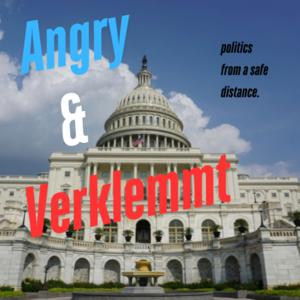

It's been an accelerant in American politics for a long time now--anger. It's what Barry Goldwater tapped into when he courted resentful white voters in the 1964 election. It's what Pat Buchanan was aiming at when hedeclared a culture war in the early 90s. And of course, Tea Party antics throughout the Obama administration eventually fused into the Freedom Caucus, and later, the seemingly bottomless well of Trump-fueled rage. We've entered a period in America when indignation and infamy are apparently the only viable doorway to politics. Anything else just seems unremarkable and insufficient to the moment.
And yet, all the while, we hear demands to find commonground. It's still frequently suggested that there's more that unites America than divides it. Above all, there's been a non-stop questioning around the source of this anger. Where does it come from? Why now? Can it be addressed? And who is addressing it better? So to think about this, we want to ask asimple question. Is it okay to be angry? And if it is, how is it okay? And what should it mean for politics in the US?
There's a prevailing sentiment that anger and outrage are kind of exclusively the domain of Republicans and that Democratsjust fare better when they stay above the fray. But the current environment is almost certainly challenging that orthodoxy because a wider cross current of people are experiencing misgiving and anger at the flurry of events instigated by the present administration. It also seems to be awakening a new fight mentality among Democrats. The lingering question is whether Democrats can utilize and manage this anger effectively and whether this will have a lasting impact on the future of the party and American politics going forward.
 View all episodes
 By Angry and Verklemmt
It's been an accelerant in American politics for a long time now--anger. It's what Barry Goldwater tapped into when he courted resentful white voters in the 1964 election. It's what Pat Buchanan was aiming at when hedeclared a culture war in the early 90s. And of course, Tea Party antics throughout the Obama administration eventually fused into the Freedom Caucus, and later, the seemingly bottomless well of Trump-fueled rage. We've entered a period in America when indignation and infamy are apparently the only viable doorway to politics. Anything else just seems unremarkable and insufficient to the moment.
And yet, all the while, we hear demands to find commonground. It's still frequently suggested that there's more that unites America than divides it. Above all, there's been a non-stop questioning around the source of this anger. Where does it come from? Why now? Can it be addressed? And who is addressing it better? So to think about this, we want to ask asimple question. Is it okay to be angry? And if it is, how is it okay? And what should it mean for politics in the US?
There's a prevailing sentiment that anger and outrage are kind of exclusively the domain of Republicans and that Democratsjust fare better when they stay above the fray. But the current environment is almost certainly challenging that orthodoxy because a wider cross current of people are experiencing misgiving and anger at the flurry of events instigated by the present administration. It also seems to be awakening a new fight mentality among Democrats. The lingering question is whether Democrats can utilize and manage this anger effectively and whether this will have a lasting impact on the future of the party and American politics going forward.