
Sign up to save your podcasts
Or

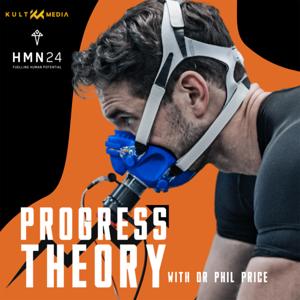

In this episode of The Progress Theory, host Dr Phil Price invites physiologist and researcher Dr Tom Jones from Northumbria University to discuss the intricacies of concurrent training. They delve into the concept of the interference effect—a phenomenon where endurance training can attenuate strength gains—and explore how various training modalities, intensities, and volumes can be manipulated to minimize this effect.
Dr Jones shares insights from his varied research experience across different sports, including his work with the Newcastle United Academy and the Swedish Winter Sports Research Center. The conversation touches on the real-world application of concurrent training principles, crucial mistakes to avoid, and the latest scientific understanding of acute molecular signalling.
Whether you're a coach, athlete, or fitness enthusiast, this episode offers valuable knowledge on optimising concurrent training for peak performance. Join us for a deep dive into the science of training with Dr Tom Jones on The Progress Theory!
In this episode, we discuss:
🔹 Volume Matters: The greater the volume of aerobic training, the more likely it is to interfere with strength development. Understanding and managing training volumes are crucial for avoiding this interference effect.
🔹 Fatigue Management: Concurrent training requires careful programming. Avoiding residual fatigue from aerobic workouts can help optimise strength and power training sessions.
🔹 Effective Communication: A lack of appreciation for the physical demands of technical skills sessions can lead to common programming mistakes. Ensuring technical coaches understand these demands is vital for coherent training weeks aligned with specific mesocycle goals.
FOLLOW OUR PODCASTFollow our Host / GuestFor all our other episodes and to get in touch, please visit www.theprogresstheory.com.
Thanks for listening!
This podcast is hosted by Captivate, try it yourself for free.
KULT Media 2023
Mentioned in this episode:
The Science of Hybrid Training
It was originally thought that you could not effectively train for both strength and endurance at the same time because they required different adaptations which were not compatible with each other. It was claimed that ‘an interference effect’, blunted the adaptations for strength if you simultaneously trained for endurance.
Book
Podcast Produced By KULT Media
Before we wrap up, I want to give a shout-out and my thanks to my production partner, Kult Media. If you are thinking of launching a podcast or want to grow your audience, head to www.kult.media to get started today.
Kult Media
Progress Theory Newsletter
The Progress Theory newsletter. If you want the latest information and recommendations on how to optimise your physical and mental performance, then subscribe to the free Progress Theory newsletter on Substack today.
Substack
 View all episodes
 By The Progress Theory
5
11 ratings
In this episode of The Progress Theory, host Dr Phil Price invites physiologist and researcher Dr Tom Jones from Northumbria University to discuss the intricacies of concurrent training. They delve into the concept of the interference effect—a phenomenon where endurance training can attenuate strength gains—and explore how various training modalities, intensities, and volumes can be manipulated to minimize this effect.
Dr Jones shares insights from his varied research experience across different sports, including his work with the Newcastle United Academy and the Swedish Winter Sports Research Center. The conversation touches on the real-world application of concurrent training principles, crucial mistakes to avoid, and the latest scientific understanding of acute molecular signalling.
Whether you're a coach, athlete, or fitness enthusiast, this episode offers valuable knowledge on optimising concurrent training for peak performance. Join us for a deep dive into the science of training with Dr Tom Jones on The Progress Theory!
In this episode, we discuss:
🔹 Volume Matters: The greater the volume of aerobic training, the more likely it is to interfere with strength development. Understanding and managing training volumes are crucial for avoiding this interference effect.
🔹 Fatigue Management: Concurrent training requires careful programming. Avoiding residual fatigue from aerobic workouts can help optimise strength and power training sessions.
🔹 Effective Communication: A lack of appreciation for the physical demands of technical skills sessions can lead to common programming mistakes. Ensuring technical coaches understand these demands is vital for coherent training weeks aligned with specific mesocycle goals.
FOLLOW OUR PODCASTFollow our Host / GuestFor all our other episodes and to get in touch, please visit www.theprogresstheory.com.
Thanks for listening!
This podcast is hosted by Captivate, try it yourself for free.
KULT Media 2023
Mentioned in this episode:
The Science of Hybrid Training
It was originally thought that you could not effectively train for both strength and endurance at the same time because they required different adaptations which were not compatible with each other. It was claimed that ‘an interference effect’, blunted the adaptations for strength if you simultaneously trained for endurance.
Book
Podcast Produced By KULT Media
Before we wrap up, I want to give a shout-out and my thanks to my production partner, Kult Media. If you are thinking of launching a podcast or want to grow your audience, head to www.kult.media to get started today.
Kult Media
Progress Theory Newsletter
The Progress Theory newsletter. If you want the latest information and recommendations on how to optimise your physical and mental performance, then subscribe to the free Progress Theory newsletter on Substack today.
Substack