
Sign up to save your podcasts
Or

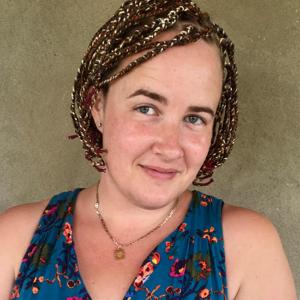

It has been one year since I defended my dissertation and earned my doctorate.
One year. It went by fast, and also, somehow, it took the whole year.
That might sound contradictory. But if you have been reading The Learning Lens from the beginning, you might already understand what I mean. Because what I have spent this past year doing, without always naming it as such, is working through Phases 9 and 10 of Mezirow’s Transformative Learning Theory. Taking what I learned during four years of doctoral work and figuring out how to integrate it into my actual life, into my voice, into Hello West Africa.
It took me most of this year to feel genuinely confident talking about transformative learning in tourism as someone coming from outside the travel and tourism industry. I am excited to be here. I am proud of what the research produced, and I am honest enough to say that it is still a process, and probably always will be.
But I keep wondering: what if there had been more support for those final phases earlier? Right after I graduated, when the silence set in and the identity of “Dr. Kouda” still felt new and uncertain, what if someone had been there to help me work through the integration? Would I have found my voice sooner?
I don’t know. But it’s the question that keeps shaping how I’m designing Hello West Africa. Because I don’t want the people who travel with us to come home and spend a year quietly wondering the same thing.
Which brings me to something I have been promising since Issue No. 1.
The 10 Phases of Meaning that are the backbone of Mezirow’s Transformative Learning Theory. I’m explaining what these are because transformation is not just a marketing phrase, it is a process.
Why the Phases Matter
My doctoral research was guided by one central question: What factors or processes make transformational learning possible for a tourist in a five-week online tour?
Everything I am about to share comes from trying to answer that question.
I have talked a lot about Phases 1, 9, and 10 in these issues. The disorienting dilemma that sparks everything. The reintegration that most experiences fail to support. But there are eight phases in between, and they matter too. You cannot skip them. You cannot rush them. And understanding what they are makes it much easier to recognize where you are when you are in the middle of one.
So here they are, in plain language, with examples from real life, because that is the only way theory actually sticks.
Phase 1: Disorienting Dilemma
An experience that causes confusion or discomfort, leading you to question your assumptions.
This is the spark. The crack in the lens. It is the moment on the plane back from Benin when I watched a man make a scene over a seat assignment and felt, for the first time, ashamed to be American. It is reading The Omnivore’s Dilemma while sitting 100 feet from a cornfield in West Africa. It is arriving in Heathrow at 21 years old and being genuinely amazed that people were just living there, going about their days, the same as anywhere else.
It is necessary. Without it, nothing else begins.
Phase 2: Self-Examination
Reflecting on feelings of anxiety or guilt as a result of the dilemma.
This is the uncomfortable phase that follows the spark. You don’t just notice that something is different, you start to feel it. The shame. The discomfort. The guilt of realizing you held an assumption you didn’t know you had. This phase is where many people want to stop because it doesn’t feel good. But it is essential. You cannot question what you haven’t first felt.
Phase 3: Critical Assessment of Assumptions
Realizing that some of your beliefs or assumptions might be flawed or limiting.
This is where you start to ask the harder questions. Not just “I felt something” but “why did I think that in the first place?” Where did this assumption come from? My upbringing? My culture? Something I absorbed without ever being told? This is the phase where the invisible lenses start to become visible.
Phase 4: Recognition of Shared Experience or Discontent
Understanding that others have faced similar challenges or questioned the same assumptions.
This is one of the most quietly powerful phases, and one of the most underrated. The moment you realize you are not alone in your questioning. That other people have stood in this same uncomfortable place and felt the same disorientation. Community matters here. Conversation matters. It is very hard to get through this phase in isolation.
Phase 5: Exploration of New Roles, Relationships, and Actions
Considering new perspectives, behaviors, or ways of thinking.
This is the phase where you start to try things on. Not committing yet, just exploring. What would it look like to see this differently? What would it mean to act from this new understanding? It is tentative, experimental, and essential.
Phase 6: Planning for Change
Developing a course of action.
The exploration starts to solidify into something more concrete. You begin to see not just that things could be different, but how they could be different. What specifically would you do? What would you change? This phase requires honesty about what is actually possible and what you are actually willing to do.
Phase 7: Acquiring Knowledge and Skills
Learning what is needed to implement the new plan or perspective.
You know what you want to do differently. Now you have to figure out how. This is the phase where you seek out information, resources, people, and experiences that can help you actually make the change. It is active and requires effort. Transformation does not happen passively.
Phase 8: Testing New Roles
Trying out new behaviors or ways of thinking in real-life situations.
This is where the theory meets the road. You have planned, you have learned, and now you actually try it. It will not be perfect. It is not supposed to be. The testing is the point. And each time you try, you learn something about whether the new perspective actually fits your life.
Phase 9: Building Competence and Self-Confidence
Gaining confidence as new behaviors or thoughts become more familiar.
This is the phase I have been living in this past year. The new identity, Dr. Kouda, researcher, transformative tourism advocate, founder of Hello West Africa, becoming more familiar with each week that I show up and speak from it. It takes time. It takes repetition. And it takes support, which is the piece I wish I had more of in the beginning.
Phase 10: Reintegration
Adapting the new perspective into your life, making it part of how you think or act regularly.
This is the destination. Not a dramatic arrival, but a quiet settling. The changed perspective is no longer a new thing you are trying on, it is just how you see. The baby sleeping next to you instead of in the crib. The farmers’ market instead of the processed food aisle. The tourism company you have been building for seventeen years because Benin changed how you understand what it means to belong somewhere.
This is where transformation lives. In the ordinary. After the experience ends.
Why Hello West Africa Is Designed Around All Ten
Most travel experiences are designed around Phase 1, the disorienting dilemma, the extraordinary moment, the thing that cracks something open.
Hello West Africa is designed around all ten.
The tour begins two to three months before you arrive, with activities designed to help you build your frames of reference. You arrive already curious, already open, already beginning Phase 1 before you even board the plane.
During the tour, we create space for Phases 2 through 8, the reflection, the questioning, the community, the exploration, and the planning. We do not leave this to chance, it is designed for.
And after you leave Benin, we will stay with you. Because Phases 9 and 10 are where everything either lands or fades, and we want it to land.
I know what it feels like when it doesn’t. I spent a year finding out.
What I am also working on is a framework that could help others apply this thinking to their own travel or tourism experiences. Not just Hello West Africa guests, but anyone designing an experience and wanting to make it genuinely transformative. The goal is to take the research and make it practical. Accessible. Something a tour operator, an educator, or a travel designer could actually use. It is not ready yet, but it is coming.
And here is something that makes Hello West Africa different from most tourism companies: the work does not stop when the tour ends. Because I come to this with a research background, I will continue to draw on the literature, study what is happening with our guests, and apply new findings to make each experience better than the last. This is what action research looks like in practice, the same methodology I used in my doctoral work, now applied to real tours with real travelers in real communities. Every tour we run will teach us something, and we will use that to do better.
The online tour I designed for my dissertation was the beginning. The in-person tours in Benin are the next chapter, with the research continually running in the background.
One Thing to Sit With
Look at those ten phases again. Think about something you are in the middle of right now, a change, a transition, a new identity you are still growing into.
Which phase are you in?
Hit reply and let me know.
Also, I’m curious, are you starting to look at the words “transformative travel” a bit differently now?
Until next Thursday,
P.S. — One year since the defense. I still have the notes I wrote during the process pinned above my desk. Some days, I look at them and think, I cannot believe I did that. Most days I think, of course I did.
Thanks for reading Between Here and Benin! This post is public so feel free to share it.
 View all episodes
 By Dr. Debra Kouda | Between the Pacific Northwest and Benin, West Africa
It has been one year since I defended my dissertation and earned my doctorate.
One year. It went by fast, and also, somehow, it took the whole year.
That might sound contradictory. But if you have been reading The Learning Lens from the beginning, you might already understand what I mean. Because what I have spent this past year doing, without always naming it as such, is working through Phases 9 and 10 of Mezirow’s Transformative Learning Theory. Taking what I learned during four years of doctoral work and figuring out how to integrate it into my actual life, into my voice, into Hello West Africa.
It took me most of this year to feel genuinely confident talking about transformative learning in tourism as someone coming from outside the travel and tourism industry. I am excited to be here. I am proud of what the research produced, and I am honest enough to say that it is still a process, and probably always will be.
But I keep wondering: what if there had been more support for those final phases earlier? Right after I graduated, when the silence set in and the identity of “Dr. Kouda” still felt new and uncertain, what if someone had been there to help me work through the integration? Would I have found my voice sooner?
I don’t know. But it’s the question that keeps shaping how I’m designing Hello West Africa. Because I don’t want the people who travel with us to come home and spend a year quietly wondering the same thing.
Which brings me to something I have been promising since Issue No. 1.
The 10 Phases of Meaning that are the backbone of Mezirow’s Transformative Learning Theory. I’m explaining what these are because transformation is not just a marketing phrase, it is a process.
Why the Phases Matter
My doctoral research was guided by one central question: What factors or processes make transformational learning possible for a tourist in a five-week online tour?
Everything I am about to share comes from trying to answer that question.
I have talked a lot about Phases 1, 9, and 10 in these issues. The disorienting dilemma that sparks everything. The reintegration that most experiences fail to support. But there are eight phases in between, and they matter too. You cannot skip them. You cannot rush them. And understanding what they are makes it much easier to recognize where you are when you are in the middle of one.
So here they are, in plain language, with examples from real life, because that is the only way theory actually sticks.
Phase 1: Disorienting Dilemma
An experience that causes confusion or discomfort, leading you to question your assumptions.
This is the spark. The crack in the lens. It is the moment on the plane back from Benin when I watched a man make a scene over a seat assignment and felt, for the first time, ashamed to be American. It is reading The Omnivore’s Dilemma while sitting 100 feet from a cornfield in West Africa. It is arriving in Heathrow at 21 years old and being genuinely amazed that people were just living there, going about their days, the same as anywhere else.
It is necessary. Without it, nothing else begins.
Phase 2: Self-Examination
Reflecting on feelings of anxiety or guilt as a result of the dilemma.
This is the uncomfortable phase that follows the spark. You don’t just notice that something is different, you start to feel it. The shame. The discomfort. The guilt of realizing you held an assumption you didn’t know you had. This phase is where many people want to stop because it doesn’t feel good. But it is essential. You cannot question what you haven’t first felt.
Phase 3: Critical Assessment of Assumptions
Realizing that some of your beliefs or assumptions might be flawed or limiting.
This is where you start to ask the harder questions. Not just “I felt something” but “why did I think that in the first place?” Where did this assumption come from? My upbringing? My culture? Something I absorbed without ever being told? This is the phase where the invisible lenses start to become visible.
Phase 4: Recognition of Shared Experience or Discontent
Understanding that others have faced similar challenges or questioned the same assumptions.
This is one of the most quietly powerful phases, and one of the most underrated. The moment you realize you are not alone in your questioning. That other people have stood in this same uncomfortable place and felt the same disorientation. Community matters here. Conversation matters. It is very hard to get through this phase in isolation.
Phase 5: Exploration of New Roles, Relationships, and Actions
Considering new perspectives, behaviors, or ways of thinking.
This is the phase where you start to try things on. Not committing yet, just exploring. What would it look like to see this differently? What would it mean to act from this new understanding? It is tentative, experimental, and essential.
Phase 6: Planning for Change
Developing a course of action.
The exploration starts to solidify into something more concrete. You begin to see not just that things could be different, but how they could be different. What specifically would you do? What would you change? This phase requires honesty about what is actually possible and what you are actually willing to do.
Phase 7: Acquiring Knowledge and Skills
Learning what is needed to implement the new plan or perspective.
You know what you want to do differently. Now you have to figure out how. This is the phase where you seek out information, resources, people, and experiences that can help you actually make the change. It is active and requires effort. Transformation does not happen passively.
Phase 8: Testing New Roles
Trying out new behaviors or ways of thinking in real-life situations.
This is where the theory meets the road. You have planned, you have learned, and now you actually try it. It will not be perfect. It is not supposed to be. The testing is the point. And each time you try, you learn something about whether the new perspective actually fits your life.
Phase 9: Building Competence and Self-Confidence
Gaining confidence as new behaviors or thoughts become more familiar.
This is the phase I have been living in this past year. The new identity, Dr. Kouda, researcher, transformative tourism advocate, founder of Hello West Africa, becoming more familiar with each week that I show up and speak from it. It takes time. It takes repetition. And it takes support, which is the piece I wish I had more of in the beginning.
Phase 10: Reintegration
Adapting the new perspective into your life, making it part of how you think or act regularly.
This is the destination. Not a dramatic arrival, but a quiet settling. The changed perspective is no longer a new thing you are trying on, it is just how you see. The baby sleeping next to you instead of in the crib. The farmers’ market instead of the processed food aisle. The tourism company you have been building for seventeen years because Benin changed how you understand what it means to belong somewhere.
This is where transformation lives. In the ordinary. After the experience ends.
Why Hello West Africa Is Designed Around All Ten
Most travel experiences are designed around Phase 1, the disorienting dilemma, the extraordinary moment, the thing that cracks something open.
Hello West Africa is designed around all ten.
The tour begins two to three months before you arrive, with activities designed to help you build your frames of reference. You arrive already curious, already open, already beginning Phase 1 before you even board the plane.
During the tour, we create space for Phases 2 through 8, the reflection, the questioning, the community, the exploration, and the planning. We do not leave this to chance, it is designed for.
And after you leave Benin, we will stay with you. Because Phases 9 and 10 are where everything either lands or fades, and we want it to land.
I know what it feels like when it doesn’t. I spent a year finding out.
What I am also working on is a framework that could help others apply this thinking to their own travel or tourism experiences. Not just Hello West Africa guests, but anyone designing an experience and wanting to make it genuinely transformative. The goal is to take the research and make it practical. Accessible. Something a tour operator, an educator, or a travel designer could actually use. It is not ready yet, but it is coming.
And here is something that makes Hello West Africa different from most tourism companies: the work does not stop when the tour ends. Because I come to this with a research background, I will continue to draw on the literature, study what is happening with our guests, and apply new findings to make each experience better than the last. This is what action research looks like in practice, the same methodology I used in my doctoral work, now applied to real tours with real travelers in real communities. Every tour we run will teach us something, and we will use that to do better.
The online tour I designed for my dissertation was the beginning. The in-person tours in Benin are the next chapter, with the research continually running in the background.
One Thing to Sit With
Look at those ten phases again. Think about something you are in the middle of right now, a change, a transition, a new identity you are still growing into.
Which phase are you in?
Hit reply and let me know.
Also, I’m curious, are you starting to look at the words “transformative travel” a bit differently now?
Until next Thursday,
P.S. — One year since the defense. I still have the notes I wrote during the process pinned above my desk. Some days, I look at them and think, I cannot believe I did that. Most days I think, of course I did.
Thanks for reading Between Here and Benin! This post is public so feel free to share it.