
Sign up to save your podcasts
Or

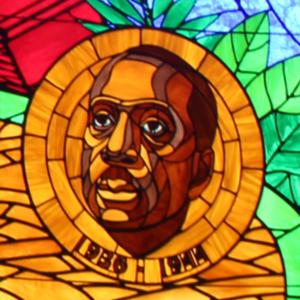

Part 11 of Jesus and the Disinherited. In this sermon he discusses hatred. He argues that hatred is a defense of the weak against the strong. However, hatred dehumaninizes the other and becomes self destructive. Hatred crushes the hater by placing the cause all of life's problems on one simple target. Hatred ignores the complexities of life, becomes all consuming. Since it cuts one off from the person/people who is/are the object of the hate, it also cuts them off from God. It isolates a person, making them feel "cut off from God" and from other humans. He argues that people will try anything to keep their hatred, but maintain their relationship with God, all to no avail. Thurman argues that each of us is responsible to God not only for what we do, but how we react to what others do to us. He finally argues that overcoming hatred cannot be done unless God comes into the hater and transforms them internally. Hence, the hater must "desire to desire" release from the hate. When God removes the hate from us, we see all people in their complete humanity and we are brought back into community. To illustrate his points he uses an allegory of an angel God sends to help a person deal with hate, and he uses Ahab from "Moby Dick."
Part of the Collection, Jesus and the Disinherited (1959, Marsh Chapel, Boston University, Boston, MA)
Tags: Ahab, angel allegory, Hate, hatred, Moby Dick
Description by Ken Owens
Recorded in Marsh Chapel, Boston University, Boston, Massachussetts
Citation: Thurman, Howard, “Jesus and the Disinherited, Part 11, May 3, 1959,” The Howard Thurman Digital Archive, accessed July 9, 2024, https://thurman.pitts.emory.edu/items/show/1027.
 View all episodes
 By Howard Thurman (Uploaded by Duncan Hamra)
Part 11 of Jesus and the Disinherited. In this sermon he discusses hatred. He argues that hatred is a defense of the weak against the strong. However, hatred dehumaninizes the other and becomes self destructive. Hatred crushes the hater by placing the cause all of life's problems on one simple target. Hatred ignores the complexities of life, becomes all consuming. Since it cuts one off from the person/people who is/are the object of the hate, it also cuts them off from God. It isolates a person, making them feel "cut off from God" and from other humans. He argues that people will try anything to keep their hatred, but maintain their relationship with God, all to no avail. Thurman argues that each of us is responsible to God not only for what we do, but how we react to what others do to us. He finally argues that overcoming hatred cannot be done unless God comes into the hater and transforms them internally. Hence, the hater must "desire to desire" release from the hate. When God removes the hate from us, we see all people in their complete humanity and we are brought back into community. To illustrate his points he uses an allegory of an angel God sends to help a person deal with hate, and he uses Ahab from "Moby Dick."
Part of the Collection, Jesus and the Disinherited (1959, Marsh Chapel, Boston University, Boston, MA)
Tags: Ahab, angel allegory, Hate, hatred, Moby Dick
Description by Ken Owens
Recorded in Marsh Chapel, Boston University, Boston, Massachussetts
Citation: Thurman, Howard, “Jesus and the Disinherited, Part 11, May 3, 1959,” The Howard Thurman Digital Archive, accessed July 9, 2024, https://thurman.pitts.emory.edu/items/show/1027.