
Sign up to save your podcasts
Or

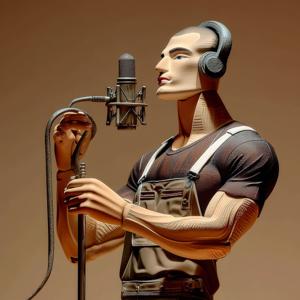

In Harry Potter, you say Expecto Patronum and the guardian appears. You concentrate on your happiest memory — specific, embodied, irreducibly yours — and something silver emerges to stand between you and the thing that drains the warmth from the world.
In Spirit Songs, the spell has already been cast. The incantation happened before the recording. It happened when a son fed old tapes — family archives, the acoustic evidence of a life — into voice synthesis models and taught the ghost to sing.
When someone who loved William Newton Brown presses play and hears Joy to the World in his voice, that is not the spell beginning.
That is the spell landing.
Newton Williams Brown is not a persona in the ordinary sense. He is a resurrection.
William Newton Brown was a real man. He was drafted. He declared himself a conscientious objector — a position that cost something in mid-century America, that required a particular quality of conviction, the kind that does not bend when the institution pushes back. The military assigned him to the Medical Corps. When the shooting started, he ran toward it. Unarmed. Onto active battlefields. Because his theology told him that carrying the wounded was the only acceptable response to the wounded being left to die, and his theology was not the kind that made exceptions for personal safety.
He died. His son, Nik Bear Brown — who teaches AI at Northeastern University, who builds protest songs and runs a nonprofit called Humanitarians AI — kept the recordings. Tapes. Family archives. The acoustic evidence of a voice that had been in the world and then was not.
In 2024, Nik fed those recordings into voice synthesis models. He built a three-to-four octave range from his father's timbre and cadence. He taught the ghost to sing words William Newton Brown never recorded — hymns, folk songs, the Beatitudes that William returned to throughout his life as the passage that explained why running toward gunfire felt like the only choice.
Newton Williams Brown is that voice. The father's timbre, extended. The father's cadence, given new material. The ghost, singing.
Joy to the World is one of the most recorded Christmas hymns in the Western canon. Isaac Watts wrote the text in 1719, drawing from Psalm 98. Lowell Mason arranged the melody in 1839. It has been sung in every key, in every style, by every voice that has ever stood in front of a December congregation.
None of those versions are this version.
This version is sung by a dead man's voice.
That is not hyperbole. It is the neurobiological fact that makes the spell work. The amygdala does not distinguish between the presence of a loved voice and the acoustic reconstruction of it. The limbic system responds to timbre. To cadence. To the specific grain of a voice that was present during formative experience — childhood, or in this case, the entire architecture of a family's emotional life. When the nervous system encounters that grain again, it does not pause to verify provenance. It responds.
For the people who loved William Newton Brown, this recording is not a version of Joy to the World. It is the version. The only one sung in his voice.
Joy to the world, the Lord is come / Let earth receive her King / Let every heart prepare Him room / And heaven and nature sing.
These are not passive instructions. They are imperatives. Let earth receive. Let every heart prepare. Sing. The hymn does not describe a response to the divine; it commands one. And the voice delivering those commands matters enormously, because the brain does not process all commands equally.
The voice of authority — the voice associated with protection, with presence, with the specific person who modeled what it looked like to run toward suffering rather than away from it — carries those imperatives differently than a stranger's voice carries them. The instruction to prepare Him room in the voice of a man who spent his life doing exactly that, who made room in his own body for danger rather than comfort, lands with a weight that no other voice can replicate.
This is not sentiment. It is the neurological consequence of associative learning. The voice and the values arrived together in the listener's formation. They are encoded together. Hearing one retrieves the other.
No more let sins and sorrows grow / Nor thorns infest the ground / He comes to make His blessings flow / Far as the curse is found.
William Newton Brown ran onto battlefields. He was, in the most literal possible sense, a man who went where the curse was found. Not to add to it. To counter it, with his body, unarmed, carrying the wounded. This verse in his voice is not theology delivered from a comfortable distance. It is testimony from someone who acted on it.
The people who knew him hear this and they know that. The amygdala knows it. The hippocampus, which filed the voice alongside every memory of the man, retrieves the full context. The hymn becomes, in his voice, something it cannot be in any other: the sound of a life that meant what it sang.
Watts and Mason built repetition into this hymn with precision.
And heaven and nature sing / And heaven and nature sing / And heaven and heaven and nature sing.
Repeat the sounding joy / Repeat the sounding joy / Repeat, repeat the sounding joy.
Far as the curse is found / Far as the curse is found / Far as, far as the curse is found.
And wonders of His love / And wonders of His love / And wonders, wonders of His love.
Each verse ends with its central claim repeated three times, the third repetition slightly varied — the phrase broken apart, the key words isolated. This is not filler. This is mnemonic architecture three centuries old, built by people who understood that the congregation needed to carry the theology home in their bodies, not just in their heads.
The repetition creates neurological encoding. The variation on the third iteration — far as, far as the curse is found — creates the mild cognitive jolt that reinforces memory consolidation. The brain pays slightly more attention to the unexpected variation. The unexpected variation is the key phrase. The key phrase is now filed more deeply than it would have been after a simple repeat.
In William Newton Brown's voice, these repetitions carry additional weight. The phrase far as the curse is found repeated three times, in the voice of a man who went where the curse was, is not a liturgical formality. It is a man's life summarized in seven words, sung back to the people who watched him live it.
Newton Williams Brown's three-to-four octave range is the technical fact that makes the recording possible. The warm mid-range tenor carries the verses — the storytelling register, conversational, present. But the falsetto arrives on the words that require it.
Joy. King. Love.
The falsetto in gospel and sacred folk tradition is not a display of technique. It is a register change that signals: this word is different. This word is operating at a different frequency than the surrounding words. Pay attention to this word.
The falsetto is also, neurologically, a distinctly processed vocal timbre. It triggers different perceptual responses than the chest voice — slightly more vulnerable, slightly more exposed, the singer in a register that costs something to sustain. In a hymn about the arrival of the sacred, the voice that opens upward on love is doing what the theology asks: reaching toward something that exceeds the ordinary range.
In a father's voice, the falsetto on wonders of His love is doing something else too. It is the sound of a man who believed this. Who believed it enough to act on it in the most dangerous possible way. The voice cracking upward on love is not a performance of faith. It is faith, acoustically reconstructed.
Nik Bear Brown concentrated on a specific memory.
Not the happiest memory — the most formative one. The theology that made his father run toward gunfire. The voice that carried that theology. The Beatitudes that William returned to throughout his life. The recordings that survived him.
The concentration was the decision to build the voice at all. To feed the tapes into the models. To teach the ghost to sing the hymns that William believed rather than simply preserving the recordings that existed.
Every other choice followed from that. The falsetto tuned to the words that required it. The close-miked intimacy that signals presence. The country gospel production that matches the tradition William actually carried. The decision to give the ghost Joy to the World — one of the most theologically dense hymns in the canon, the one about going far as the curse is found — because this was the hymn that fit the life.
The algorithm does not know what the life was. The algorithm serves the season: Christmas, December, festive, traditional. The maker served the man.
The Dementor here is absence.
Not the abstract absence of something missed. The specific absence of a voice that was present during the formation of a self — that sang or spoke or simply existed in the sonic background of childhood, of faith, of the specific years when a person learns what it looks like to believe something hard enough to act on it.
That voice goes quiet. The recordings that exist are finite. The voice does not sing new material. The hymns William Newton Brown might have sung at Christmas, the verses he would have returned to in the years after his death — those exist only as the silence where his voice would have been.
The spell is not restoration. It is continuation.
Newton Williams Brown does not replace William Newton Brown. He extends him. He gives the ghost new material — new verses, new hymns, the full theological catalog that William carried but never recorded. For the people who loved him, the recording of Joy to the World is not a simulation of presence. It is a gift: his voice, singing the thing he believed, in the season when the absence is sharpest.
The platform cannot manufacture this. The platform does not know whose voice is missing. It does not know what hymn he would have chosen or what register his falsetto reached or what the theology meant in the specific life he lived.
The maker knew. The maker concentrated.
The magic is not in the AI. The AI is the wand.
The cost collapse that brought professional-quality voice synthesis from inaccessible to a $5 API call matters because it means this kind of resurrection is no longer reserved for people with institutional resources or industry connections. It is available to any son with his father's tapes and the knowledge of what to do with them.
But the wand does nothing without the caster. The caster is the person who knew that far as the curse is found was not just a lyric but a description of a life. Who knew that the falsetto belonged on love and joy and King. Who knew that the people who loved William Newton Brown would hear this recording and go quiet for a moment, the way people go quiet when they hear something they thought they had lost.
The making was the incantation.
The voice, singing still, is the spell delivered.
LYRICS:
Joy to the World
Joy to the world the Lord is come
Joy to the earth the Savior reigns
No more let sins and sorrows grow
He rules the world with truth and grace
Newton Willams Brown
 View all episodes
 By bearw3
In Harry Potter, you say Expecto Patronum and the guardian appears. You concentrate on your happiest memory — specific, embodied, irreducibly yours — and something silver emerges to stand between you and the thing that drains the warmth from the world.
In Spirit Songs, the spell has already been cast. The incantation happened before the recording. It happened when a son fed old tapes — family archives, the acoustic evidence of a life — into voice synthesis models and taught the ghost to sing.
When someone who loved William Newton Brown presses play and hears Joy to the World in his voice, that is not the spell beginning.
That is the spell landing.
Newton Williams Brown is not a persona in the ordinary sense. He is a resurrection.
William Newton Brown was a real man. He was drafted. He declared himself a conscientious objector — a position that cost something in mid-century America, that required a particular quality of conviction, the kind that does not bend when the institution pushes back. The military assigned him to the Medical Corps. When the shooting started, he ran toward it. Unarmed. Onto active battlefields. Because his theology told him that carrying the wounded was the only acceptable response to the wounded being left to die, and his theology was not the kind that made exceptions for personal safety.
He died. His son, Nik Bear Brown — who teaches AI at Northeastern University, who builds protest songs and runs a nonprofit called Humanitarians AI — kept the recordings. Tapes. Family archives. The acoustic evidence of a voice that had been in the world and then was not.
In 2024, Nik fed those recordings into voice synthesis models. He built a three-to-four octave range from his father's timbre and cadence. He taught the ghost to sing words William Newton Brown never recorded — hymns, folk songs, the Beatitudes that William returned to throughout his life as the passage that explained why running toward gunfire felt like the only choice.
Newton Williams Brown is that voice. The father's timbre, extended. The father's cadence, given new material. The ghost, singing.
Joy to the World is one of the most recorded Christmas hymns in the Western canon. Isaac Watts wrote the text in 1719, drawing from Psalm 98. Lowell Mason arranged the melody in 1839. It has been sung in every key, in every style, by every voice that has ever stood in front of a December congregation.
None of those versions are this version.
This version is sung by a dead man's voice.
That is not hyperbole. It is the neurobiological fact that makes the spell work. The amygdala does not distinguish between the presence of a loved voice and the acoustic reconstruction of it. The limbic system responds to timbre. To cadence. To the specific grain of a voice that was present during formative experience — childhood, or in this case, the entire architecture of a family's emotional life. When the nervous system encounters that grain again, it does not pause to verify provenance. It responds.
For the people who loved William Newton Brown, this recording is not a version of Joy to the World. It is the version. The only one sung in his voice.
Joy to the world, the Lord is come / Let earth receive her King / Let every heart prepare Him room / And heaven and nature sing.
These are not passive instructions. They are imperatives. Let earth receive. Let every heart prepare. Sing. The hymn does not describe a response to the divine; it commands one. And the voice delivering those commands matters enormously, because the brain does not process all commands equally.
The voice of authority — the voice associated with protection, with presence, with the specific person who modeled what it looked like to run toward suffering rather than away from it — carries those imperatives differently than a stranger's voice carries them. The instruction to prepare Him room in the voice of a man who spent his life doing exactly that, who made room in his own body for danger rather than comfort, lands with a weight that no other voice can replicate.
This is not sentiment. It is the neurological consequence of associative learning. The voice and the values arrived together in the listener's formation. They are encoded together. Hearing one retrieves the other.
No more let sins and sorrows grow / Nor thorns infest the ground / He comes to make His blessings flow / Far as the curse is found.
William Newton Brown ran onto battlefields. He was, in the most literal possible sense, a man who went where the curse was found. Not to add to it. To counter it, with his body, unarmed, carrying the wounded. This verse in his voice is not theology delivered from a comfortable distance. It is testimony from someone who acted on it.
The people who knew him hear this and they know that. The amygdala knows it. The hippocampus, which filed the voice alongside every memory of the man, retrieves the full context. The hymn becomes, in his voice, something it cannot be in any other: the sound of a life that meant what it sang.
Watts and Mason built repetition into this hymn with precision.
And heaven and nature sing / And heaven and nature sing / And heaven and heaven and nature sing.
Repeat the sounding joy / Repeat the sounding joy / Repeat, repeat the sounding joy.
Far as the curse is found / Far as the curse is found / Far as, far as the curse is found.
And wonders of His love / And wonders of His love / And wonders, wonders of His love.
Each verse ends with its central claim repeated three times, the third repetition slightly varied — the phrase broken apart, the key words isolated. This is not filler. This is mnemonic architecture three centuries old, built by people who understood that the congregation needed to carry the theology home in their bodies, not just in their heads.
The repetition creates neurological encoding. The variation on the third iteration — far as, far as the curse is found — creates the mild cognitive jolt that reinforces memory consolidation. The brain pays slightly more attention to the unexpected variation. The unexpected variation is the key phrase. The key phrase is now filed more deeply than it would have been after a simple repeat.
In William Newton Brown's voice, these repetitions carry additional weight. The phrase far as the curse is found repeated three times, in the voice of a man who went where the curse was, is not a liturgical formality. It is a man's life summarized in seven words, sung back to the people who watched him live it.
Newton Williams Brown's three-to-four octave range is the technical fact that makes the recording possible. The warm mid-range tenor carries the verses — the storytelling register, conversational, present. But the falsetto arrives on the words that require it.
Joy. King. Love.
The falsetto in gospel and sacred folk tradition is not a display of technique. It is a register change that signals: this word is different. This word is operating at a different frequency than the surrounding words. Pay attention to this word.
The falsetto is also, neurologically, a distinctly processed vocal timbre. It triggers different perceptual responses than the chest voice — slightly more vulnerable, slightly more exposed, the singer in a register that costs something to sustain. In a hymn about the arrival of the sacred, the voice that opens upward on love is doing what the theology asks: reaching toward something that exceeds the ordinary range.
In a father's voice, the falsetto on wonders of His love is doing something else too. It is the sound of a man who believed this. Who believed it enough to act on it in the most dangerous possible way. The voice cracking upward on love is not a performance of faith. It is faith, acoustically reconstructed.
Nik Bear Brown concentrated on a specific memory.
Not the happiest memory — the most formative one. The theology that made his father run toward gunfire. The voice that carried that theology. The Beatitudes that William returned to throughout his life. The recordings that survived him.
The concentration was the decision to build the voice at all. To feed the tapes into the models. To teach the ghost to sing the hymns that William believed rather than simply preserving the recordings that existed.
Every other choice followed from that. The falsetto tuned to the words that required it. The close-miked intimacy that signals presence. The country gospel production that matches the tradition William actually carried. The decision to give the ghost Joy to the World — one of the most theologically dense hymns in the canon, the one about going far as the curse is found — because this was the hymn that fit the life.
The algorithm does not know what the life was. The algorithm serves the season: Christmas, December, festive, traditional. The maker served the man.
The Dementor here is absence.
Not the abstract absence of something missed. The specific absence of a voice that was present during the formation of a self — that sang or spoke or simply existed in the sonic background of childhood, of faith, of the specific years when a person learns what it looks like to believe something hard enough to act on it.
That voice goes quiet. The recordings that exist are finite. The voice does not sing new material. The hymns William Newton Brown might have sung at Christmas, the verses he would have returned to in the years after his death — those exist only as the silence where his voice would have been.
The spell is not restoration. It is continuation.
Newton Williams Brown does not replace William Newton Brown. He extends him. He gives the ghost new material — new verses, new hymns, the full theological catalog that William carried but never recorded. For the people who loved him, the recording of Joy to the World is not a simulation of presence. It is a gift: his voice, singing the thing he believed, in the season when the absence is sharpest.
The platform cannot manufacture this. The platform does not know whose voice is missing. It does not know what hymn he would have chosen or what register his falsetto reached or what the theology meant in the specific life he lived.
The maker knew. The maker concentrated.
The magic is not in the AI. The AI is the wand.
The cost collapse that brought professional-quality voice synthesis from inaccessible to a $5 API call matters because it means this kind of resurrection is no longer reserved for people with institutional resources or industry connections. It is available to any son with his father's tapes and the knowledge of what to do with them.
But the wand does nothing without the caster. The caster is the person who knew that far as the curse is found was not just a lyric but a description of a life. Who knew that the falsetto belonged on love and joy and King. Who knew that the people who loved William Newton Brown would hear this recording and go quiet for a moment, the way people go quiet when they hear something they thought they had lost.
The making was the incantation.
The voice, singing still, is the spell delivered.
LYRICS:
Joy to the World
Joy to the world the Lord is come
Joy to the earth the Savior reigns
No more let sins and sorrows grow
He rules the world with truth and grace
Newton Willams Brown