
Sign up to save your podcasts
Or

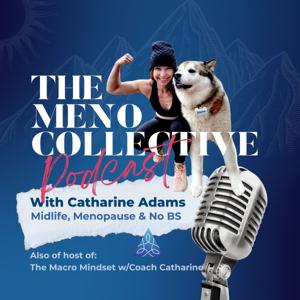

Why the cortisol narrative has become so seductive, and so profitable. What the research actually shows about cortisol dysregulation in perimenopausal women. How estrogen decline, not cortisol, is the primary driver of abdominal fat redistribution in perimenopause. What estradiol fluctuations actually do to your stress response. Why restricting your coffee, your strength training, and your food based on cortisol fear is counterproductive. And what evidence-based strategies actually support energy, sleep, and body composition regardless of cortisol levels.
Research & References
The claims in this episode are supported by the following peer-reviewed sources.
Miller, R. et al. (2016). The CIRCORT database: Reference ranges and seasonal changes in diurnal salivary cortisol derived from a meta-dataset comprised of 15 field studies. Psychoneuroendocrinology. https://doi.org/10.1016/j.psyneuen.2016.08.010
Gordon, J. et al. (2016). Estradiol variability, stressful life events, and the emergence of depressive symptomatology during the menopausal transition. Menopause. https://doi.org/10.1097/GME.0000000000000528
Hamidovic, A. et al. (2020). Higher Circulating Cortisol in the Follicular vs. Luteal Phase of the Menstrual Cycle: A Meta-Analysis. Frontiers in Endocrinology. https://doi.org/10.3389/fendo.2020.00311
Moreau, K. et al. (2020). Decline in endothelial function across the menopause transition in healthy women is related to decreased estradiol and increased oxidative stress. GeroScience. https://pubmed.ncbi.nlm.nih.gov/32770384/
De Nys, L. et al. (2022). The effects of physical activity on cortisol and sleep: A systematic review and meta-analysis. Psychoneuroendocrinology. https://doi.org/10.1016/j.psyneuen.2022.105843
Bornstein, S. et al. (2016). Diagnosis and Treatment of Primary Adrenal Insufficiency: An Endocrine Society Clinical Practice Guideline. Journal of Clinical Endocrinology and Metabolism. https://doi.org/10.1210/jc.2015-1710
A Note From Catharine
I am not a medical professional. This episode is for educational and informational purposes only and is not a substitute for medical advice. If you have concerns about your cortisol levels, your hormonal health, or any symptoms you are experiencing, please speak with your healthcare provider.
🩷 The Translation newsletter: Translation
🩷 Free menopause stage quiz: Perimenopause Stage
🩷 Perimenopause Navigator Cohort: Navigator
🎯 Find your #1 Consistency Saboteur (free 3-min quiz):
🤝 Work with me 1-1 (personalized nutrition + fitness coaching):
🎧 All podcast episodes: The Meno Collective & The Macro Mindset
—
Catharine Adams | Lifestyle & Health Coach Through The Menopause Transition
~The basics, done relentlessly, drive the needle.
[email protected] • BC, Canada 🍁
© 2026 The Meno Collective
Educational information only. Always consult your healthcare provider.
 View all episodes
 By Catharine Adams
Why the cortisol narrative has become so seductive, and so profitable. What the research actually shows about cortisol dysregulation in perimenopausal women. How estrogen decline, not cortisol, is the primary driver of abdominal fat redistribution in perimenopause. What estradiol fluctuations actually do to your stress response. Why restricting your coffee, your strength training, and your food based on cortisol fear is counterproductive. And what evidence-based strategies actually support energy, sleep, and body composition regardless of cortisol levels.
Research & References
The claims in this episode are supported by the following peer-reviewed sources.
Miller, R. et al. (2016). The CIRCORT database: Reference ranges and seasonal changes in diurnal salivary cortisol derived from a meta-dataset comprised of 15 field studies. Psychoneuroendocrinology. https://doi.org/10.1016/j.psyneuen.2016.08.010
Gordon, J. et al. (2016). Estradiol variability, stressful life events, and the emergence of depressive symptomatology during the menopausal transition. Menopause. https://doi.org/10.1097/GME.0000000000000528
Hamidovic, A. et al. (2020). Higher Circulating Cortisol in the Follicular vs. Luteal Phase of the Menstrual Cycle: A Meta-Analysis. Frontiers in Endocrinology. https://doi.org/10.3389/fendo.2020.00311
Moreau, K. et al. (2020). Decline in endothelial function across the menopause transition in healthy women is related to decreased estradiol and increased oxidative stress. GeroScience. https://pubmed.ncbi.nlm.nih.gov/32770384/
De Nys, L. et al. (2022). The effects of physical activity on cortisol and sleep: A systematic review and meta-analysis. Psychoneuroendocrinology. https://doi.org/10.1016/j.psyneuen.2022.105843
Bornstein, S. et al. (2016). Diagnosis and Treatment of Primary Adrenal Insufficiency: An Endocrine Society Clinical Practice Guideline. Journal of Clinical Endocrinology and Metabolism. https://doi.org/10.1210/jc.2015-1710
A Note From Catharine
I am not a medical professional. This episode is for educational and informational purposes only and is not a substitute for medical advice. If you have concerns about your cortisol levels, your hormonal health, or any symptoms you are experiencing, please speak with your healthcare provider.
🩷 The Translation newsletter: Translation
🩷 Free menopause stage quiz: Perimenopause Stage
🩷 Perimenopause Navigator Cohort: Navigator
🎯 Find your #1 Consistency Saboteur (free 3-min quiz):
🤝 Work with me 1-1 (personalized nutrition + fitness coaching):
🎧 All podcast episodes: The Meno Collective & The Macro Mindset
—
Catharine Adams | Lifestyle & Health Coach Through The Menopause Transition
~The basics, done relentlessly, drive the needle.
[email protected] • BC, Canada 🍁
© 2026 The Meno Collective
Educational information only. Always consult your healthcare provider.