This digital story recording was created in conjunction with the Smithsonian's Museum on Main Street program and its Stories from Main Street student documentary initiative, called "Stories: Yes." The project encourages students and their mentors to research and record stories about small-towns and rural neighborhoods, waterways, personal memories, cultural traditions, work histories, as well as thoughts about American democracy. These documentaries are then shared on Smithsonian websites and social media.
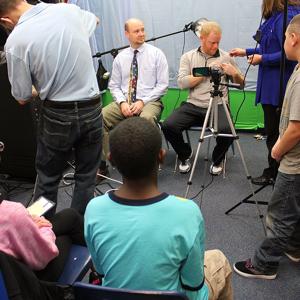
Carold Legg talks about how flooding in 2008 and 1943 affected him and his neighbors. Students from Lawrenceville High School students in Lawrenceville, Illinois, worked in conjunction with the Lawrence County Historical Society to produce this story as part of the Stories: Yes program.
Speaker 1 (00:03): Can you tell us about yourself and how your life in Lawrence County has been affected by the flooding?
Carold Legg (00:09): Okay. I'm Carold Legg. About this time of year, I was sitting at this location, not this building, this location, as a high school senior 72 years ago. We're going to talk about floods, but what's a flood? To me, a flood is a whole lot of water where it's not supposed to be.
Speaker 1 (00:33): How has your life been affected by the flood?
Carold Legg (00:36): Well, eight years ago in June of 2008, my house was an island for two days. I was surrounded by flood, I had raw river floodwater. On Saturday night, they said there was a prediction that the Ambraw River was going to crest a foot higher than its previous high water mark. On Monday morning, one of my neighbors woke up and stepped out into water in her bedroom. That was quite a surprise.
Speaker 1 (01:21): Yeah.
Carold Legg (01:22): And that flood water finally got to me about noon on Monday, June the 9th 2008. Seems to be more common in the springtime of year, not always, but it's more common. So, many times our planting is delayed until the flood waters go down and things dry out. Other times, we have crops already planted and growing, flood waters roll in and drown the crops that are up. Flooding can have a large dollar effect on farmers' income. The Amb' River starts as a drainage ditch on the University of Illinois campus. That's where it starts.
Speaker 1 (02:16): Do you think when you hear about the flooding, you said you were prepared because you watch the news, but do you think a lot of people in this area are prepared for the floods, even though everyone's not affected, but the people in flood areas are?
Carold Legg (02:28): No, a lot of people are not. And here's another thing that catches many people, takes them by surprise, is levees break. I am not protected by any levee. Aware of what a levee is? Many times, there's enough water comes down the river to overflow the top of the levee or maybe a portion of the levee actually collapses. But anyway, many times flooding occurs without it being really expected. So people are living their normal life not preparing for that problem. There was a major flood here back in 1943. I was a junior in high school at the time. Route 50 as we know it down here now was not built yet. Route 50, between Lawrenceville and Vincennes, was flooded and traffic could not get through.
Asset ID: 2022.19.02
Find a complete transcript: www.museumonmainstreet.org



 View all episodes
