
Sign up to save your podcasts
Or

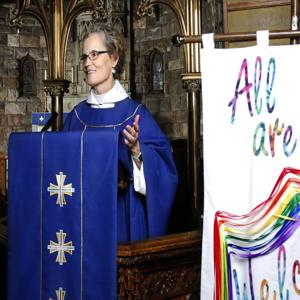

July 27, 2025: May God’s words be spoken, may God’s words be heard. Amen.
One of the things I often say about some passages of scripture is that they are so familiar to us, we have lost all of its meaning. We have stopped really listening or reading it, but immediately jump to what we “know” about it. This is especially true with some of the parables, like the one we heard two weeks ago about the “Good Samaritan.”
Today the gospel reading from Luke is one of those passages. And while not a parable, it includes something we say every single Sunday – what we call The Lord’s Prayer. Now before we get to it, just a bit about this gospel that is important to remember.
The Gospel of Luke mentions Jesus praying more than any other gospel. It is mentioned 9 times, and only 2 of those times are mentioned in any other gospel. Jesus prays a LOT. Which maybe why the disciples finally asked him about what he was doing and how to do as he does.
And when they do, he says: “…to them, “When you pray, say: Father, hallowed be your name. Your kingdom come. Give us each day our daily bread. And forgive us our sins, for we ourselves forgive everyone indebted to us. And do not bring us to the time of trial.”” It more closely aligns with our alternative Lord’s Prayer form often chosen for use in the Daily Office.
If you don’t know what I mean, take out the BCP in your pew and turn to page 97, for example. Go on…I’ll wait…. See there the two versions. Read the one on the right.
This is why when you are in a service of worship, you should not join in the prayer until you know which one the Officiant is asking everyone to use. I remember our liturgical professor at The General Theological Seminary stopping the entire class mid-prayer. You see, in seminary, every class is opened with prayer, and in his class, it was the Lord’s prayer. Well, we eager beaver seminarians jumped in at the Our Father, and he slammed us. “Which prayer was I going to use? How do you know?” Chastened, we learned to listen, before we speak. So, if you find yourself in a service where the liturgy is not printed out, and the prayer book is being used, wait until you hear the Officiant say “in heaven” or “who art in heaven,” before joining in. Once you hear that, then you know which form is being used.
All this to say that we are so familiar with this one particular prayer, most especially in one particular form, that we can begin to lose sight of what it means for us, or alternative ways of praying it. As Francois Bovon, the Swiss biblical scholar and historian of early Christianity, who taught at Havard Divinity School, once remarked, “The Lord’s Prayer belongs to us and yet escapes us.”[1]
“The Lord’s Prayer belongs to us and yet escapes us.”
Bovon has a point here, and we will come to see that a bit better if we take a step away from the words we know by heart, and see how it was perhaps heard by this first audience of this author. Just a reminder, this is one of two references to this scene with Jesus, and this one differs a bit from the one we get in the Gospel of Matthew. And the thing is, it would, because the author of Luke & Acts, and the author of Matthew, are speaking to two different audiences.
Matthew is written by and for Jewish followers of Jesus. Luke-Acts is written by and for Gentiles (non-Jewish, or non-religious) people of the Greco-Roman world. Those two gospels were also originally written in different languages. Luke-Acts was written in Greek – and a high level Greek too.
Sometimes when we translate something from an original language to another, we lose some of its meaning. And if we were to go back and look at the transliteration of the Greek, we would find that we have lost a bit of the poetry of the prayer. It may have sounded something like this:
“Father in the heavens
Let it be holy, the name of you
Let it be coming, the kingdom of you
Let it be coming, the will of you
As in heaven, and on the land
The bread of us, on being
Be giving to us
According to the day
Forgive us our sins
And ourselves we are forgiving those owing us
And do not bring us into trial,
But rescue us from the evil one.
I love that poetry at the beginning “Let it be holy, the name of you. Let it be coming, the kingdom of you. Let it be coming, the will of you. As in heaven, and on the land.” There is an emphasis on expectancy – “Let it be coming.”
Now, remember what Bovon said, “The Lord’s Prayer belongs to us and yet escapes us.”
I would argue that is true about prayer in general, because setting aside this prayer in particular, we likely will see that the way we pray has moved from expectancy and our responsibilities toward one another to a wishing list we hand over to God.
We have turned prayer into a vending machine, perhaps partly because of what Jesus says right after he teaches them this prayer. Jesus says, “…Ask, and it will be given you; search, and you will find; knock, and the door will be opened for you. For everyone who asks receives, and everyone who searches finds, and for everyone who knocks, the door will be opened.”
Well, alrighty then. If we pray, we will get the healing of our loved one, that new job we want, or the parking space in mid-town Manhattan, right? I mean, we ask, knock, search… BAM! What we want will appear – because Jesus said so!
Well, here’s the thing… Jesus didn’t say that you will get what you asked for when you pray to God. Jesus said you will get what you need. Let’s go back to that bit about the disciples asking Jesus how to pray. He didn’t respond with: “Give us our daily bread, and anything else we ask for.”
The prayer he told them to pray isn’t asking God for anything more than what will sustain us in body and spirit – bread for the body, forgiveness of others and freedom from sin for our spirit. God will always answer that prayer.
But there is more to it than that. God does give us something whenever we ask, something we don’t usually ask for directly, and Jesus makes that clear at the end of this passage. After the knock, seek, ask, bit, he adds “Is there anyone among you who, if your child asks for a fish, will give a snake instead of a fish? Or if the child asks for an egg, will give a scorpion? If you then, who are evil, know how to give good gifts to your children, how much more will the heavenly Father give the Holy Spirit to those who ask him!”
Yes, God always answers prayer. God always gives the Holy Spirit to those who ask – and that will be what sustains us in body, mind, and spirit. That is what makes prayer such a powerful thing for us in these turbulent times.
Now, it would be understandable to say, “But God, I really need my loved one to be made well.” Or, “I really need that job to sustain my family.” We will, of course, forgo the whole parking spot prayer. These are true and deeply felt needs, and God does hear us when we pray about them. So why then does it feel a bit like God hands us a snake when we don’t get the job, or a scorpion when someone we love dies? Because – it is painful and awful when these things happen to us.
But to be sure, God did not bring those things about. God answered our prayer in the only way God answers all prayers – with the gift of the Holy Spirit. In times when joy abounds, it allows us to manifest that joy in ways that will heal the world. In times of sorrow, the Spirit equips us to heal our own brokenness. And sometimes, especially when that gift of the Spirit is multiplied by many praying together, miracles can and do happen, because the Holy Spirit is a powerful thing.
So where is God’s will and kingdom in those times when what we hope for does not come to be? It is not in the outcome, to be sure, but in that gift of the Holy Spirit which sustains us in our sorrow, and which God gives to all who seek, who ask, who knock, through prayer. Truth is, that gift is always there for us, whether we pray or not. But prayer opens our hearts to receiving it.
That is why this passage is so powerful for us today, because prayer itself is a powerful thing. Yet Jesus knew that this prayer in particular is the one we would need most, because it is a promise to allow God to be at work in us, and for us to be Christ like in our relationship with others. And if there was ever a time we need to make this prayer not only belong to us, but not escape us, it is now.
For we are facing a lot of what the author of Colossians, (and I say author any time the actual writer is unknown), is warning about in the part of that letter we heard this morning, and we are going to need to not only pray and allow God to work in us, but to receive the Spirit that God will gift to us.
In Colossians the author writes “See to it that no one takes you captive through philosophy and empty deceit, according to human tradition, according to the elemental spirits of the universe, and not according to Christ.” The author is warning his readers about those who offer quick fixes to your problems, or worse – human traditions in place of living Christ like. That last one is very important. So much so that even Jesus rebuked those who “teach human precepts as doctrine.”
Today, the rise of Christian Nationalism is doing just that. It is using the name of Jesus and the cross of Christianity as foundational building blocks of human power and oppression. The author of Colossians tells the reader instead to “abound in thanksgiving” and to live “according to Christ.”
And as we know, living according to Christ is never about hate, but about love.
Living according to Christ is never about darkness, but about light.
Living according to Christ is never about power over others, but about lifting all of God’s children up.
And when we live according to Christ, we will not ever be captive to empty deceit, but will abound in thanksgiving without even trying.
Folks, we have much work to do in the world as followers of Jesus, and if there was ever a time to pray the Lord’s prayer, it is now. Because we need our daily bread of Christ if we are to be Christ like in the world, modeling our lives on him.
We need to embrace the will of God – that dream of peace, wholeness, love, mercy, and grace for all of creation.
We need God’s gift of the Holy Spirit to give us the strength to save us and everyone else from this time of trial.
The Lord’s Prayer does indeed belong to us.
May we never allow its power to escape us.
Amen.
For the audio, click below, or subscribe to our iTunes Sermon Podcast by clicking here (also available on Audible):
Sermon Podcast
[1] François Bovon, Luke 2: A Commentary on the Gospel of Luke 9:51–19:27, Hermeneia (Minneapolis: Fortress, 2013), 81. As quoted in WorkingPreacher commentary.
The Rev. Diana L. Wilcox
Christ Church in Bloomfield & Glen Ridge
July 27, 2025
Seventh Sunday After Pentecost – Year C – Proper 12 – Track 1
1st Reading – Hosea 1:2-10
Psalm 85
2nd Reading – Colossians 2:6-15, (16-19)
Gospel – Luke 11:1-13
The post “Let It Be Coming” appeared first on Christ Episcopal Church.
 View all episodes
 By The Rev. Diana L. Wilcox
5
88 ratings
July 27, 2025: May God’s words be spoken, may God’s words be heard. Amen.
One of the things I often say about some passages of scripture is that they are so familiar to us, we have lost all of its meaning. We have stopped really listening or reading it, but immediately jump to what we “know” about it. This is especially true with some of the parables, like the one we heard two weeks ago about the “Good Samaritan.”
Today the gospel reading from Luke is one of those passages. And while not a parable, it includes something we say every single Sunday – what we call The Lord’s Prayer. Now before we get to it, just a bit about this gospel that is important to remember.
The Gospel of Luke mentions Jesus praying more than any other gospel. It is mentioned 9 times, and only 2 of those times are mentioned in any other gospel. Jesus prays a LOT. Which maybe why the disciples finally asked him about what he was doing and how to do as he does.
And when they do, he says: “…to them, “When you pray, say: Father, hallowed be your name. Your kingdom come. Give us each day our daily bread. And forgive us our sins, for we ourselves forgive everyone indebted to us. And do not bring us to the time of trial.”” It more closely aligns with our alternative Lord’s Prayer form often chosen for use in the Daily Office.
If you don’t know what I mean, take out the BCP in your pew and turn to page 97, for example. Go on…I’ll wait…. See there the two versions. Read the one on the right.
This is why when you are in a service of worship, you should not join in the prayer until you know which one the Officiant is asking everyone to use. I remember our liturgical professor at The General Theological Seminary stopping the entire class mid-prayer. You see, in seminary, every class is opened with prayer, and in his class, it was the Lord’s prayer. Well, we eager beaver seminarians jumped in at the Our Father, and he slammed us. “Which prayer was I going to use? How do you know?” Chastened, we learned to listen, before we speak. So, if you find yourself in a service where the liturgy is not printed out, and the prayer book is being used, wait until you hear the Officiant say “in heaven” or “who art in heaven,” before joining in. Once you hear that, then you know which form is being used.
All this to say that we are so familiar with this one particular prayer, most especially in one particular form, that we can begin to lose sight of what it means for us, or alternative ways of praying it. As Francois Bovon, the Swiss biblical scholar and historian of early Christianity, who taught at Havard Divinity School, once remarked, “The Lord’s Prayer belongs to us and yet escapes us.”[1]
“The Lord’s Prayer belongs to us and yet escapes us.”
Bovon has a point here, and we will come to see that a bit better if we take a step away from the words we know by heart, and see how it was perhaps heard by this first audience of this author. Just a reminder, this is one of two references to this scene with Jesus, and this one differs a bit from the one we get in the Gospel of Matthew. And the thing is, it would, because the author of Luke & Acts, and the author of Matthew, are speaking to two different audiences.
Matthew is written by and for Jewish followers of Jesus. Luke-Acts is written by and for Gentiles (non-Jewish, or non-religious) people of the Greco-Roman world. Those two gospels were also originally written in different languages. Luke-Acts was written in Greek – and a high level Greek too.
Sometimes when we translate something from an original language to another, we lose some of its meaning. And if we were to go back and look at the transliteration of the Greek, we would find that we have lost a bit of the poetry of the prayer. It may have sounded something like this:
“Father in the heavens
Let it be holy, the name of you
Let it be coming, the kingdom of you
Let it be coming, the will of you
As in heaven, and on the land
The bread of us, on being
Be giving to us
According to the day
Forgive us our sins
And ourselves we are forgiving those owing us
And do not bring us into trial,
But rescue us from the evil one.
I love that poetry at the beginning “Let it be holy, the name of you. Let it be coming, the kingdom of you. Let it be coming, the will of you. As in heaven, and on the land.” There is an emphasis on expectancy – “Let it be coming.”
Now, remember what Bovon said, “The Lord’s Prayer belongs to us and yet escapes us.”
I would argue that is true about prayer in general, because setting aside this prayer in particular, we likely will see that the way we pray has moved from expectancy and our responsibilities toward one another to a wishing list we hand over to God.
We have turned prayer into a vending machine, perhaps partly because of what Jesus says right after he teaches them this prayer. Jesus says, “…Ask, and it will be given you; search, and you will find; knock, and the door will be opened for you. For everyone who asks receives, and everyone who searches finds, and for everyone who knocks, the door will be opened.”
Well, alrighty then. If we pray, we will get the healing of our loved one, that new job we want, or the parking space in mid-town Manhattan, right? I mean, we ask, knock, search… BAM! What we want will appear – because Jesus said so!
Well, here’s the thing… Jesus didn’t say that you will get what you asked for when you pray to God. Jesus said you will get what you need. Let’s go back to that bit about the disciples asking Jesus how to pray. He didn’t respond with: “Give us our daily bread, and anything else we ask for.”
The prayer he told them to pray isn’t asking God for anything more than what will sustain us in body and spirit – bread for the body, forgiveness of others and freedom from sin for our spirit. God will always answer that prayer.
But there is more to it than that. God does give us something whenever we ask, something we don’t usually ask for directly, and Jesus makes that clear at the end of this passage. After the knock, seek, ask, bit, he adds “Is there anyone among you who, if your child asks for a fish, will give a snake instead of a fish? Or if the child asks for an egg, will give a scorpion? If you then, who are evil, know how to give good gifts to your children, how much more will the heavenly Father give the Holy Spirit to those who ask him!”
Yes, God always answers prayer. God always gives the Holy Spirit to those who ask – and that will be what sustains us in body, mind, and spirit. That is what makes prayer such a powerful thing for us in these turbulent times.
Now, it would be understandable to say, “But God, I really need my loved one to be made well.” Or, “I really need that job to sustain my family.” We will, of course, forgo the whole parking spot prayer. These are true and deeply felt needs, and God does hear us when we pray about them. So why then does it feel a bit like God hands us a snake when we don’t get the job, or a scorpion when someone we love dies? Because – it is painful and awful when these things happen to us.
But to be sure, God did not bring those things about. God answered our prayer in the only way God answers all prayers – with the gift of the Holy Spirit. In times when joy abounds, it allows us to manifest that joy in ways that will heal the world. In times of sorrow, the Spirit equips us to heal our own brokenness. And sometimes, especially when that gift of the Spirit is multiplied by many praying together, miracles can and do happen, because the Holy Spirit is a powerful thing.
So where is God’s will and kingdom in those times when what we hope for does not come to be? It is not in the outcome, to be sure, but in that gift of the Holy Spirit which sustains us in our sorrow, and which God gives to all who seek, who ask, who knock, through prayer. Truth is, that gift is always there for us, whether we pray or not. But prayer opens our hearts to receiving it.
That is why this passage is so powerful for us today, because prayer itself is a powerful thing. Yet Jesus knew that this prayer in particular is the one we would need most, because it is a promise to allow God to be at work in us, and for us to be Christ like in our relationship with others. And if there was ever a time we need to make this prayer not only belong to us, but not escape us, it is now.
For we are facing a lot of what the author of Colossians, (and I say author any time the actual writer is unknown), is warning about in the part of that letter we heard this morning, and we are going to need to not only pray and allow God to work in us, but to receive the Spirit that God will gift to us.
In Colossians the author writes “See to it that no one takes you captive through philosophy and empty deceit, according to human tradition, according to the elemental spirits of the universe, and not according to Christ.” The author is warning his readers about those who offer quick fixes to your problems, or worse – human traditions in place of living Christ like. That last one is very important. So much so that even Jesus rebuked those who “teach human precepts as doctrine.”
Today, the rise of Christian Nationalism is doing just that. It is using the name of Jesus and the cross of Christianity as foundational building blocks of human power and oppression. The author of Colossians tells the reader instead to “abound in thanksgiving” and to live “according to Christ.”
And as we know, living according to Christ is never about hate, but about love.
Living according to Christ is never about darkness, but about light.
Living according to Christ is never about power over others, but about lifting all of God’s children up.
And when we live according to Christ, we will not ever be captive to empty deceit, but will abound in thanksgiving without even trying.
Folks, we have much work to do in the world as followers of Jesus, and if there was ever a time to pray the Lord’s prayer, it is now. Because we need our daily bread of Christ if we are to be Christ like in the world, modeling our lives on him.
We need to embrace the will of God – that dream of peace, wholeness, love, mercy, and grace for all of creation.
We need God’s gift of the Holy Spirit to give us the strength to save us and everyone else from this time of trial.
The Lord’s Prayer does indeed belong to us.
May we never allow its power to escape us.
Amen.
For the audio, click below, or subscribe to our iTunes Sermon Podcast by clicking here (also available on Audible):
Sermon Podcast
[1] François Bovon, Luke 2: A Commentary on the Gospel of Luke 9:51–19:27, Hermeneia (Minneapolis: Fortress, 2013), 81. As quoted in WorkingPreacher commentary.
The Rev. Diana L. Wilcox
Christ Church in Bloomfield & Glen Ridge
July 27, 2025
Seventh Sunday After Pentecost – Year C – Proper 12 – Track 1
1st Reading – Hosea 1:2-10
Psalm 85
2nd Reading – Colossians 2:6-15, (16-19)
Gospel – Luke 11:1-13
The post “Let It Be Coming” appeared first on Christ Episcopal Church.