
Sign up to save your podcasts
Or


I grew up in a middle-class family about 10 minutes from CleanSlate’s Wilkes-Barre center. Growing up, my neighborhood seemed like the perfect suburban community. My parents didn’t lock their doors and loved their country and neighbors. The only reference to drug education we had was Nancy Reagan’s, “Just Say No” campaign and most people in my community thought that if people did just that, the drug problem would cease.
My parents and my friend’s parents only knew about heroin from the news reports they’d seen in the sixties, saying that their rock idols had died from overdoses. Little did they think there could be a heroin problem in their own community. My home of Northeast Pennsylvania, once known as “a valley with a heart,“ had in just a few years become nicknamed “a valley with a habit“ by local media. I don’t think anyone at the time could imagine how true that statement would become.
By the time the local government and medical community admitted that heroin was a problem, years had passed and resources were scarce. I was in college when I started using. It was the nineties, so I listened to bands like Nirvana, Jane’s Addiction and Alice in Chains, watched movies like “Trainspotting” and “The Basketball Diaries,” and in an attempt to be well-read, frequented books by Allen Ginsberg, William S. Burroughs and Jack Kerouac. I thought of myself as a free thinker who did not conform to societal norms. Heroin to me was fascinating and taboo and, at the time, I incorrectly equated it with being artistic and creative.
I was around 18 years old when I started using heroin. At the time, I had no idea how drug use would affect my future. After more than 30 treatment episodes, including stays in halfway and recovery houses, countless 12-step meetings, multiple recovery books, trying medications and detox – you name it, I tried it – I ended up homeless in Philadelphia with track marks up both sides of my neck. My living quarters consisted of an abandoned building with no plumbing where rats and roaches were my roommates.
Along the way I had episodes of endocarditis, countless blood infections, frostbite, abscesses and even got stabbed, shot at and robbed. I would not say I was suicidal, but I had thought to myself that if I happened to die, that was fine with me. I figured it came with the territory and the lifestyle I had chosen. After reading countless obituaries of friends and acquaintances who had overdosed, how could I think that I was immune? At my lowest point, I remember taking a Sharpie and writing my mom’s name and phone number inside my winter coat in the hopes that if I died, the coroner would call her to claim my body.
Finish Kates Story at https://www.cleanslatecenters.com/location/pennsylvania/
Give us a Review!
📢 **Announcement!** 📢. We want to introduce our new 24-hour, 7-days-a-week hotline for crisis or substance use treatment. Whether you are seeking help for the first time or are an alum in need of immediate assistance, our team is here for you around the clock. 📞 **Call 1-800-HELP-120 anytime, day or night.** #ScrantonRecovery #ScrantonRecovery #ScrantonRecovery Fellowship House
As a treatment center, Fellowship House offers both residential and outpatient treatment services to
allbetter.fm
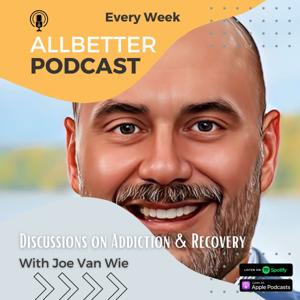
Discussions on addiction and recovery. We interview clinicians/researchers, legislators, and individ
Disclaimer: This post contains affiliate links. If you make a purchase, I may receive a commission at no extra cost to you.
Support the show
Stop by our Apple Podcast and drop a Review!
https://podcasts.apple.com/us/podcast/allbetter/id1592297425?see-all=reviews
Support The Show
https://www.patreon.com/allbetter
 View all episodes
 By Joe Van Wie

4.9
9191 ratings
I grew up in a middle-class family about 10 minutes from CleanSlate’s Wilkes-Barre center. Growing up, my neighborhood seemed like the perfect suburban community. My parents didn’t lock their doors and loved their country and neighbors. The only reference to drug education we had was Nancy Reagan’s, “Just Say No” campaign and most people in my community thought that if people did just that, the drug problem would cease.
My parents and my friend’s parents only knew about heroin from the news reports they’d seen in the sixties, saying that their rock idols had died from overdoses. Little did they think there could be a heroin problem in their own community. My home of Northeast Pennsylvania, once known as “a valley with a heart,“ had in just a few years become nicknamed “a valley with a habit“ by local media. I don’t think anyone at the time could imagine how true that statement would become.
By the time the local government and medical community admitted that heroin was a problem, years had passed and resources were scarce. I was in college when I started using. It was the nineties, so I listened to bands like Nirvana, Jane’s Addiction and Alice in Chains, watched movies like “Trainspotting” and “The Basketball Diaries,” and in an attempt to be well-read, frequented books by Allen Ginsberg, William S. Burroughs and Jack Kerouac. I thought of myself as a free thinker who did not conform to societal norms. Heroin to me was fascinating and taboo and, at the time, I incorrectly equated it with being artistic and creative.
I was around 18 years old when I started using heroin. At the time, I had no idea how drug use would affect my future. After more than 30 treatment episodes, including stays in halfway and recovery houses, countless 12-step meetings, multiple recovery books, trying medications and detox – you name it, I tried it – I ended up homeless in Philadelphia with track marks up both sides of my neck. My living quarters consisted of an abandoned building with no plumbing where rats and roaches were my roommates.
Along the way I had episodes of endocarditis, countless blood infections, frostbite, abscesses and even got stabbed, shot at and robbed. I would not say I was suicidal, but I had thought to myself that if I happened to die, that was fine with me. I figured it came with the territory and the lifestyle I had chosen. After reading countless obituaries of friends and acquaintances who had overdosed, how could I think that I was immune? At my lowest point, I remember taking a Sharpie and writing my mom’s name and phone number inside my winter coat in the hopes that if I died, the coroner would call her to claim my body.
Finish Kates Story at https://www.cleanslatecenters.com/location/pennsylvania/
Give us a Review!
📢 **Announcement!** 📢. We want to introduce our new 24-hour, 7-days-a-week hotline for crisis or substance use treatment. Whether you are seeking help for the first time or are an alum in need of immediate assistance, our team is here for you around the clock. 📞 **Call 1-800-HELP-120 anytime, day or night.** #ScrantonRecovery #ScrantonRecovery #ScrantonRecovery Fellowship House
As a treatment center, Fellowship House offers both residential and outpatient treatment services to
allbetter.fm
Discussions on addiction and recovery. We interview clinicians/researchers, legislators, and individ
Disclaimer: This post contains affiliate links. If you make a purchase, I may receive a commission at no extra cost to you.
Support the show
Stop by our Apple Podcast and drop a Review!
https://podcasts.apple.com/us/podcast/allbetter/id1592297425?see-all=reviews
Support The Show
https://www.patreon.com/allbetter