
Sign up to save your podcasts
Or

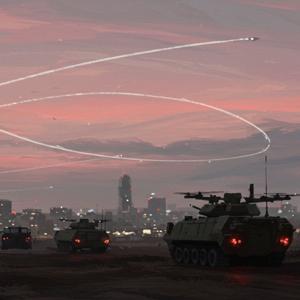

In April 1972, putting a single bridge span into a North Vietnamese river took a flight of multimillion-dollar F-4 Phantoms, 2,000-pound laser-guided bombs, and pilots flying straight into a wall of flak. Today, four infantrymen working out of a hedgerow can launch a surfboard-sized drone off a makeshift rail and drop the same bridge for a fraction of a fraction of the cost. That shift — and everything it breaks — is the subject of this briefing.
We dissect the 2026 Ukrainian "logistics lockdown" campaign against the occupied South and the Crimean land bridge, and use it to argue that operational-level interdiction — the systematic destruction of fuel networks, command nodes, and ground lines of communication 20 to 200 km behind the line of contact — is no longer the exclusive property of exquisite air power. It has been democratized. But the episode hinges on a disagreement worth having: is the revolution the hardware (attritable airframes, edge-compute AI, the compressed kill chain), or is it the bureaucracy — the decentralized funding models and acquisition reforms under Fedorov and Syrskyi that let you field mass cheap enough to lose without bankrupting your own force? You can't field the mass if you don't fix the flow of money, and we trace exactly how that flow was rerouted: the direct-to-brigade capital, the gamified "e-points" strike-reward dashboard, the brutally Darwinian startup procurement loop — and the sustainment chaos and target-selection bias it leaves behind.
From there we map the tactical realities against five historical interdiction analogs and pull the implications for our own future force:
We also work the adversary's vote: Russian countermeasures from 120 km/h night transits and in-cab RF spotters to dazzle camouflage and ML-poisoning designed to break automated target recognition — plus the cost-exchange math, the roughly 8.3:1 ratio, and the "point-defense bankruptcy" that comes from spending interceptor-grade money on locust-grade targets.
The closing question is the one defense professionals should sit with: if a besieged state with budgetary chaos and delayed aid can cobble together a decentralized autonomous interdiction complex that grinds a superpower's logistics to a bloody halt, what happens to American expeditionary logistics in the Indo-Pacific or Europe when an adversary with a real state-backed industrial base optimizes this exact blueprint against our ground lines of communication?
 View all episodes
 By CJH
In April 1972, putting a single bridge span into a North Vietnamese river took a flight of multimillion-dollar F-4 Phantoms, 2,000-pound laser-guided bombs, and pilots flying straight into a wall of flak. Today, four infantrymen working out of a hedgerow can launch a surfboard-sized drone off a makeshift rail and drop the same bridge for a fraction of a fraction of the cost. That shift — and everything it breaks — is the subject of this briefing.
We dissect the 2026 Ukrainian "logistics lockdown" campaign against the occupied South and the Crimean land bridge, and use it to argue that operational-level interdiction — the systematic destruction of fuel networks, command nodes, and ground lines of communication 20 to 200 km behind the line of contact — is no longer the exclusive property of exquisite air power. It has been democratized. But the episode hinges on a disagreement worth having: is the revolution the hardware (attritable airframes, edge-compute AI, the compressed kill chain), or is it the bureaucracy — the decentralized funding models and acquisition reforms under Fedorov and Syrskyi that let you field mass cheap enough to lose without bankrupting your own force? You can't field the mass if you don't fix the flow of money, and we trace exactly how that flow was rerouted: the direct-to-brigade capital, the gamified "e-points" strike-reward dashboard, the brutally Darwinian startup procurement loop — and the sustainment chaos and target-selection bias it leaves behind.
From there we map the tactical realities against five historical interdiction analogs and pull the implications for our own future force:
We also work the adversary's vote: Russian countermeasures from 120 km/h night transits and in-cab RF spotters to dazzle camouflage and ML-poisoning designed to break automated target recognition — plus the cost-exchange math, the roughly 8.3:1 ratio, and the "point-defense bankruptcy" that comes from spending interceptor-grade money on locust-grade targets.
The closing question is the one defense professionals should sit with: if a besieged state with budgetary chaos and delayed aid can cobble together a decentralized autonomous interdiction complex that grinds a superpower's logistics to a bloody halt, what happens to American expeditionary logistics in the Indo-Pacific or Europe when an adversary with a real state-backed industrial base optimizes this exact blueprint against our ground lines of communication?