
Sign up to save your podcasts
Or

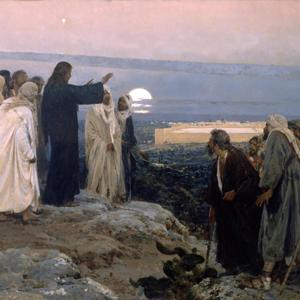

In this session, we explore Peter's sermon on the Day of Pentecost. What proofs did Peter put forward to make his claim that Jesus was Lord and Messiah? What was the significance of the titles "Son of Man" and "Son of God" for Peter's audience? Watch with us, and if you enjoy these sessions, kindly share them to a friend.
Class notes are available here as a PDF.
If you like, you can also watch on my YouTube channel.
EXCERPT:
Peter uses three words to describe God’s miraculous activity in Jesus, and we’re going to see those three words all throughout Acts, and all over the New Testament: miracles, wonders, and signs. Let’s take a minute to talk about them.
The first word is usually translated as “miracle,” but it doesn’t mean the same thing it usually does in English. In many languages, the word “miracle” carries the idea of something that is contrary to the laws of nature. But the word Peter uses doesn’t mean that at all: it’s our old friend dunamis, and that means power, the supernatural power of God. So, rather than using the word “miracles,” I suppose we could render it by saying “acts of power.” One commentator I read called it “manifestations of divine power.”
There are just a few English Bible version that avoid using the word “miracles.” They say “mighty works” (ESV) or “powerful deeds” (NET). That’s better, not just because it’s more accurate, but also because it doesn’t put supernatural works out of reach for believers. God wants to use us in deeds of power. Remember, Jesus said that the one who believes in Him will do the works that He had been doing, and even greater works (see John 14:12). He also said in Acts 1:8 that we would receive dunamis when the Holy Spirit came upon us.
 View all episodes
 By Nick Uva
In this session, we explore Peter's sermon on the Day of Pentecost. What proofs did Peter put forward to make his claim that Jesus was Lord and Messiah? What was the significance of the titles "Son of Man" and "Son of God" for Peter's audience? Watch with us, and if you enjoy these sessions, kindly share them to a friend.
Class notes are available here as a PDF.
If you like, you can also watch on my YouTube channel.
EXCERPT:
Peter uses three words to describe God’s miraculous activity in Jesus, and we’re going to see those three words all throughout Acts, and all over the New Testament: miracles, wonders, and signs. Let’s take a minute to talk about them.
The first word is usually translated as “miracle,” but it doesn’t mean the same thing it usually does in English. In many languages, the word “miracle” carries the idea of something that is contrary to the laws of nature. But the word Peter uses doesn’t mean that at all: it’s our old friend dunamis, and that means power, the supernatural power of God. So, rather than using the word “miracles,” I suppose we could render it by saying “acts of power.” One commentator I read called it “manifestations of divine power.”
There are just a few English Bible version that avoid using the word “miracles.” They say “mighty works” (ESV) or “powerful deeds” (NET). That’s better, not just because it’s more accurate, but also because it doesn’t put supernatural works out of reach for believers. God wants to use us in deeds of power. Remember, Jesus said that the one who believes in Him will do the works that He had been doing, and even greater works (see John 14:12). He also said in Acts 1:8 that we would receive dunamis when the Holy Spirit came upon us.