
Sign up to save your podcasts
Or


Summary
“We talk about risk all the time, but we forget to talk about the benefit. FDA’s job is to protect and promote public health, and benefit–risk is how those two missions meet.”
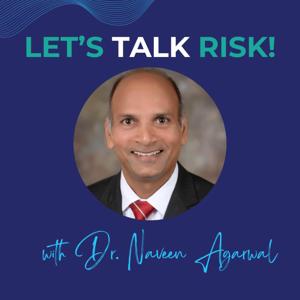
In this episode of the Let's Talk Risk Podcast, host Naveen Agarwal sits down with Dr. Allison Komiyama, neuroscientist, former FDA reviewer, regulatory strategist, and founder of Bluestocking Health. Known for her ability to make complex FDA topics understandable and fun, Allison brings fresh clarity to one of the most misunderstood areas in risk management: benefit–risk evaluation.
Together, they explore why benefit–risk thinking goes far beyond premarket submissions, how companies can use it to guide post-market decisions, and why QA/RA professionals have a massive leadership opportunity as technology accelerates faster than regulations can keep up. Allison also shares the inspiration behind her new venture, Bluestocking Health, and her mission to spark more accessible, joyful conversations about medical technologies.
Chapters
01:20 Introducing Allison Komiyama
03:40 How FDA thinks about benefit and risk
08:10 Why benefits must be evidence-based, not marketing claims
10:45 The missing benefit–risk conversation in 510(k) submissions
13:45 Reverse-engineering FDA’s benefit–risk guidance for real devices
14:30 How AI/ML challenges traditional benefit–risk evaluation
17:00 Why intended use and indications are the foundation
18:40 Bringing marketing, clinical, and reimbursement into early conversations
20:05 QA/RA as strategic leaders, not gatekeepers
24:30 How the patient voice reframes quality and purpose
26:00 The mission behind Bluestocking Health
30:15 Final message for QA/RA professionals: “Keep talking to each other.”
Suggested links:
* FDA: Benefit-Risk Case Study for an AI/ML Device.
* LTR: An Ideal Medical Device.
* FDA: Benefit-Risk Guidance for 510(k) Submissions.
Key Takeaways
* Benefit–risk is fundamental to safety and effectiveness but there is no cookie-cutter formula.
* FDA reviewers weigh benefit just as heavily as risk, but industry often forgets the benefit side.
* Many devices enter the market via 510(k), where benefit–risk is rarely discussed, despite being essential.
* FDA does provide benefit–risk guidance for substantial equivalence, a tool few companies actually use.
* Post-market benefit–risk evaluation is critical; clearance is the starting line, not the finish line.
* For AI/ML devices, understanding good machine-learning practices and PCCPs helps establish safe guardrails.
* Intended use and indications are the anchor for any meaningful benefit–risk assessment.
* QA/RA professionals can play a strategic leadership role by connecting benefit–risk to business, clinical, and patient perspectives.
* Cross-functional conversations among engineering, marketing, reimbursement, clinical must start early, not at the end.
* The patient voice remains the most powerful unifying force in developing safe, beneficial technology.
Keywords
Benefit–risk evaluation, FDA submissions, 510(k)/De Novo/PMA, post-market safety, AI/ML devices, regulatory strategy, quality leadership, Bluestocking Health, patient-centric design, MedTech innovation.
About Allison Komiyama
Allison Komiyama is the Founder & CEO of Bluestocking Health, a new platform dedicated to elevating conversations around medical technologies and helping patients, caregivers, and innovators better understand the devices that shape healthcare. A former FDA reviewer at CDRH, Allison has spent more than a decade supporting hundreds of submissions across the full product lifecycle, spanning startups to global enterprises.
Disclaimer
Information and insights presented in this podcast are for educational purposes only. Views expressed by all speakers are their own and do not reflect those of their respective organizations.
Parts of this article were created using AI-generated content, which was subsequently reviewed, edited, and fact-checked by the author to ensure accuracy and alignment with our standards.
Let's Talk Risk! is a reader-supported publication. To receive new posts and support my work, consider becoming a free or paid subscriber.
 View all episodes
 By Casual and informal conversations about practical aspects of medical device risk management.
5
22 ratings
Summary
“We talk about risk all the time, but we forget to talk about the benefit. FDA’s job is to protect and promote public health, and benefit–risk is how those two missions meet.”
In this episode of the Let's Talk Risk Podcast, host Naveen Agarwal sits down with Dr. Allison Komiyama, neuroscientist, former FDA reviewer, regulatory strategist, and founder of Bluestocking Health. Known for her ability to make complex FDA topics understandable and fun, Allison brings fresh clarity to one of the most misunderstood areas in risk management: benefit–risk evaluation.
Together, they explore why benefit–risk thinking goes far beyond premarket submissions, how companies can use it to guide post-market decisions, and why QA/RA professionals have a massive leadership opportunity as technology accelerates faster than regulations can keep up. Allison also shares the inspiration behind her new venture, Bluestocking Health, and her mission to spark more accessible, joyful conversations about medical technologies.
Chapters
01:20 Introducing Allison Komiyama
03:40 How FDA thinks about benefit and risk
08:10 Why benefits must be evidence-based, not marketing claims
10:45 The missing benefit–risk conversation in 510(k) submissions
13:45 Reverse-engineering FDA’s benefit–risk guidance for real devices
14:30 How AI/ML challenges traditional benefit–risk evaluation
17:00 Why intended use and indications are the foundation
18:40 Bringing marketing, clinical, and reimbursement into early conversations
20:05 QA/RA as strategic leaders, not gatekeepers
24:30 How the patient voice reframes quality and purpose
26:00 The mission behind Bluestocking Health
30:15 Final message for QA/RA professionals: “Keep talking to each other.”
Suggested links:
* FDA: Benefit-Risk Case Study for an AI/ML Device.
* LTR: An Ideal Medical Device.
* FDA: Benefit-Risk Guidance for 510(k) Submissions.
Key Takeaways
* Benefit–risk is fundamental to safety and effectiveness but there is no cookie-cutter formula.
* FDA reviewers weigh benefit just as heavily as risk, but industry often forgets the benefit side.
* Many devices enter the market via 510(k), where benefit–risk is rarely discussed, despite being essential.
* FDA does provide benefit–risk guidance for substantial equivalence, a tool few companies actually use.
* Post-market benefit–risk evaluation is critical; clearance is the starting line, not the finish line.
* For AI/ML devices, understanding good machine-learning practices and PCCPs helps establish safe guardrails.
* Intended use and indications are the anchor for any meaningful benefit–risk assessment.
* QA/RA professionals can play a strategic leadership role by connecting benefit–risk to business, clinical, and patient perspectives.
* Cross-functional conversations among engineering, marketing, reimbursement, clinical must start early, not at the end.
* The patient voice remains the most powerful unifying force in developing safe, beneficial technology.
Keywords
Benefit–risk evaluation, FDA submissions, 510(k)/De Novo/PMA, post-market safety, AI/ML devices, regulatory strategy, quality leadership, Bluestocking Health, patient-centric design, MedTech innovation.
About Allison Komiyama
Allison Komiyama is the Founder & CEO of Bluestocking Health, a new platform dedicated to elevating conversations around medical technologies and helping patients, caregivers, and innovators better understand the devices that shape healthcare. A former FDA reviewer at CDRH, Allison has spent more than a decade supporting hundreds of submissions across the full product lifecycle, spanning startups to global enterprises.
Disclaimer
Information and insights presented in this podcast are for educational purposes only. Views expressed by all speakers are their own and do not reflect those of their respective organizations.
Parts of this article were created using AI-generated content, which was subsequently reviewed, edited, and fact-checked by the author to ensure accuracy and alignment with our standards.
Let's Talk Risk! is a reader-supported publication. To receive new posts and support my work, consider becoming a free or paid subscriber.
92 Listeners
22 Listeners