
Sign up to save your podcasts
Or


Summary
“Under QMSR, FDA will still be FDA, but they’ll finally have broader authority to cite what they’ve always cared about.”
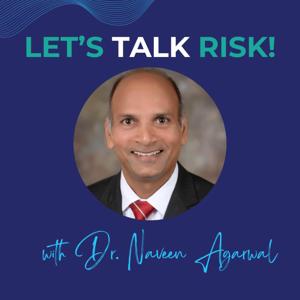
In this Let’s Talk Risk! conversation, host Naveen Agarwal sits down with Adam Isaacs Rae to unpack one of the most misunderstood aspects of FDA’s new QMSR rule: the parts that aren’t changing.
Adam brings a unique dual-lens perspective as both a medical device consultant and a lead auditor for certification bodies. With trademark clarity and humor, he explains why focusing only on “closing gaps” misses the real risk. The conversation dives into places where FDA will continue to operate exactly as before such as design control expectations, CAPA rigor, complaint handling scrutiny, and the agency’s ability to dig deeper under the broader ISO 13485 framework.
Across thirty minutes, Naveen and Adam explore how QMSR will shift the conversation from timeliness to effectiveness, from dashboards to real risk thinking, and from procedural compliance to deliberate regulatory strategy in complex multi-market environments.
Listen to the full 30-minute podcast or jump to a section of interest listed below.
Chapters
00:00 Introduction and welcome00:53 The story behind “The Other Consultants”02:22 Why QMSR prep must go beyond gap assessments03:12 What QMSR won’t change and why it matters04:59 Design control complexity under QMSR08:00 FDA’s deeper reach into complaints and risk13:41 CAPA becomes CA + PA and effectiveness takes center stage23:07 Key takeaways and closing remarks
If you enjoyed this podcast, consider subscribing to the Let’s Talk Risk! newsletter.
Suggested links:
LTR: 90-Day Action Plan to Review QMSR Readiness.
LTR: Beyond Compliance - Building Good Practices Under QMSR.
ACHIEVE Workshop: Using ChatGPT to Analyze Recalls and Adverse Events.
Key Takeaways
* QMSR changes the requirements, not FDA’s inspection philosophy. The agency will still probe deeply and expect strong evidence of safety and effectiveness.
* Design control complexity will increase. Especially for manufacturers managing the same device across the US, EU, and UK under a unified system.
* Risk integration becomes unavoidable. Under ISO 13485, FDA can now cite weaknesses in risk-linked processes more explicitly.
* Complaint handling scrutiny will intensify. Inspectors can now ask for “your highest-risk complaints”, and expect a defensible rationale.
* CAPA becomes CA + PA. Terminology harmonizes with ISO, but FDA’s expectations for root cause depth and recurrence prevention remain unchanged.
* Effectiveness will take center stage. FDA will look beyond timeliness KPIs and challenge the thinking behind effectiveness criteria.
* Effectiveness must be defined up front. Not after the corrective actions are completed, a common failure mode in CAPA systems.
* Recurrence and escapes remain FDA’s biggest red flags. QMSR simply gives them broader grounds to write findings.
* Manufacturers must rethink regulatory strategy. Reliance sounds attractive, but differing market routes require clear separation and intentional planning.
* The biggest risks come from what QMSR doesn’t change. These unchanged legacy expectations can “sting” manufacturers who assume harmonization means simplification.
Keywords
QMSR, ISO 13485, FDA inspections, design controls, CAPA, corrective action, preventive action, effectiveness criteria, complaint handling, risk-based quality, regulatory strategy, post-market surveillance
About Adam Isaacs Rae
Adam Isaacs Rae is a medical device quality and regulatory leader and Managing Director of The Other Consultants and The Other Auditors. With over a decade of experience across global medical device manufacturers, regulatory bodies, and certification audits, Adam brings a rare dual perspective as both consultant and lead auditor for ISO 13485. He specializes in pragmatic, risk-based compliance strategies that balance regulatory rigor with business realities, and is known for his clear, conversational approach to complex topics like QMSR, CAPA, and international market access.
Let’s Talk Risk! with Dr. Naveen Agarwal is a bi-weekly live audio event on LinkedIn, where we talk about risk management related topics in a casual, informal way. Join us at 11:00 am EST every Friday on LinkedIn.
Disclaimer
Information and insights presented in this podcast are for educational purposes only, and not as legal advice. Views expressed by all speakers are their own and do not reflect those of their respective organizations.
Parts of this article were created using AI-generated content, which was subsequently reviewed, edited, and fact-checked by the author to ensure accuracy and alignment with our standards.
 View all episodes
 By Where MedTech professionals gain clarity and confidence to navigate complex decisions.
5
22 ratings
Summary
“Under QMSR, FDA will still be FDA, but they’ll finally have broader authority to cite what they’ve always cared about.”
In this Let’s Talk Risk! conversation, host Naveen Agarwal sits down with Adam Isaacs Rae to unpack one of the most misunderstood aspects of FDA’s new QMSR rule: the parts that aren’t changing.
Adam brings a unique dual-lens perspective as both a medical device consultant and a lead auditor for certification bodies. With trademark clarity and humor, he explains why focusing only on “closing gaps” misses the real risk. The conversation dives into places where FDA will continue to operate exactly as before such as design control expectations, CAPA rigor, complaint handling scrutiny, and the agency’s ability to dig deeper under the broader ISO 13485 framework.
Across thirty minutes, Naveen and Adam explore how QMSR will shift the conversation from timeliness to effectiveness, from dashboards to real risk thinking, and from procedural compliance to deliberate regulatory strategy in complex multi-market environments.
Listen to the full 30-minute podcast or jump to a section of interest listed below.
Chapters
00:00 Introduction and welcome00:53 The story behind “The Other Consultants”02:22 Why QMSR prep must go beyond gap assessments03:12 What QMSR won’t change and why it matters04:59 Design control complexity under QMSR08:00 FDA’s deeper reach into complaints and risk13:41 CAPA becomes CA + PA and effectiveness takes center stage23:07 Key takeaways and closing remarks
If you enjoyed this podcast, consider subscribing to the Let’s Talk Risk! newsletter.
Suggested links:
LTR: 90-Day Action Plan to Review QMSR Readiness.
LTR: Beyond Compliance - Building Good Practices Under QMSR.
ACHIEVE Workshop: Using ChatGPT to Analyze Recalls and Adverse Events.
Key Takeaways
* QMSR changes the requirements, not FDA’s inspection philosophy. The agency will still probe deeply and expect strong evidence of safety and effectiveness.
* Design control complexity will increase. Especially for manufacturers managing the same device across the US, EU, and UK under a unified system.
* Risk integration becomes unavoidable. Under ISO 13485, FDA can now cite weaknesses in risk-linked processes more explicitly.
* Complaint handling scrutiny will intensify. Inspectors can now ask for “your highest-risk complaints”, and expect a defensible rationale.
* CAPA becomes CA + PA. Terminology harmonizes with ISO, but FDA’s expectations for root cause depth and recurrence prevention remain unchanged.
* Effectiveness will take center stage. FDA will look beyond timeliness KPIs and challenge the thinking behind effectiveness criteria.
* Effectiveness must be defined up front. Not after the corrective actions are completed, a common failure mode in CAPA systems.
* Recurrence and escapes remain FDA’s biggest red flags. QMSR simply gives them broader grounds to write findings.
* Manufacturers must rethink regulatory strategy. Reliance sounds attractive, but differing market routes require clear separation and intentional planning.
* The biggest risks come from what QMSR doesn’t change. These unchanged legacy expectations can “sting” manufacturers who assume harmonization means simplification.
Keywords
QMSR, ISO 13485, FDA inspections, design controls, CAPA, corrective action, preventive action, effectiveness criteria, complaint handling, risk-based quality, regulatory strategy, post-market surveillance
About Adam Isaacs Rae
Adam Isaacs Rae is a medical device quality and regulatory leader and Managing Director of The Other Consultants and The Other Auditors. With over a decade of experience across global medical device manufacturers, regulatory bodies, and certification audits, Adam brings a rare dual perspective as both consultant and lead auditor for ISO 13485. He specializes in pragmatic, risk-based compliance strategies that balance regulatory rigor with business realities, and is known for his clear, conversational approach to complex topics like QMSR, CAPA, and international market access.
Let’s Talk Risk! with Dr. Naveen Agarwal is a bi-weekly live audio event on LinkedIn, where we talk about risk management related topics in a casual, informal way. Join us at 11:00 am EST every Friday on LinkedIn.
Disclaimer
Information and insights presented in this podcast are for educational purposes only, and not as legal advice. Views expressed by all speakers are their own and do not reflect those of their respective organizations.
Parts of this article were created using AI-generated content, which was subsequently reviewed, edited, and fact-checked by the author to ensure accuracy and alignment with our standards.
92 Listeners
20 Listeners