
Sign up to save your podcasts
Or


Summary
“You don’t want to be implementing QMSR while the FDA is waiting in the lobby.”
As the FDA transitions from the Quality System Regulation (QSR) to the new Quality Management System Regulation (QMSR), confusion persists across the MedTech industry. Is ISO 13485 certification enough? Does MDSAP cover everything? What exactly will FDA inspectors expect?
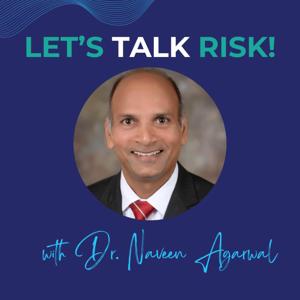
In this episode of the Let’s Talk Risk Podcast, host Naveen Agarwal sits down with Holly Cotter to talk about what this transition really means for manufacturers, especially startups and U.S.-only companies.
Holly brings a rare perspective: biomedical engineer, hands-on clinical experience, global regulatory consultant, and community builder. Together, we unpack not just regulatory changes — but the leadership opportunity QMSR presents for quality and regulatory professionals.
Chapters
00:00 Introduction and QMSR transition02:25 Explicit vs. implied changes under QMSR06:00 Risk beyond design validation: FDA’s broader lens09:30 Inspection uncertainty: Q-SIT, guidance gaps, and readiness11:35 MDSAP alignment: what it covers — and what it doesn’t14:00 The Quality Plan: your most practical readiness tool20:10 Dangerous assumptions about ISO 13485 certification25:40 indieMedTech: building community in MedTech
If you enjoyed this podcast, consider subscribing to the Let’s Talk Risk! newsletter.
Suggested links:
* LTR: QMSR Readiness, Risk-Based Assurance and FDA Expectations.
* LTR: 90-Day QMSR Readiness Action Pan for Leaders.
* LTR: FDA Readiness for QMSR.
Key Takeaways
* ISO 13485 certification ≠ automatic QMSR compliance
* Risk-based thinking must extend across the entire quality system
* Internal audits and management reviews will face deeper FDA scrutiny
* MDSAP is helpful, but not sufficient
* A simple, well-structured Quality Plan demonstrates leadership and readiness
* QMSR presents a strategic opportunity for QARA professionals
Keywords
QMSR, FDA Quality System Regulation, ISO 13485, Risk-Based Thinking, MDSAP, FDA Inspection Readiness, Quality Plan, CAPA, Supplier Controls, MedTech Leadership
About Holly Cotter
Holly Cotter is a a biomedical engineer turned regulatory strategist with hands-on clinical roots and global MedTech experience. She has led regulatory, quality, and clinical initiatives across startups, large manufacturers, and consulting environments, with deep expertise in EU MDR, post-market surveillance, PMCF strategy, and FDA compliance.
Holly is also the Co-Founder of indieMedTech, a growing professional platform dedicated to connecting and empowering MedTech leaders. Through her consulting work and community building, she is helping companies navigate complex regulatory transitions - including the shift to QMSR - with clarity, structure, and risk-based thinking.
Disclaimer
Information and insights presented in this podcast are for educational purposes only. Views expressed by all speakers are their own and do not reflect those of their respective organizations.
Parts of this article were created using AI-generated content, which was subsequently reviewed, edited, and fact-checked by the author to ensure accuracy and alignment with our standards.
 View all episodes
 By Where MedTech professionals gain clarity and confidence to navigate complex decisions.
5
22 ratings
Summary
“You don’t want to be implementing QMSR while the FDA is waiting in the lobby.”
As the FDA transitions from the Quality System Regulation (QSR) to the new Quality Management System Regulation (QMSR), confusion persists across the MedTech industry. Is ISO 13485 certification enough? Does MDSAP cover everything? What exactly will FDA inspectors expect?
In this episode of the Let’s Talk Risk Podcast, host Naveen Agarwal sits down with Holly Cotter to talk about what this transition really means for manufacturers, especially startups and U.S.-only companies.
Holly brings a rare perspective: biomedical engineer, hands-on clinical experience, global regulatory consultant, and community builder. Together, we unpack not just regulatory changes — but the leadership opportunity QMSR presents for quality and regulatory professionals.
Chapters
00:00 Introduction and QMSR transition02:25 Explicit vs. implied changes under QMSR06:00 Risk beyond design validation: FDA’s broader lens09:30 Inspection uncertainty: Q-SIT, guidance gaps, and readiness11:35 MDSAP alignment: what it covers — and what it doesn’t14:00 The Quality Plan: your most practical readiness tool20:10 Dangerous assumptions about ISO 13485 certification25:40 indieMedTech: building community in MedTech
If you enjoyed this podcast, consider subscribing to the Let’s Talk Risk! newsletter.
Suggested links:
* LTR: QMSR Readiness, Risk-Based Assurance and FDA Expectations.
* LTR: 90-Day QMSR Readiness Action Pan for Leaders.
* LTR: FDA Readiness for QMSR.
Key Takeaways
* ISO 13485 certification ≠ automatic QMSR compliance
* Risk-based thinking must extend across the entire quality system
* Internal audits and management reviews will face deeper FDA scrutiny
* MDSAP is helpful, but not sufficient
* A simple, well-structured Quality Plan demonstrates leadership and readiness
* QMSR presents a strategic opportunity for QARA professionals
Keywords
QMSR, FDA Quality System Regulation, ISO 13485, Risk-Based Thinking, MDSAP, FDA Inspection Readiness, Quality Plan, CAPA, Supplier Controls, MedTech Leadership
About Holly Cotter
Holly Cotter is a a biomedical engineer turned regulatory strategist with hands-on clinical roots and global MedTech experience. She has led regulatory, quality, and clinical initiatives across startups, large manufacturers, and consulting environments, with deep expertise in EU MDR, post-market surveillance, PMCF strategy, and FDA compliance.
Holly is also the Co-Founder of indieMedTech, a growing professional platform dedicated to connecting and empowering MedTech leaders. Through her consulting work and community building, she is helping companies navigate complex regulatory transitions - including the shift to QMSR - with clarity, structure, and risk-based thinking.
Disclaimer
Information and insights presented in this podcast are for educational purposes only. Views expressed by all speakers are their own and do not reflect those of their respective organizations.
Parts of this article were created using AI-generated content, which was subsequently reviewed, edited, and fact-checked by the author to ensure accuracy and alignment with our standards.
93 Listeners
20 Listeners