
Sign up to save your podcasts
Or


Summary
“The clinical study is actually where your risk analysis is going to meet reality.”
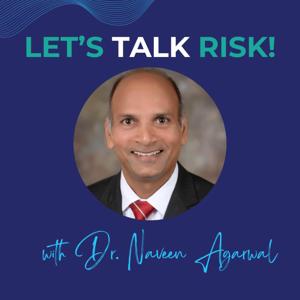
In this Let’s Talk Risk! conversation, host Naveen Agarwal speaks with Lavanya Ramnath, Senior Regulatory Affairs Specialist at Insulet, about what it really takes to prepare for an IDE and why early-phase risk work is far more than a documentation exercise. Drawing on her experience in diabetes technology, SaMD, and closed-loop systems, Lavanya explains how regulatory, clinical, engineering, and usability thinking must come together long before a device ever reaches a patient.
The conversation also goes deeper than process. Lavanya shares the personal connection that drew her into MedTech, how family experiences with diabetes and cardiac disease shaped her career, and why she approaches device development with a simple principle: build as if it were intended for your own family. From significant-risk judgments and feasibility studies to alarm design, human factors, and mentorship, this episode is a thoughtful reminder that good regulatory work is ultimately about real people, real uncertainty, and real consequences.
Listen to the full 30-minute podcast or jump to a section of interest listed below.
Chapters
00:00 Introduction03:23 The personal story behind Lavanya’s commitment to MedTech05:01 What an IDE is and why it matters07:53 When companies decide they need an IDE09:08 Significant vs. non-significant risk in early clinical development12:36 In silico testing, risk analysis, and the three buckets of risk work16:07 Human factors, usability, and improving confidence in risk judgments19:00 Alarm design, patient preference, standards, and practical tradeoffs20:49 Learning regulatory on the job and the role of mentorship25:40 Final takeaways: patient focus, study design, and risk as strategy
If you enjoyed this podcast, consider subscribing to the Let’s Talk Risk! newsletter.
Suggested links:
LTR: Decoding Privacy Laws in Clinical Research.
LTR: A Patient Centric Approach to Medical Device R&D.
LTR: A 90-Day Plan to Review QMSR Readiness.
Key Takeaways
* An IDE is not a marketing authorization. It is the permission to study a device in humans, and it often begins much earlier in development than many teams expect.
* Early risk work is a judgment exercise under uncertainty. Teams must assess whether a device could cause serious harm even before every failure mode is fully known.
* Risk analysis should not stop at a table. Lavanya frames it as a broader strategy spanning system hazards, component-level failure analysis, and an overall residual-risk rationale.
* Clinical studies are where risk analysis meets reality. They help confirm whether residual risk is truly acceptable in real-world use.
* Human factors matters directly to safety. User behavior, interface design, age, familiarity with technology, and real-use conditions all shape risk.
* Good design requires balancing competing needs. The insulin pump alarm example shows the tension between patient preference, safety urgency, and standards compliance.
* Regulatory growth happens through cross-functional learning. Lavanya emphasizes partnering with other functions, asking questions, and staying open to how the full product puzzle fits together.
* Mentorship can accelerate confidence and visibility. The episode closes with a strong message about seeking mentors, giving back, and finding your voice in the profession.
Keywords
IDE, Investigational Device Exemption, clinical trials, risk management, ISO 14971, human factors, IEC 62366, usability engineering, insulin pumps, SaMD, digital health, regulatory affairs, benefit-risk, design controls, mentorship
About Lavanya Ramnath
Lavanya Ramnath is a Senior Regulatory Affairs Specialist at Insulet, where she supports U.S. new product development for SaMD and closed-loop insulin delivery systems, including feasibility and pivotal clinical studies, IDE submissions, and FDA interactions. She has also contributed to indication expansion work for Omnipod 5 and supports broader regulatory documentation, process improvement, and global compliance activities.
Previously, Lavanya held regulatory roles at Abbott, CR Bard, and Medtronic, building experience across the full device lifecycle for both low- and high-risk devices in U.S., EU, and international markets. A biomedical engineer by training, she is especially passionate about helping bring safe, effective, and innovative devices to patients worldwide — a mission shaped by personal family experiences with diabetes and cardiac disease.
Let’s Talk Risk! with Dr. Naveen Agarwal is a bi-weekly live audio event on LinkedIn, where we talk about risk management related topics in a casual, informal way. Join us at 11:00 am EST every other Friday on LinkedIn.
Disclaimer
Information and insights presented in this podcast are for educational purposes only, and not as legal advice. Views expressed by all speakers are their own and do not reflect those of their respective organizations.
Parts of this article were created using AI-generated content, which was subsequently reviewed, edited, and fact-checked by the author to ensure accuracy and alignment with our standards.
 View all episodes
 By Casual and informal conversations about practical aspects of medical device risk management.
5
22 ratings
Summary
“The clinical study is actually where your risk analysis is going to meet reality.”
In this Let’s Talk Risk! conversation, host Naveen Agarwal speaks with Lavanya Ramnath, Senior Regulatory Affairs Specialist at Insulet, about what it really takes to prepare for an IDE and why early-phase risk work is far more than a documentation exercise. Drawing on her experience in diabetes technology, SaMD, and closed-loop systems, Lavanya explains how regulatory, clinical, engineering, and usability thinking must come together long before a device ever reaches a patient.
The conversation also goes deeper than process. Lavanya shares the personal connection that drew her into MedTech, how family experiences with diabetes and cardiac disease shaped her career, and why she approaches device development with a simple principle: build as if it were intended for your own family. From significant-risk judgments and feasibility studies to alarm design, human factors, and mentorship, this episode is a thoughtful reminder that good regulatory work is ultimately about real people, real uncertainty, and real consequences.
Listen to the full 30-minute podcast or jump to a section of interest listed below.
Chapters
00:00 Introduction03:23 The personal story behind Lavanya’s commitment to MedTech05:01 What an IDE is and why it matters07:53 When companies decide they need an IDE09:08 Significant vs. non-significant risk in early clinical development12:36 In silico testing, risk analysis, and the three buckets of risk work16:07 Human factors, usability, and improving confidence in risk judgments19:00 Alarm design, patient preference, standards, and practical tradeoffs20:49 Learning regulatory on the job and the role of mentorship25:40 Final takeaways: patient focus, study design, and risk as strategy
If you enjoyed this podcast, consider subscribing to the Let’s Talk Risk! newsletter.
Suggested links:
LTR: Decoding Privacy Laws in Clinical Research.
LTR: A Patient Centric Approach to Medical Device R&D.
LTR: A 90-Day Plan to Review QMSR Readiness.
Key Takeaways
* An IDE is not a marketing authorization. It is the permission to study a device in humans, and it often begins much earlier in development than many teams expect.
* Early risk work is a judgment exercise under uncertainty. Teams must assess whether a device could cause serious harm even before every failure mode is fully known.
* Risk analysis should not stop at a table. Lavanya frames it as a broader strategy spanning system hazards, component-level failure analysis, and an overall residual-risk rationale.
* Clinical studies are where risk analysis meets reality. They help confirm whether residual risk is truly acceptable in real-world use.
* Human factors matters directly to safety. User behavior, interface design, age, familiarity with technology, and real-use conditions all shape risk.
* Good design requires balancing competing needs. The insulin pump alarm example shows the tension between patient preference, safety urgency, and standards compliance.
* Regulatory growth happens through cross-functional learning. Lavanya emphasizes partnering with other functions, asking questions, and staying open to how the full product puzzle fits together.
* Mentorship can accelerate confidence and visibility. The episode closes with a strong message about seeking mentors, giving back, and finding your voice in the profession.
Keywords
IDE, Investigational Device Exemption, clinical trials, risk management, ISO 14971, human factors, IEC 62366, usability engineering, insulin pumps, SaMD, digital health, regulatory affairs, benefit-risk, design controls, mentorship
About Lavanya Ramnath
Lavanya Ramnath is a Senior Regulatory Affairs Specialist at Insulet, where she supports U.S. new product development for SaMD and closed-loop insulin delivery systems, including feasibility and pivotal clinical studies, IDE submissions, and FDA interactions. She has also contributed to indication expansion work for Omnipod 5 and supports broader regulatory documentation, process improvement, and global compliance activities.
Previously, Lavanya held regulatory roles at Abbott, CR Bard, and Medtronic, building experience across the full device lifecycle for both low- and high-risk devices in U.S., EU, and international markets. A biomedical engineer by training, she is especially passionate about helping bring safe, effective, and innovative devices to patients worldwide — a mission shaped by personal family experiences with diabetes and cardiac disease.
Let’s Talk Risk! with Dr. Naveen Agarwal is a bi-weekly live audio event on LinkedIn, where we talk about risk management related topics in a casual, informal way. Join us at 11:00 am EST every other Friday on LinkedIn.
Disclaimer
Information and insights presented in this podcast are for educational purposes only, and not as legal advice. Views expressed by all speakers are their own and do not reflect those of their respective organizations.
Parts of this article were created using AI-generated content, which was subsequently reviewed, edited, and fact-checked by the author to ensure accuracy and alignment with our standards.
92 Listeners
22 Listeners