
Sign up to save your podcasts
Or


What happens when a neurotypical partner finds himself navigating two diagnosed ADHD partners?
What does it look like when successful professionals discover later in life that the “quirks” they’ve worked around for decades have names, diagnoses, and treatment options?
And if you’re a young professional - in law, healthcare, or any demanding field - trying to learn your craft while navigating strong personalities and competing management styles, how do you know you’re not failing… but simply wired differently?
In this episode of Almost Clinical, powered by Buttaci, Leardi, & Werner, hosts Vincent Buttaci, John Leardi, and Paul Werner pull back the curtain on something the professional world – including law firms, healthcare facilities, and medical practices – didn’t meaningfully discuss until recently: neurodiversity in the workplace.
What begins as an honest look at one firm’s internal dynamic becomes a broader conversation about leadership, performance, and self-awareness in high-pressure industries.
Vincent and John share their late-in-life ADHD diagnoses and how that awareness reshaped the way they practice law, advise healthcare clients, and lead teams.
Paul offers the equally important perspective of building structure, process, and adaptability inside a partnership where different minds operate differently – and how that balance contributes to a strong, effective firm.
The episode explores:
At its core, this episode isn’t about labels.
It’s about understanding how people work, especially in high-pressure industries where patient care, compliance, litigation, and operational risk are all on the line.
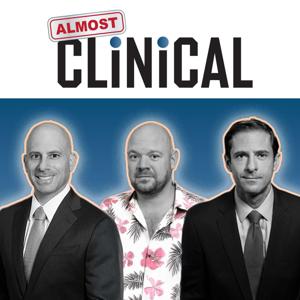
Join Almost Clinical hosts Vincent Buttaci, John Leardi, and Paul Werner as they challenge each other’s views on how to operate, invest, and succeed in healthcare’s rapidly shifting landscape, translate legalese into business sense for healthcare providers, executives, private equity professionals, and strategic stakeholders, and explore the issues shaping the business of medicine today and tomorrow.
 View all episodes
 By Buttaci Leardi & Werner
What happens when a neurotypical partner finds himself navigating two diagnosed ADHD partners?
What does it look like when successful professionals discover later in life that the “quirks” they’ve worked around for decades have names, diagnoses, and treatment options?
And if you’re a young professional - in law, healthcare, or any demanding field - trying to learn your craft while navigating strong personalities and competing management styles, how do you know you’re not failing… but simply wired differently?
In this episode of Almost Clinical, powered by Buttaci, Leardi, & Werner, hosts Vincent Buttaci, John Leardi, and Paul Werner pull back the curtain on something the professional world – including law firms, healthcare facilities, and medical practices – didn’t meaningfully discuss until recently: neurodiversity in the workplace.
What begins as an honest look at one firm’s internal dynamic becomes a broader conversation about leadership, performance, and self-awareness in high-pressure industries.
Vincent and John share their late-in-life ADHD diagnoses and how that awareness reshaped the way they practice law, advise healthcare clients, and lead teams.
Paul offers the equally important perspective of building structure, process, and adaptability inside a partnership where different minds operate differently – and how that balance contributes to a strong, effective firm.
The episode explores:
At its core, this episode isn’t about labels.
It’s about understanding how people work, especially in high-pressure industries where patient care, compliance, litigation, and operational risk are all on the line.
Join Almost Clinical hosts Vincent Buttaci, John Leardi, and Paul Werner as they challenge each other’s views on how to operate, invest, and succeed in healthcare’s rapidly shifting landscape, translate legalese into business sense for healthcare providers, executives, private equity professionals, and strategic stakeholders, and explore the issues shaping the business of medicine today and tomorrow.