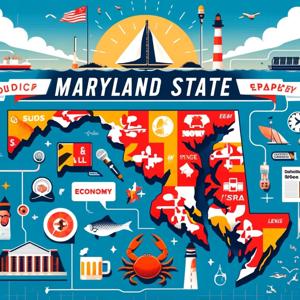
Maryland closes out 2025 with a mix of resilience and forward momentum amid challenges from bird flu outbreaks spiking egg prices by up to 10 percent, a massive fuel spill, multiple mass overdoses, and a federal government shutdown, as highlighted in WBAL-TV 11's year-in-review[1]. Baltimore business leaders stand out as the state's most optimistic, citing strong demand in cybersecurity, healthcare, and logistics, with projections for growth in technical IT roles and customer support jobs, according to Alta Technologies[3].
In government and politics, the 2025 legislative session delivered key wins overridden over vetoes, including the Energy Resource Adequacy and Planning Act establishing a Strategic Energy Planning Office to bolster grid reliability[7]. Governor Wes Moore signed an executive order on December 19 to lower energy costs through rebates and $130 million in clean energy investments, building on the Next Generation Energy Act's $200 million in bill relief[12]. Starting January 1, 2026, new laws enhance tax sale protections for homeowners and heirs via House Bill 59, alongside boosts to healthcare access and worker rights, per The BayNet[2]. The Board of Public Works approved $26.5 million for 130 revitalization projects, including $1 million for Salisbury University's new Performing Arts Center[4][19].
Economically, CPV launched Maryland's largest solar project on reclaimed land, supporting clean energy goals and local jobs[13], while Governor Moore unveiled the Maryland Community Business Compass with $10 million for small businesses in fresh food and child care[8]. Community efforts shine in education and infrastructure, with ongoing school construction discussions at the MACo Winter Conference[9] and $69.5 million in statewide awards for projects like IonQ's headquarters[23].
No major recent weather events dominate, but a fast-moving storm looms Friday, bringing snow, sleet, and freezing rain to Baltimore and beyond, risking icy roads and power outages, as forecast by the National Weather Service and AccuWeather[5][10].
Looking Ahead: Watch for the January 1 rollout of new laws, potential Winter Storm Watch impacts on post-holiday travel, and the 2026 General Assembly session tackling school funding and energy affordability.
Thank you for tuning in, listeners—please subscribe for more. This has been a Quiet Please production, for more check out quietplease.ai.
Some great Deals https://amzn.to/49SJ3Qs
For more check out http://www.quietplease.ai
This content was created in partnership and with the help of Artificial Intelligence AI



 View all episodes