
Sign up to save your podcasts
Or

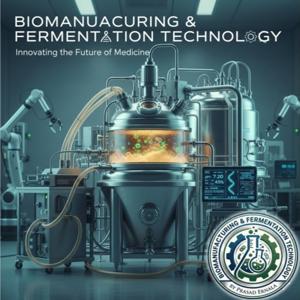

This episode details the critical role of media engineering in maintaining microbial productivity and phenotypic stability when transitioning from the laboratory to large-scale industrial fermentation. It explains how specialized nutrient formulations can manage "hidden" constraints, such as trace metal availability and vitamin deficiencies, which often emerge only under high cell densities. The sources highlight strategies for mitigating environmental stressors, including pH fluctuations, oxidative damage, and osmotic pressure, which can cause culture inconsistency and yield collapse. By utilizing chelation, buffering, and micronutrient titration, developers can dampen the negative effects of industrial gradients and metabolic oscillations. Ultimately, the text provides a framework for designing robust media that supports cofactor sufficiency and stabilizes cellular performance across various industrial host organisms.
 View all episodes
 By prasad ernala
This episode details the critical role of media engineering in maintaining microbial productivity and phenotypic stability when transitioning from the laboratory to large-scale industrial fermentation. It explains how specialized nutrient formulations can manage "hidden" constraints, such as trace metal availability and vitamin deficiencies, which often emerge only under high cell densities. The sources highlight strategies for mitigating environmental stressors, including pH fluctuations, oxidative damage, and osmotic pressure, which can cause culture inconsistency and yield collapse. By utilizing chelation, buffering, and micronutrient titration, developers can dampen the negative effects of industrial gradients and metabolic oscillations. Ultimately, the text provides a framework for designing robust media that supports cofactor sufficiency and stabilizes cellular performance across various industrial host organisms.