
Sign up to save your podcasts
Or

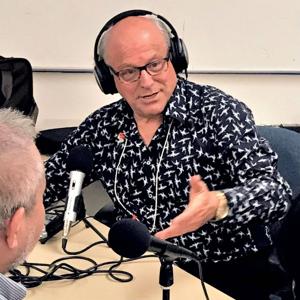


Everyone knows Ba and Josette and their great work Natural Learning Relationships.
This podcast provides perhaps the best insight into the core of NLR. Consciousness must become the way of all relationships with children. Learn how it works and why this must be so.
There is a spiritual essence expressed in through, and as nature, that is in each of us, and expresses itself in the natural development of children.
If we're going to be with children, be with our life essence, be with the unfolding of our humanity, we have to participate in consciousness with children. We have to understand how the natural laws unfold in a consciousness way.
…We can move away from the hurtful conditioning imposed on children.
Josette said:…in every age of childhood, and every age of development, something different is organizing.
Human development is governed by natural laws. We’re all unfolding in stages. The variable is the environment. What is the child exposed to in the environment? That's where we come in to play, because we are the environment of the children around us. We create it, we organize it, and we organize our time, and our space, and our relationships to them.
Ba said:The actualization of wholeness—and the actualization of spirit, is lived through us, through the life force, and through consciousness. If we start relating to children in that way, then we have this great opportunity to allow a transformation to emerge and unfold according to natural laws, just like the flowers in your garden...
To learn more start here: https://luvmourconsulting.com/natural-learning-relationships
Click here for a transcript of the podcast.
Today's guest, William Greene, is Professor of Education at Southern Oregon University, which has rapidly become a center for the international holistic education conference. I met William eight or nine years ago, and we shared immediately our great love for holistic education. But most importantly, William is at the center for bringing holistic education to a worldwide audience.
In this podcast, I talk to William about how our own process of learning can intersect with an embodied sense of what’s right, true or meaningful, and how this can in turn tie together with a first nation perspective, with a perspective held in common with people in all parts of the world. And we talk about how to keep that alive in ourselves and in our students and what we all learn from each other in an ongoing conversation.
Click here for a transcript of this podcast.
The story of today’s guest, Jeffrey Pflaum, touches me in so many personal ways. First, he spent from 1968 to 2002 in New York City public schools, bringing one of the most innovative self-reflective music and writing programs, primarily concerned with writing, to the widely-diverse students in the public school in which he worked.
Second, he and I share a bit of a similar background in that you'll hear it in our voices and in the joy and excitement that we have when talking with one another. And third, as you'll hear, the man's heart just vibrates with love for life and love for children. I'm so excited today to be interviewing and working and dialoguing with Jeffrey Pflaum.
If you are interested in checking out Jeffrey’s articles/posts on EI, SEL, reading, writing, creativity, poetry, character formation, values clarification, and thinking, the best place to go is:
http://independent.academia.edu/PflaumJ
Click here for a transcript of the podcast
Mirian Vilela is the Executive Director of the Earth Charter International Center on Education for Sustainable Development at the University for Peace and is the coordinator of the UNESCO Chair on Education for Sustainable Development with the Earth Charter.
Mirian's perspective on what is sustainability and what the Earth Charter really means is transcendent to how people often think about sustainability, her words ring of a profound connectedness of life, self, education, environment, just wholeness.
She has been working in the field of sustainability since 1990, when she worked for the United Nations Conference on Environment and Development (UNCED) in preparation to the 1992 UN Earth Summit. Prior to that she worked for the United Nations Conference on Trade and Development (UNCTAD).
Click here for a transcript of the podcast.
Doug Selwyn’s long career reminds us of other pioneers who have toiled tirelessly to bring Relationship Based Education to the world and have gone largely unnoticed by the wider public. Thus, he, like Nel Noddings, Ron Miller, Lewis, John Creger, and other podcast guests, deserve some sort of lifetime achievement award. All that we can do is give them a platform to bring their wisdom laced messages to all of us.
Doug Selwyn has been an educator for more than thirty years, the first half as a teacher in K–12 in the Seattle Public Schools and the second half in teacher education, first at Antioch University, Seattle and then for ten years as a professor of education at the State University of New York at Plattsburgh until his retirement in 2017. He received his doctorate from Seattle University in 1991 and was named Washington State social studies teacher of the year in 1990–91. He has published several books on education, most recently Following the Threads (Peter Lang, 2009).
He lives in Greenfield, Massachusetts, with his wife, writer Jan Maher.
Click here for a transcript of the podcast
Kevin Hawkins has worked with adolescents and young people in various contexts for over 30 years - as teacher, school head, and social worker in the UK, Africa, and Europe. He is a Senior Trainer for the Mindfulness in Schools Project (UK) and has taught mindfulness to children, teenagers, teachers and parents since 2008. In 2012 he co-founded MindWell, which supports educational communities in developing wellbeing through mindfulness and social-emotional learning (SEL). he is a facilitator for the evidence-based CARE program (Cultivating Awareness and Resilience in Educators). Kevin is a regular speaker, writer and presenter on the topics of mindfulness, wellbeing and social-emotional learning in education. His book on mindfulness in education, Mindful Teacher, Mindful School, Improving Wellbeing in teaching and learning, was published by SAGE/Corwin in July 2017.
www.mindwell-education.com
Click here for a transcript of the podcast.
Ali is a founding principle in ICARE (International Council for Accrediting Relationship-Based Education). She lives and breathes education and is deeply invested in shaping the future of learning. ICARE’s mission is to catalyze, synergize, and nourish diverse edu-ecosystems to “enlight and ignite” the evolution of education. Co-creating the ICARE holistic accreditation program is a labor of love and an expression of her utmost respect for colleagues who are doing the vital work of relationship-based education in schools and other programs around the world. http://www.enlightignite.com/
Ali’s learning and teaching experiences span the range of conventional and alternative education approaches. As a child, Ali was homeschooled, unschooled, Waldorf schooled, Montessori schooled, and public schooled. She has worked for (and selected for her daughters’ education) parent-run educational cooperatives, Waldorf-oriented and Montessori preschools, Sudbury schools, traditional public schools, and public charter schools.
Ali has been Development Director and Head of School for Sankalpa Academy, founding executive director of Integrity Academy at Casa de Luz, Center for Integral Studies, and executive director of AHB Community School, a creative and collaborative educational alternative that cultivates authentic, balanced critical thinkers who are prepared for a life of learning and community engagement.
Her early teaching experience focused on early childhood at South Austin Children’s Cooperative, Starbright Preschool, and Escuela Montessori de Montopolis. She taught bilingual kindergarten at Maplewood Elementary (an Austin public school) and kindergarten/first grade at Austin Discovery School, a progressive charter elementary school Ali also helped found the Clearview Sudbury School of Austin.
Ali holds an EC-4 teaching certificate from the State of Texas, a B.A. from the University of Texas at Austin in history/applied learning and development, and an M.Ed. from Texas State University in bilingual/bicultural education. She is currently pursuing her Ph.D. in educational administration at Texas State University. Ali has taught ESL in Mexico and Guatemala at Colegio Cuernavaca, Casa Xelaju, Colegio Alonzo Morelio, and La Pedrera. She also has taught yoga to both children and adults.
Ali has distinguished herself as a community leader, serving on the boards of numerous alternative schools and nonprofit groups that support health and social justice. She is a three-time Texas State University appointee to the Clinton Global Initiative University.
Click here for a transcript of the podcast.
Dr. Cajete is a pioneer in indigenous education, and helping bridge the gap from indigenous education to science. He brings a profound holistic understand, and a wealth of experience to bridge these two worlds.
Currently, he is Director of Native American Studies and an Associate Professor in the Division of Language, Literacy and Socio cultural Studies in the College of Education at the University of New Mexico.
Dr. Cajete also designs culturally-responsive curricula geared to the special needs and learning styles of Native American students. These curricula are based upon Native American understanding of the “nature of nature’ and utilizes this foundation to develop an understanding of the science and artistic thought process as expressed in Indigenous perspectives of the natural world.
Dr. Cajete has authored fivebooks:
“Look to the Mountain: An Ecology of Indigenous Education,” (Kivaki Press, 1994)
“Ignite the Sparkle: An Indigenous Science Education Curriculum Model”, (Kivaki Press, 1999)
“Spirit of the Game: Indigenous Wellsprings (2004)”
“A People’s Ecology: Explorations in Sustainable Living”
“Native Science: Natural Laws of Interdependence” (Clearlight Publishers, 1999 and 2000)
Click here for a transcript of the podcast
Teri Sperry grew up in Tennessee and Nebraska in a family of educators. She earned a B.A. in English from the University of Nebraska at Lincoln and an M.A. in Comparative Literature from the University of North Carolina at Chapel Hill with the support of a Mellon Fellowship in the Humanities. Soon after graduate school, she moved to Austin, Texas, the vibrant community she has called home ever since.
She spent much of her professional life as a freelance editor, specializing in scholarly books for university presses as well as other educational materials, a profession that allowed her the flexibility to pursue other rewarding roles: urban homesteader, occasional political organizer, school volunteer and PTO officer, and, most importantly, parent. A passionate advocate for education transformation, she became an educational consultant and publisher in 2011, founding Alt Ed Austin to help families learn about the many unconventional schooling options—holistic, progressive, democratic, self-directed, and other child-centered models—in the Austin area. Her goal is always to find the right fit for each kid.
Teri currently spends much of her time observing in schools, researching and writing about education, consulting with parents about schooling options for their children, and collaborating with schools and other educational organizations to support and strengthen the local alt ed community. Most recently, Teri has been delighted to work with her colleagues at Enlight Ignite and partners at Luvmour Consulting to create the International Council for Accrediting Relationship-based Education (ICARE), an accrediting agency that supports schools in strengthening their holistic practices and overall school sustainability while building public trust in relationship-based education.
Click here for a transcript of the podcast
Mike Seymour, M.S., has been associated with K-12 education since 1990, most recently in his role as President of The Heritage Institute. Mike is also the founder and Director of a non-profit sponsored by The Heritage Institute, Youth for a New World, which engages youth in global issues and local solutions.
Earlier Mike was a consultant and trainer to schools, school districts and Educational Service Districts on such diverse subjects as leadership, visioning and planning and at-risk students. Mike has been board member, Chairman of the Board and volunteer Executive Director of Community for Youth, a highly innovative and successful mentoring program for disadvantaged students in three of Seattle’s most low-performing high schools. Mike authored a text—Educating for Humanity: Rethinking the Purposes of Education--calling on a new vision for education, showing how important the stakes are today for an integral education realizing the interconnectedness of the world. Mike's Awakening Self blog speaks about the important historic shift humanity is going through in our times, and how awakening into a new consciousness is a global phenomenon.
Mike recently published the biography of a courageous Burundian peacemaker, Prosper Ndabishuriye, who helped change the destiny of his nation during the horrific ethnic violence between Hutus and Tutsis in the 1990's. Mike’s recently published book, If You’re Going to Kill them, You Just Kill Us First, tells Prosper’s heroic story and Mike’s role in the peace-making work.
As part of Mike's long-standing support of environmental sustainability, he attended in July 2013 a Climate Leaders training by the Climate Reality Project founded by former Senator and Vice-President Al Gore, and has offered workshops on climate change. Mike is author of the course Climate Change for Teachers & Kids, now taught by Charity Staudenraus, and offers climate change presentations in his home region.
\Mike was also a facilitator and trainer for the Pachamama Alliance’s symposium titled Awakening the Dreamer, Changing the Dream, with a mission to help foster “an environmentally sustainable, socially just and spiritually fulfilling human presence on Earth” as trhe foremost need of our times.
Mike has a special interest in open, democratic forms of education that allow students to engage in real-world issues. Mike has a B.S. in Comparative Literature from Columbia University and an M.S. in Marriage & Family Therapy from Seattle Pacific University.
Click here for a transcript of the podcast
From the publisher's feed