
Sign up to save your podcasts
Or

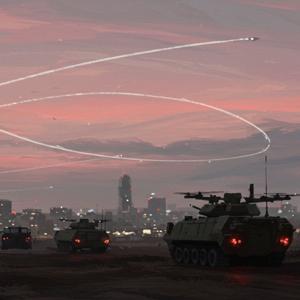

How do you measure the largest battle in human history — by bodies, by firepower, or by the consequences that change the map forever? In this episode of War Lab we tackle a terrifying but vital project: a “calculus of annihilation” that weighs troop density, casualty intensity, and strategic weight to rank the mega-engagements that defined eras and reshaped nations. We cut through propaganda, bad data, and the fog of statistics to ask the hard question: what does scale really mean — and what does it tell us about the future of war?
Listen as we test our framework against the great turning points of history: the urban hell of Stalingrad, the 872-day agony of Leningrad, Kursk’s armored maelstrom, the crushing blow of Operation Bagration, and the final furnace of Berlin. We rewind further — from Verdun and the Somme to ancient catastrophes like Changping and hydraulic ambushes at Salsu — to show how pre-industrial ambition can match industrial lethality. Then we zoom out to maritime and operational extremes — Leyte Gulf, Jutland, Kiev’s vast encirclement — and the Chinese civil war campaigns that rivaled World War II in scale and logistics.
This is more than history: it’s a primer for policymakers and security thinkers. If industrialization moved the metric from men to materiel, what replaces troop density in an age of algorithmic war? Is systemic collapse of an electrical grid or financial system the next “largest battle”? We close by mapping the moral and strategic lessons national leaders must learn if they hope to limit the next generation’s capacity for annihilation.
Tune in for a rigorous, evidence-driven episode that blends archival revision, operational analysis, and a hard look at how scale shapes strategy — and subscribe so you don’t miss the next deep dive from War Lab.
 View all episodes
 By CJH
How do you measure the largest battle in human history — by bodies, by firepower, or by the consequences that change the map forever? In this episode of War Lab we tackle a terrifying but vital project: a “calculus of annihilation” that weighs troop density, casualty intensity, and strategic weight to rank the mega-engagements that defined eras and reshaped nations. We cut through propaganda, bad data, and the fog of statistics to ask the hard question: what does scale really mean — and what does it tell us about the future of war?
Listen as we test our framework against the great turning points of history: the urban hell of Stalingrad, the 872-day agony of Leningrad, Kursk’s armored maelstrom, the crushing blow of Operation Bagration, and the final furnace of Berlin. We rewind further — from Verdun and the Somme to ancient catastrophes like Changping and hydraulic ambushes at Salsu — to show how pre-industrial ambition can match industrial lethality. Then we zoom out to maritime and operational extremes — Leyte Gulf, Jutland, Kiev’s vast encirclement — and the Chinese civil war campaigns that rivaled World War II in scale and logistics.
This is more than history: it’s a primer for policymakers and security thinkers. If industrialization moved the metric from men to materiel, what replaces troop density in an age of algorithmic war? Is systemic collapse of an electrical grid or financial system the next “largest battle”? We close by mapping the moral and strategic lessons national leaders must learn if they hope to limit the next generation’s capacity for annihilation.
Tune in for a rigorous, evidence-driven episode that blends archival revision, operational analysis, and a hard look at how scale shapes strategy — and subscribe so you don’t miss the next deep dive from War Lab.