
Sign up to save your podcasts
Or

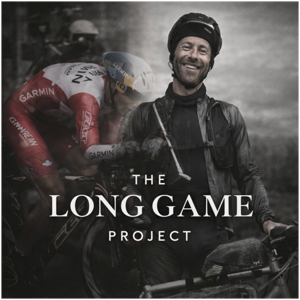

What does your body actually do during a long ride — and how do you find out?
In this episode, Svein sits down with performance physiologist Steve Neal, who traveled to Nelson, BC with his full metabolic cart setup to put the Svein through a comprehensive testing session ahead of the BC Epic 1000 — a 1,040 km ultra-endurance race.
This isn't a standard VO2 max test. Steve's protocol goes far deeper, measuring fat oxidation, carbohydrate crossover, ventilatory thresholds, muscle oxygen (via Moxy sensors), spirometry, and recovery response — all in a single session. The result? More actionable data than most world tour riders ever receive.
In this episode, we cover:
The headline result from today's test: fat max improved from 280 to 320 watts compared to the previous test — while the athlete is two years older. That's the kind of data that changes how you train.
Whether you're preparing for a 1,000 km bikepacking race or just trying to understand why long rides feel harder than they should, this episode gives you a framework for thinking about endurance performance that goes well beyond watts and heart rate.
Guest: Steve Neal, performance physiologist and metabolic testing specialist based in British Columbia. [email protected]
Svein Tuft
tuftcamps.com
@svein.tuft on instagram
 View all episodes
 By svein tuft
What does your body actually do during a long ride — and how do you find out?
In this episode, Svein sits down with performance physiologist Steve Neal, who traveled to Nelson, BC with his full metabolic cart setup to put the Svein through a comprehensive testing session ahead of the BC Epic 1000 — a 1,040 km ultra-endurance race.
This isn't a standard VO2 max test. Steve's protocol goes far deeper, measuring fat oxidation, carbohydrate crossover, ventilatory thresholds, muscle oxygen (via Moxy sensors), spirometry, and recovery response — all in a single session. The result? More actionable data than most world tour riders ever receive.
In this episode, we cover:
The headline result from today's test: fat max improved from 280 to 320 watts compared to the previous test — while the athlete is two years older. That's the kind of data that changes how you train.
Whether you're preparing for a 1,000 km bikepacking race or just trying to understand why long rides feel harder than they should, this episode gives you a framework for thinking about endurance performance that goes well beyond watts and heart rate.
Guest: Steve Neal, performance physiologist and metabolic testing specialist based in British Columbia. [email protected]
Svein Tuft
tuftcamps.com
@svein.tuft on instagram