
Sign up to save your podcasts
Or

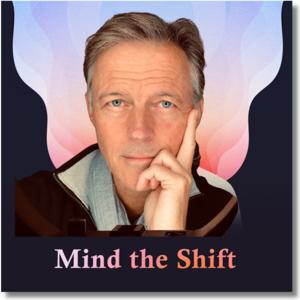


Professor Dean Radin is one of the world’s leading authorities on psychic phenomena. He is the chief scientist at IONS, the Institute of Noetic Sciences.
Dean’s personal website
Julia Mossbridge is a scientist in the true sense of the word, a curious and open-minded investigator and seeker. She has balanced beautifully on the perceived border between traditional science and the esoteric realms.
She has created two institutes, whereof one bears the intriguing name The Institute for Love and Time (TILT). It is about creating technologies that support wellbeing related to feeling unconditional love.
How can love and time go together?
“Both are powerful and healing to humans”, Julia says.
On a deeper level, she explains, people experience that when the boundaries of time are removed, the conditions of connection are also removed, which opens the door to unconditional love.
The way Julia describes the experience of time is somewhat at odds with the “live in the now” mantra. We can extend the self in time, she says. And by doing that we break down boundaries.
“It gives you a lot more chances to do good for yourself and the world. It doesn’t have to be all at once. We have all this time.”
“Folks say you can’t do anything about the past, and the future is all about potentialities, so you can only do something about it in the now. The reason this is so enticing is that we’re built to experience free will. So that’s how we’re gonna make a lot of money on self-help books”, Julia laughs.
“I think it’s a racket. I think it makes people look for control rather than take responsibility.”
In reality, we are not in control. Everything we experience has already happened. That has even been measured (the thought of doing something sudden arises after we’ve done it).
“To even come close to being in control, we must extend the definition of ‘I’. To really be in control we must extend it indefinitely to include the whole universe and everything that has happened and everything that is going to happen.”
The Iroquios have a word for this extension: the long body.
Julia Mossbridge has done extensive research on precognition, the intuitive knowledge about a future event. She uses a metaphor: An event that triggers precognition is like a stick in the stream of consciousness. The stick creates a wake, which is the slowly fading memory of the event after it has happened. But on the front end it also creates an area where the “arrow of time” is reversed.
“There's backpressure. The stream of consciousness ‘prepares’ itself to go around the stick.”
Precognition most commonly appears in dreams.
“The conscious mind is like our story of what is happening, but the unconscious mind really has access to all the incoming data from the universe”, Julia says.
She agrees with psychology pioneer William James that the brain is like a filter.
“When your brain is damaged, you're not changing consciousness, you're changing the capacity to receive it.”
She is also in agreement with the theories of cognitive psychologist Donald Hoffman, who describes physical reality as an interface, where living beings are “conscious agents”. If we were to look “under the hood” (which may be what enlightenment entails), we would see a completely different reality that doesn’t make sense in the physical world.
Mossbridge also delves into what AI does to us, and with us, and what we can do with AI.
“Human potential is going to explode with AI if we do it right. It can be a partner in our evolution. We are in this together.”
Julia’s bio:
Affiliate professor in the Dept. of Biophysics and Physics at University of San Diego
Senior consultant with Tangible IQ
Co-founder of TILT: The Institute for Love and Time
Founder of Mossbridge Institute
Author and co-author of multiple books and scientific articles related to time travel, artificial intelligence and unconditional love
PhD in Communication Sciences and Disorders (Northwestern University)
MA in Neuroscience (UC San Francisco)
BA in Neuroscience with highest honors (Oberlin College)
Julia on Linkedin
Julia on Medium
The Institute for Love and Time (TILT)
The Mossbridge Institute
Why are we so afraid to die, I ask afterlife expert, researcher, coach and writer Craig Hogan.
Craig's organization Seek Reality
The ancient Maya taught that consciousness is primary, and that matter is the manifestation of a thought, if you will, that arose in the all-encompassing primordial consciousness.
This knowledge is at the core of the work of Carl Johan Calleman. He is originally a trained biologist and chemist, but he has dedicated most of his career to studying the wisdom of the Maya and has written eight books on the subject.
There is a hidden meaning behind the mythical plumed serpent, theme of the Kukulcan pyramid in Chichen Itzá, Carl Johan explains:
Consciousness has expressed itself gradually in the universe – it has come in nine waves.
The first wave was what modern science calls the Big Bang.
This worldview means that evolution undoubtedly takes place, but it is purposeful, not random.
“Established science has been fighting this idea of a living universe for a long time”, says Carl Johan.
Why do the structures of the universe on all levels hold together? Because there is an underlying purpose, and because the universe is holographic: an atom is subordinate to a molecule, which is subordinate to a cell, which is subordinate to a whole organism, which is subordinate to a planet, a solar system, a galaxy and so on.
“Otherwise everything would be just floating around in a soup of nothingness.”
Evolution is quantized, as Calleman sees it. It takes quantum leaps, namely in the form of the Mayans’ nine waves, which in turn have peaks and valleys.
This entails that technically advanced civilizations could not have existed before the sixth wave, which was activated in 3,115 BCE.
“Yes, this is what you should expect if you adhere to the idea of a quantized evolution. It should not happen gradually.”
With every new wave, a new state of consciousness becomes downloadable. The human mind changes.
The peaks and valleys correspond to creative and destructive periods in humanity. The rise and the collapse of empires, for instance.
The ninth wave is the final one. And it is already here. Forget the trope around 21 December 2012 – the ninth wave was activated in March of 2011. That year was indeed eventful.
All the earlier waves are still running. Not every human and not every other organism will be fully influenced by the most recent wave. Some remain in a lower vibration. Myriad animals and plants that came into creation with earlier waves are still here.
But the ninth wave makes it possible to reach peak consciousness.
“That’s where we’re meant to go. That’s the highest frequency.”
This ascension, as some call it, will be easier for the younger generations, Carl Johan Calleman thinks.
“They will be able to create peace and unity, a form of heaven on Earth. But the time period until that happens will be very difficult. Maybe we will see a global dictatorship.”
Geophysicist Bob Schneiker stumbled upon the debate about the age of the Sphinx by chance. He got hooked, and the more he found out, the more convinced he became that Robert Schoch and other maverick researchers are wrong about the dating.
Climate catastrophism displays all the core features of a cultural entity, says Andy West, author of The Grip of Culture.
The word prodigy comes to mind when you learn about the young Polish independent researcher and writer Aleksander Czeszkiewicz.
When Lant Pritchett worked as a development economist (many years at the World Bank), he noted the approach was very place centric. It was about how to develop Senegal, India, Nigeria etc. Mobility was not a big deal.
Lant’s website
Mary Reed was a staunchly agnostic healthcare executive in Washington DC when she began venturing uncontrollably into mystical realms in the company of divine masters.
”I went into the body and the being of Jesus on the cross at the moment of crucifixion. As an agnostic, that was wildly out of the blue. But in that experience, which went on for three and a half hours, I got all of this information about humanity and what is happening in our world”, Mary says.
Deeply confused by events like this, she moved to the Himalayas and spent seven years coming to terms with her unexpected abilities.
The first ”voice in her head” (not really a voice) appeared in 2000. Since 2020 Mary also channels lessons from a collective of divine beings called Consensus, which presented itself to her.
Today Mary considers herself a mystic wisdom guide. Despite certain transformative events, arriving at that place has been a gradual process.
”It just keeps coming.”
It takes many years to integrate a spiritually transformative experience, which every NDEer can attest to.
Mary is the author of the award-winning memoir Unwitting Mystic, and the sweeping newest release, Humanity’s Epic Awakening.
In the latter, Mary explains that the awakening we are about to experience (and are already beginning to experience) will entail the end of many deeply rooted human ideas, such as hell.
”What we are waking up to is already here. We are just not aware of it yet. But we will be soon.”
The most central part of her message, she says, is that nothing should be rejected. The old paradigm of good and bad inherently always puts us in conflict.
”We label certain things bad and want them to go away. It’s like wanting one part of us to go away. No bad you see in the world today just happened. It’s being recycled.”
Mary saw this extremely clearly when she had a vision of a block sitting in her stomach. It was the collectively rejected block of pain of all of humanity.
”This pain does not want to be rejected, it wants to be embraced”, Mary says.
”Awakening isn’t intended to be a polite experience, it’s intended to be an honest experience.”
Mary’s website
Mary’s book Humanity’s Epic Awakening
Mary’s book Unwitting Mystic
This is part two of my conversation with Michael Le Flem about Atlantis. For basics about Michael and his book Visions of Atlantis, see show notes for part one (episode 114):
In this episode, we dive deeper into the details of what has been told and written about Atlantean science, technology and worldview, not least by the two unconventional sources Frederick Oliver and Edgar Cayce.
Experts have tried to debunk their methods – Cayces in particular – but it has proved to be impossible to explain how they know certain things.
We also talk about the often hollow arguments from skeptics.
Why do people find evidence for the lost civilization almost everywhere? Because Atlantis was said to have been an empire, not unlike the British empire.
Why hasn't any evidence of advanced technology been found? Because nothing advanced would survive the test of time – except stone structures, and those abound. The evidence is actually staring us in the face.
There are also fascinating similarities between languages on either side of the Atlantic.
Michael’s website
Michael’s book Visions of Atlantis
The Edgar Cayce organization AER
Frederick Oliver’s book A Dweller on Two Planets
From the publisher's feed

40 Listeners
60 Listeners
11 Listeners
140 Listeners

33 Listeners
13 Listeners
3 Listeners

6 Listeners

12 Listeners

3 Listeners
6 Listeners
3 Listeners

3 Listeners

3 Listeners

0 Listeners