
Sign up to save your podcasts
Or

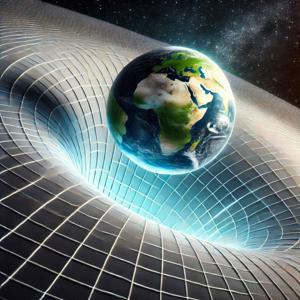

This episode investigates a profound "impossible timeline" in our cosmic history. While the first stars only began to shine roughly 200 million years after the Big Bang, astronomers have discovered massive quasars—engines of unimaginable brightness powered by supermassive black holes—existing just 670 million years after the dawn of time.
We examine the unique prediction of the heavy seed model—early galaxies where the central black hole is actually more massive than all the stars combined. With the James Webb Space Telescope (JWST) now peering back to the cosmic dawn, we are finally receiving answers to how these impossible giants were forged.
 View all episodes
 By TheTuringApp.com
5
33 ratings
This episode investigates a profound "impossible timeline" in our cosmic history. While the first stars only began to shine roughly 200 million years after the Big Bang, astronomers have discovered massive quasars—engines of unimaginable brightness powered by supermassive black holes—existing just 670 million years after the dawn of time.
We examine the unique prediction of the heavy seed model—early galaxies where the central black hole is actually more massive than all the stars combined. With the James Webb Space Telescope (JWST) now peering back to the cosmic dawn, we are finally receiving answers to how these impossible giants were forged.

840 Listeners

12,020 Listeners

47,493 Listeners

2,073 Listeners
69 Listeners
7 Listeners

1,752 Listeners