Insights:
Neural crest cells have a variety of fates, including teeth, skull bones, melanocytes, sympathetic ganglia, Schwaan cells and adrenal medulla.
Neural cells undergo induction, migration and differentiation to form the full variety of tissue they form. Induction depends on exposure to intermediate levels of bone morphogenic protein (BMP) and is inhibited by Wnt inhibitor Dkk1 in the prosencephalon. Induction results in changes in cadherin expression so neural crest progenitors can escape the neural tube.
Migration depends on molecular signals that either attract or repel the specific crest cells. Final differentiation depends on part on the signals from local environment (eg glucocorticoids in adrenal cortex, noradrenaline from notochord, Steel factor from dermatomyotome).
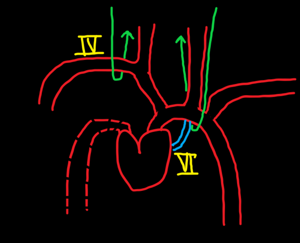
Knowing about neural crest helps to explains various syndromes. diGeorge is a pathology of neural crests of 3rd and 4th pharyngeal arch affecting the aortopulmonary septum, thymus/parathyroid gland and oropharynx.
Hirschsprung disease occurs in failure of migration of neural crest from sacral neural tube to distal colon and rectum, associated with RET mutations.
Neurofibromatosis is characterised by neoplasia/hyperplasia of neural crest cells, notably melanocytes and Schwaan cells of peripheral and cranial nerves. The molecular pathology is mutations in GTPase activating proteins that disrupt the G protein cycle, resulting in excess cellular proliferation.
References
Carlson, B. and Kantaputra, P. (2014). Human embryology and developmental biology. Philadelphia, Pa: Saunders/Elsevier.
Sadler, T. and Langman, J. (n.d.). Langman's medical embryology. 10th ed.



 View all episodes
