
Sign up to save your podcasts
Or


When the clock strikes midnight as we ring in a new year, our problems don't magically resolve. Everything from the previous year carries over and more piles on as we get back up and running.
But there's nothing wrong with setting our cynism aside to embrace a new year as a sort of clean slate. January is the perfect time to look at life from a different lens and maybe adopt a fresh perspective.
And perhaps that perspective is inside us, and 2026 is the year we start listening to ourselves and trusting our insticts.
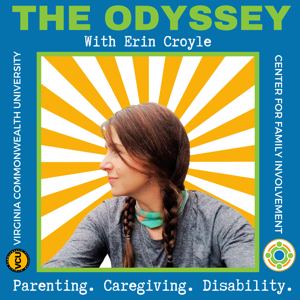
The Odyssey: Parenting. Caregiving. Disability.
The Center for Family Involvement at VCU School of Education's Partnership for People with Disabilities provides informational and emotional support to people with disabilities and their families. All of our services are free. We just want to help. We know how hard this can be because we're in it with you.
TRANSCRIPT:
01;00;13;29 - 01;00;15;20
Welcome to the Odyssey.
Parenting. Caregiving. Disability.
I'm Erin Croyle, the creator and host.
The Odyssey podcast explores
how our lives change. When a loved one has a disability.
I was lucky enough to head down this less traveled road when my first child was born with Down's Syndrome in 2010.
This podcast explores the triumphs and hardships we face.
We celebrate the joys of the odyssey of parenting, caregiving, and disability bring.
But we don't shy away from the tough stuff.
Since I'm all about keeping it real, I'm going to jump right in and say 2025 was probably the hardest year of my life to date.
And it's not like the clock strikes midnight on New Year's and poof, that all goes away.
Y'all, BLEEP is still hard as BLEEP. And that's not going to change any time soon.
But the one thing that I love about the New year is it can offer a fresh perspective if you allow it too.
And that's where I'll begin.
So about that fresh perspective.
I am a perfectionist. And it makes it really hard to be the creator, host, producer, editor, all the things of a podcast it's a lot of work. And, in addition to my work at the Center for Family Involvement; in 2025, I was lucky enough to join on, at ACT for Youth at Cornell University, working there as part of the communications unit.
And I absolutely love it. And it allows me to also work with families and professionals who are dealing with special health care needs and disabilities. It is a deep, deep passion of mine. I am a journalist by trade and so production volume, production value is really important to me. And so it's very hard to do a podcast and not edit the living daylights out of it for any little errors or mistakes that I make, especially right now when I'm just kind of spit-balling.
But like I mentioned in the intro, I've had a really hard year and that came with technical difficulties and life difficulties and just difficulties, y'all. And so that fresh perspective that I'm trying to welcome into my life is just to not try to be so perfect in all aspects of it. And so maybe this podcast will be a little messier and maybe they'll be a little more.
I don't know. More pauses. See, even there I am, I have I'm having a hard time because I didn't get the grammar right. But there'll be more pauses, more ums, more whatever. When I start bringing interviews back on, when I have the bandwidth to edit them, maybe I won't edit them so much. I have a few in the can that I need to do, but
I'm used to working with a team, and I'm a one man band here, and when you're juggling all of these things in life, you just can't do it all. And you certainly can't do it all perfectly. And I recognize and talk openly about disability and neurodiversity, and my own neurodiversity is got this perfectionism trap. And man, does it really, really, really, really get in the way of getting stuff done.
I don't know, I just had a notification and
in previous iterations I would have started over and I'm not going to start over. So if that got through on the audio, so be it. If my dog barks on the audio, so be it. I'm going to roll with it.
And I got to tell you, you know, speaking about that neurodiversity piece, man, I don't know.
I want to be honest, like the ADHD thing where, some tasks are hard and having three kids with neurodiversity and differing support needs, seeing the the avoidance of non-preferred tasks, as we like to call them. I have the technical difficulties on this podcast and trying to figure those out like it's it's this thing where, I don't know, you work around the clock, but your brain cannot focus on what you need to get done.
And I, I like to I think of it as like a chainsaw, like where, you know, or to push them out or whatever, where you have to pull the, not the lever, but the string thingamabob. Right. And it's been a long time since I've done it. But like, if you can't pull it hard enough, if your arms not long enough.
I mean, talk about not being tall or not being a man or whatever. Everything designed for someone other than who you are, right? It's really hard to start up. That's my brain. When I'm trying to do technical things. It just. It just it just gets so bored with, with the minutia of, of some aspects of understanding things. I just want to know how to do it so I can do it.
I don't want to go through the process of trying to figure it out. You know, it's similar with
many, many, many things like reading a book that you don't want to read. You just it's like pulling teeth to try to get it started and think about it.
But I spend a lot of time thinking about other things. And, part of me really wishes I could have went live with the podcast on Wednesday. So that whole caregiving piece, and a whole hard talking about heart and the things in life that are hard. So not only does my oldest have multiple disabilities, you know, he has down syndrome, he has ADHD as hearing loss.
I talk about these things openly. And Arlo, that's his name. He would too. So I want to be clear that, like, I try not to overshare too many things about his life, and I get I get consent from him
And I think it's important to share things because I'm able to advocate for him in a way that a lot of people can't.
And what's interesting about Arlo and my life and my work is that it's all interwoven. So I was a journalist living overseas when he was born, and I didn't know he was going to have Down's syndrome, and I've literally had to advocate for him since before he was born. He stopped moving when I was 39 weeks pregnant, and had we not gone to the hospital because of that,
even though I say this, because or at the time I remember saying, oh, you know, just drink cold water. I remember drinking cold water. And, the night before we went into the hospital and I was at a party with my friend Tommy. Hey, Uncle TomI, if you're listening,
I miss you,
I know, we were all there and talking and and I later took a sip of really cold water, or might have even been Coca-Cola, and I, like I felt a kick, but I had felt his movement slowing and something inside me was like,
But everyone said, oh no, that slows at that time, you know, oh, it's okay. You know, babies get bigger and so their movements slow. That morning we went to the the next morning and went to the E.R. and had we not Arlo would not be here today. Right. So that advocacy started by saying, okay, it wasn't moving enough.
So I'm going to listen to my own concerns and not everybody else telling me. And sure enough, an emergency C-section totally traumatic. And out he came. And he is an ICU for two weeks and I swear this week I was we were at the doctor and his his pulse ox rate has oxygen levels dropped while he was getting this treatment, and it's like PTSD.
It took me right back to his little head in the box, you know, with oxygen and just watching the machines and looking at the beeping, wondering if I'd ever be able to bring him home. And I know for a lot of caregivers, two weeks isn't that long. But man, it feels like forever when you just want to hold your kiddo, right?
And that that advocacy has continued. So when he was like two, you know, he started, he would get pneumonia and he'd be really, really sick. And I was just sharing with my colleague this week about this, like, no one said, like, hey, he shouldn't be getting pneumonia this often. It was my advocacy when I took him to the pulmonologist and or anyone that doesn't know a pulmonologist is a doctor that, studies respiratory and lungs.
Right. Took him to the pulmonologist and I said, hey, we're doing, like, two antibiotics and steroids at a time here. I don't want to keep treating this. How do we start preventing this? And it wasn't until I said that that someone said, oh, well, we can test his IgG levels, meaning they can test his immune system to see what his body is responding to and where things are at.
I had to ask for it. I didn't even know what I was asking for. I just had to present my son in a different way and ask a question that for some reason nobody was thinking. And sure enough, we found out. I can't even remember at this point. But you know, somewhere between the ages of two and four that he has immune system deficiencies, which are quite common when you have down syndrome, because having an extra copy of the 21st chromosome messes with your immune system.
There's a direct correlation we know from mapping the human genome about that. Right. And so that advocacy led to him getting these IVIg treatments and, you know, similar advocacy led to him getting hearing aids. And, you know, similar advocacy led him to playing sports and doing this and doing that. But the medical component has always been this different sort of thing, because as I found out this week, it's.
Much more rare. To have a kiddo with special healthcare needs at the level of some of us than we even realize. And I'm sharing this because I just some I spend so much time
driving to and from appointments with not just our but, you know, my other kids. I have three kids
and, you know, the whole soccer mom thing, you're in the car a lot.
And so my brain is always working, but I don't have a lot to show for it. I, I have written entire books in my head on these drives. I kid you not like, I have this fantasy one day of writing more but that's why I'm going to try to talk to y'all. But this spitballing kind of attitude and I hope that these ramblings make sense, as I think it's important to share this perspective, is this realization I had.
As I was driving to and from these appointments with with Arlo this week, is that I don't have an advanced degree. I don't have,
anything to show for my knowledge, but I'm surrounded by people who are doctors or have law degrees or have PhDs or have masters. I'm surrounded by brilliance and highly educated folks, and I also am educated in the school of hard knocks.
And I say that in a way that like, I'm not woe is me. I feel this level of privilege, part of the reason I went into journalism is one I had undiagnosed ADHD, and I think somewhere in my body I knew that I had an interest in everything. And so I loved the idea of being able to, pick a story and really doing a deep dive and then, the next day it's another another story and another story and just really getting to learn about the human experience.
I find it absolutely fascinating. also my background in communications has allowed me to take my passion for disability rights and advocacy and helping families and sharing knowledge and sharing information and taking my experiences and my collaborations and sharing that to help empower other people.
I think it's so important because I remember early on starting out really holding like my son's, medical team and this really high regard. And then it just I had a light bulb moment, not only with the pulmonologist at that point, but also, you know, later on with, or maybe earlier on with audiology. And it's honestly time and time again where you see that doctors only know what doctors know and honestly, even the professionals with other high advanced degrees, they only know what they know.
And I had a conversation with Arlo's doctor this week that just kind of really sent that home, because he's an amazingly what's the word I'm looking for?
He's just an honest straight shooter. When I asked him, listen, doctor. And I didn't ask for his permission to share his name, but man, would I love to give him a shout out.
But I was like, listen, explain to me my kiddos condition like, you know, about this, but how do you know about this? And we consulted with this other doctor. And how do you know her? Because I saw a team at Boston Children's that really shed some light on, This new blood condition he has is called chronic immune thrombocytopenia. It's apparently incredibly rare.
Right. And so his doctor that we saw on Wednesday where he's getting his new treatment, I was like, well, listen, here's the deal. I see. I work in hematology and oncology and pediatrics, and that's a pretty small specialty right then in and of itself. And then when you take the immune component, right, the immune system component that impacts hematology and oncology, it's even smaller.
And then when you take down syndrome. And immune system and hematology and oncology. Well really there's only a few places in the country and in the world where you know, you have doctors that see a concentration of pediatric patients with those combined things.
And so, the doctors who serve these pediatric patients, kids like my son, they know each other.
It's a small world. You know, you think about the small world and the six degrees of separation and all of that.
It is a small world. And so it was really cool that I get to not only know these doctors, but I like to think of Arlo and myself and the advocacy that we do on a medical front helps inform their work, too.
And he and I, this doctor and I shot the breeze to just about disability in general. And you know, the the notions of disability versus language versus person first, language versus identity first, and disability pride and all of the things It's a really unique experience that we have. Right?
I don't know, it's complicated because I think that the life that I live, and I think that the lives that many of us live when we have children. But then you also add the component of having children with disabilities, neurodiversity, complex medical needs. There's not a lot of time for much else in your life, right? Like I don't really do much other than work kids.
And then my advocacy work, like, I, I mean, maybe I could see friends once in a while, but in my free time, I like to, you know, I don't know, serve on my school board and, help other parents. And, if, if there's any time leftover after that, I sleep or I run. So. Yeah, but I don't mind it because then I get to have conversations with these amazing people, and I feel like we get to surround ourselves.
And if we can find joy and honesty and build relationships in those capacities, it enriches our lives and I guess I'm lucky enough to take that experience that I had with the doctor and share that here with others. And and again, because I'm trying this non perfection route, I'm not sure I'm making sense and I don't really plan to go back and overanalyze if it does. So apologies. Y'all can like shoot me DMs or whatever. And I can try to clear it up or do a follow up session, but that's, it is what it is.
And I think that a lot of us have that whether we're foster parents or we are talking to school teams or teachers, I think that we really need to recognize that, yes, we have professionals in our life, but our own expertise means something, and our life experiences.
It's not something that anybody else can inform on.
Your perspective is your perspective, and it's important. And your child is your child, and you usually know what's best for them.
it's it's interesting because I think about parenting and I think about the people in my life that are not affected by having a kid with higher needs.
And I think about these preconceived notions we have of all of it.
It's it's a fantasy world, being a kid, being a parent, being in a marriage, you know, even having a dog, like, it's all these preconceived pictures we have. And the truth is, we're dealt what we're dealt. And you have to learn to play with the cards that you're dealt. And, I don't know, I got a lot of curveballs thrown at me, and I'm just trying to figure out how to hit them out of the park.
But honestly, it's not really about winning, right? I don't know, hitting it out of the park. Maybe that goes back to that perfectionist piece, but. It's really about trusting your instincts and recognizing that even the professionals, even these people that we have in our circles, that are the experts. They're not the experts on your life.
I think about so often, early on in our life, one of the things I was so fixated on, because we have this medical complex of fixing our kids, you know, we want to fix the disability. We want them to conform to everything. I really wanted him to be able to communicate. And by communicate, I mean communicate.
Traditionally, words speak. there's amazing people in in the down syndrome community, like, my friend David Egan. Right. Amazing public speaker. And I just thought that I could give Arlo enough therapy where he would be able to communicate, like David or like, Frank Stevens
And I really worked hard. I had him enrolled in speech therapy and this therapy and that therapy. And so the point where I was just running myself ragged and Arlo's, little brother Emile was in the picture around that time, too, and he was like, I was interrupting a meal's naps to make sure Arlo got to therapy and just missing out on so much joy of parenting, because I thought that therapy was everything and it was important.
But I was lucky enough to have some professionals in my life then to remind me and help me see the forest for the trees. And one of them, was this amazing speech language pathologist. Her name is Molly Wallace. And she and I were talking about, this program coming up. I'm imagining it still exists.
There's a program called Talk Tools and a speech therapist named Sarah Rosenthal Johnson, who I like to call SR.J. I asked Molly about her. I'm like, so, should I do this? There was, the down syndrome Association was sending out emails, and it was like $800 to have a session with her. And if we can get enough families, we might be able to get a a price and knock it down to like 750 or something like that, like $800 to spend a few hours with someone who apparently is a guru of helping kids with Down's syndrome.
Talk by using these tools that can help, with muscle and motor and all of these things in the kid's mouth and things they can chew on, and all of this stuff. And it's like, Molly,
I don't think I was working at the time or I, you know, I've never because of the whole disability tax.
Right. It's not like it's easy for the primary caregiver to have a full time job and make a lot of money. So it's like it's always a struggle. And so $800 is a lot honestly for anybody. Right. And this was 15 years ago or something like that.
And Molly was like, listen, I use talk tools, but I also just use a little bit of everything because there's no magic formula for anybody.
And I've thought about that time and time again since, there's no one guru for any thing at all. Right. Nothing. So not for our kids with disabilities. there's no guru who can fix anything. You know, there's no one book. There's no one. This there's no one therapists. There's no one strategy. My gosh, if there were one strategy, I would have far fewer gray hairs from our elopement or, you know, my other kiddos refusal to do homework. It's just there's nothing. Yeah. You can you can use the whole toolbox of behavioral strategies. And sometimes it's just a matter of your kid getting old enough to be able to handle it, or finding the right medication mix for their brain to be able to do it.
Or it might not just be possible. And I'm not saying possible. Like I hate taking that out of the equation because I don't believe that things aren't possible. But you know what? Sometimes they look different from what, quote unquote able bodied people think is possible. Right? That's why we have accommodations and modifications. That's why we have the Ada, because sometimes what we or what non-disabled folks see is what we should do is really just ridiculous conformity that we need to rethink how we how we handle it.
But I mean, those gurus too, they don't just apply to the disability world. I think about even some of the stuff that I've fallen for. I think I even referenced Mel Robbins and and and her let them theory like, yeah let them maybe that's a cool idea for a couple things in your life, but an overall overarching theme for everything you do is just let them know sometimes them and do what you need to do.
I'm sorry, but no, there is no one anything for anybody. It's just not how it works. We we learn by listening. We learn by trial and error. We learn by trying. Let them seeing. Maybe it works with one thing and it doesn't with another, and trying something else.
So how do I land this plane on what feels like an ever winding path on my in perfect podcast?
Because maybe end with some sage advice from an anti-guru, which is, question everything.
Even yourself.
Ask questions. Reframe questions. Think about things differently. And and stay on top of stuff. I say this again from experience. I thought that had the right team of specialists. And then I realized, no, you need to explore more. You need to dig deeper. Another big medical component that I can't end this podcast without saying, and I probably should have said sooner, is really stay on top of appointments.
And even if. It seems like you're seeing a specialist every year or every other year,
There are so many times where I took Arlo to see specialists, and I left thinking, what was that for? What was that for? Because when you have complex medical needs, you have to stay on top of more blood tests and see different doctors. It's not just a well visit. It's a check in with the EMT, check in with pulmonology, a check in with geneticist or a developmental pediatrician.
And you know, if everything's going okay, it doesn't feel like a big deal. You get the bloodwork every year and you're done or whatever. Those, annual milestone, developmental whatever tests are and you're done. But that complacency can be very dangerous.
Every time in this journey where I have gotten comfortable or I thought, oh my gosh, maybe this is where things will get easier.
I got kneecapped and it got harder. Not me personally, but
something my poor kid actually got some other diagnosis or you know, when he was officially diagnosed with hearing loss,
I had to learn a whole new jargon and vernacular and then finally wrapped my head around that. And then there was a heart issue that came up.
And then, this, this blood disorder that is now entered the picture. But thankfully, because I kept going to those appointments, that felt pointless. We were never a new patient anywhere. We were always able to be referred quite quickly to get all of the help that he needed. And I think that it's important not to feel complacent and not to think, oh, come on, I can just let this go because you can't.
And that's my unsolicited advice. Just don't just stay on top of things, because one day you will likely need it. And if you don't, that's great. Then it's just an inconvenience every year or every other year. But I still remember, and one of the reasons I feel so strongly about this is not even my own kiddo. It was, a friend of ours back in the DC area who had an adult child with down syndrome, who was going through a mental health crisis and because he hadn't had many health issues, they didn't really have things in place.
And I just mentioned to, oh, well, Kennedy Krieger, which is an amazing institution in Baltimore, part of Johns Hopkins, really great facilities for all sorts of complex medical needs.
There was a patient there at the time and I mentioned this the the parent called and because he was a new patient and because he was an adult, I believe the waiting list was two years.
This person was in crisis and couldn't get the help he needed from the specialist he needed for two years. That's the thing with complex medical needs. Because they're complicated, because the the sort of perfect storm of, of uniqueness combines into disorders that it takes,
a very small team of specialists to are tapped into a very small national or even worldwide network.
You really never want to lapse on treatment. You always want to have connections just in case.
And so that minor inconvenience that is totally worth the trade off.
So I'll leave you with that unsolicited advice. And then just to like, leave with a little joy.
Since these thoughts came to me on one of my many, many road trips, which, again, like looking for the joy in life. Arlo is so much fun to travel with.
And since so much of this was going through my head, like I said on that road trip that we had, I'm curious what road trip songs you like to listen to.
Arlo and I love to jam to all sorts of things, and thankfully, his tastes have expanded from Gangnam Style, and
Or the Lego Movie soundtrack. Oh my god, that song really does get stuck inside your head if anyone knows what I'm talking about.
We listened to everything from Radiohead and of course, to Kendrick Lamar to oh, I don't even know. But one of the songs that popped on that I just randomly wanted to share was Just Breathe. And interestingly, the original is by Pearl jam, but Willie Nelson has a cover of it that is so, so, so good.
What are you listening to these days? So next time, next week when I'm on the road again with Arlo, I would love to know if there's something I should check out. Although I'll probably just listen to the same playlist because I like what I like
it is what it is.
Anyway.
Thanks for listening. Please be sure to share with review, subscribe, like, follow or whatever it is you need to get a ping when the next episode drops.
This is the Odyssey: parenting, caregiving, disability.
I'm Erin Croyle.
We'll talk soon.
 View all episodes
 By Erin Croyle
When the clock strikes midnight as we ring in a new year, our problems don't magically resolve. Everything from the previous year carries over and more piles on as we get back up and running.
But there's nothing wrong with setting our cynism aside to embrace a new year as a sort of clean slate. January is the perfect time to look at life from a different lens and maybe adopt a fresh perspective.
And perhaps that perspective is inside us, and 2026 is the year we start listening to ourselves and trusting our insticts.
The Odyssey: Parenting. Caregiving. Disability.
The Center for Family Involvement at VCU School of Education's Partnership for People with Disabilities provides informational and emotional support to people with disabilities and their families. All of our services are free. We just want to help. We know how hard this can be because we're in it with you.
TRANSCRIPT:
01;00;13;29 - 01;00;15;20
Welcome to the Odyssey.
Parenting. Caregiving. Disability.
I'm Erin Croyle, the creator and host.
The Odyssey podcast explores
how our lives change. When a loved one has a disability.
I was lucky enough to head down this less traveled road when my first child was born with Down's Syndrome in 2010.
This podcast explores the triumphs and hardships we face.
We celebrate the joys of the odyssey of parenting, caregiving, and disability bring.
But we don't shy away from the tough stuff.
Since I'm all about keeping it real, I'm going to jump right in and say 2025 was probably the hardest year of my life to date.
And it's not like the clock strikes midnight on New Year's and poof, that all goes away.
Y'all, BLEEP is still hard as BLEEP. And that's not going to change any time soon.
But the one thing that I love about the New year is it can offer a fresh perspective if you allow it too.
And that's where I'll begin.
So about that fresh perspective.
I am a perfectionist. And it makes it really hard to be the creator, host, producer, editor, all the things of a podcast it's a lot of work. And, in addition to my work at the Center for Family Involvement; in 2025, I was lucky enough to join on, at ACT for Youth at Cornell University, working there as part of the communications unit.
And I absolutely love it. And it allows me to also work with families and professionals who are dealing with special health care needs and disabilities. It is a deep, deep passion of mine. I am a journalist by trade and so production volume, production value is really important to me. And so it's very hard to do a podcast and not edit the living daylights out of it for any little errors or mistakes that I make, especially right now when I'm just kind of spit-balling.
But like I mentioned in the intro, I've had a really hard year and that came with technical difficulties and life difficulties and just difficulties, y'all. And so that fresh perspective that I'm trying to welcome into my life is just to not try to be so perfect in all aspects of it. And so maybe this podcast will be a little messier and maybe they'll be a little more.
I don't know. More pauses. See, even there I am, I have I'm having a hard time because I didn't get the grammar right. But there'll be more pauses, more ums, more whatever. When I start bringing interviews back on, when I have the bandwidth to edit them, maybe I won't edit them so much. I have a few in the can that I need to do, but
I'm used to working with a team, and I'm a one man band here, and when you're juggling all of these things in life, you just can't do it all. And you certainly can't do it all perfectly. And I recognize and talk openly about disability and neurodiversity, and my own neurodiversity is got this perfectionism trap. And man, does it really, really, really, really get in the way of getting stuff done.
I don't know, I just had a notification and
in previous iterations I would have started over and I'm not going to start over. So if that got through on the audio, so be it. If my dog barks on the audio, so be it. I'm going to roll with it.
And I got to tell you, you know, speaking about that neurodiversity piece, man, I don't know.
I want to be honest, like the ADHD thing where, some tasks are hard and having three kids with neurodiversity and differing support needs, seeing the the avoidance of non-preferred tasks, as we like to call them. I have the technical difficulties on this podcast and trying to figure those out like it's it's this thing where, I don't know, you work around the clock, but your brain cannot focus on what you need to get done.
And I, I like to I think of it as like a chainsaw, like where, you know, or to push them out or whatever, where you have to pull the, not the lever, but the string thingamabob. Right. And it's been a long time since I've done it. But like, if you can't pull it hard enough, if your arms not long enough.
I mean, talk about not being tall or not being a man or whatever. Everything designed for someone other than who you are, right? It's really hard to start up. That's my brain. When I'm trying to do technical things. It just. It just it just gets so bored with, with the minutia of, of some aspects of understanding things. I just want to know how to do it so I can do it.
I don't want to go through the process of trying to figure it out. You know, it's similar with
many, many, many things like reading a book that you don't want to read. You just it's like pulling teeth to try to get it started and think about it.
But I spend a lot of time thinking about other things. And, part of me really wishes I could have went live with the podcast on Wednesday. So that whole caregiving piece, and a whole hard talking about heart and the things in life that are hard. So not only does my oldest have multiple disabilities, you know, he has down syndrome, he has ADHD as hearing loss.
I talk about these things openly. And Arlo, that's his name. He would too. So I want to be clear that, like, I try not to overshare too many things about his life, and I get I get consent from him
And I think it's important to share things because I'm able to advocate for him in a way that a lot of people can't.
And what's interesting about Arlo and my life and my work is that it's all interwoven. So I was a journalist living overseas when he was born, and I didn't know he was going to have Down's syndrome, and I've literally had to advocate for him since before he was born. He stopped moving when I was 39 weeks pregnant, and had we not gone to the hospital because of that,
even though I say this, because or at the time I remember saying, oh, you know, just drink cold water. I remember drinking cold water. And, the night before we went into the hospital and I was at a party with my friend Tommy. Hey, Uncle TomI, if you're listening,
I miss you,
I know, we were all there and talking and and I later took a sip of really cold water, or might have even been Coca-Cola, and I, like I felt a kick, but I had felt his movement slowing and something inside me was like,
But everyone said, oh no, that slows at that time, you know, oh, it's okay. You know, babies get bigger and so their movements slow. That morning we went to the the next morning and went to the E.R. and had we not Arlo would not be here today. Right. So that advocacy started by saying, okay, it wasn't moving enough.
So I'm going to listen to my own concerns and not everybody else telling me. And sure enough, an emergency C-section totally traumatic. And out he came. And he is an ICU for two weeks and I swear this week I was we were at the doctor and his his pulse ox rate has oxygen levels dropped while he was getting this treatment, and it's like PTSD.
It took me right back to his little head in the box, you know, with oxygen and just watching the machines and looking at the beeping, wondering if I'd ever be able to bring him home. And I know for a lot of caregivers, two weeks isn't that long. But man, it feels like forever when you just want to hold your kiddo, right?
And that that advocacy has continued. So when he was like two, you know, he started, he would get pneumonia and he'd be really, really sick. And I was just sharing with my colleague this week about this, like, no one said, like, hey, he shouldn't be getting pneumonia this often. It was my advocacy when I took him to the pulmonologist and or anyone that doesn't know a pulmonologist is a doctor that, studies respiratory and lungs.
Right. Took him to the pulmonologist and I said, hey, we're doing, like, two antibiotics and steroids at a time here. I don't want to keep treating this. How do we start preventing this? And it wasn't until I said that that someone said, oh, well, we can test his IgG levels, meaning they can test his immune system to see what his body is responding to and where things are at.
I had to ask for it. I didn't even know what I was asking for. I just had to present my son in a different way and ask a question that for some reason nobody was thinking. And sure enough, we found out. I can't even remember at this point. But you know, somewhere between the ages of two and four that he has immune system deficiencies, which are quite common when you have down syndrome, because having an extra copy of the 21st chromosome messes with your immune system.
There's a direct correlation we know from mapping the human genome about that. Right. And so that advocacy led to him getting these IVIg treatments and, you know, similar advocacy led to him getting hearing aids. And, you know, similar advocacy led him to playing sports and doing this and doing that. But the medical component has always been this different sort of thing, because as I found out this week, it's.
Much more rare. To have a kiddo with special healthcare needs at the level of some of us than we even realize. And I'm sharing this because I just some I spend so much time
driving to and from appointments with not just our but, you know, my other kids. I have three kids
and, you know, the whole soccer mom thing, you're in the car a lot.
And so my brain is always working, but I don't have a lot to show for it. I, I have written entire books in my head on these drives. I kid you not like, I have this fantasy one day of writing more but that's why I'm going to try to talk to y'all. But this spitballing kind of attitude and I hope that these ramblings make sense, as I think it's important to share this perspective, is this realization I had.
As I was driving to and from these appointments with with Arlo this week, is that I don't have an advanced degree. I don't have,
anything to show for my knowledge, but I'm surrounded by people who are doctors or have law degrees or have PhDs or have masters. I'm surrounded by brilliance and highly educated folks, and I also am educated in the school of hard knocks.
And I say that in a way that like, I'm not woe is me. I feel this level of privilege, part of the reason I went into journalism is one I had undiagnosed ADHD, and I think somewhere in my body I knew that I had an interest in everything. And so I loved the idea of being able to, pick a story and really doing a deep dive and then, the next day it's another another story and another story and just really getting to learn about the human experience.
I find it absolutely fascinating. also my background in communications has allowed me to take my passion for disability rights and advocacy and helping families and sharing knowledge and sharing information and taking my experiences and my collaborations and sharing that to help empower other people.
I think it's so important because I remember early on starting out really holding like my son's, medical team and this really high regard. And then it just I had a light bulb moment, not only with the pulmonologist at that point, but also, you know, later on with, or maybe earlier on with audiology. And it's honestly time and time again where you see that doctors only know what doctors know and honestly, even the professionals with other high advanced degrees, they only know what they know.
And I had a conversation with Arlo's doctor this week that just kind of really sent that home, because he's an amazingly what's the word I'm looking for?
He's just an honest straight shooter. When I asked him, listen, doctor. And I didn't ask for his permission to share his name, but man, would I love to give him a shout out.
But I was like, listen, explain to me my kiddos condition like, you know, about this, but how do you know about this? And we consulted with this other doctor. And how do you know her? Because I saw a team at Boston Children's that really shed some light on, This new blood condition he has is called chronic immune thrombocytopenia. It's apparently incredibly rare.
Right. And so his doctor that we saw on Wednesday where he's getting his new treatment, I was like, well, listen, here's the deal. I see. I work in hematology and oncology and pediatrics, and that's a pretty small specialty right then in and of itself. And then when you take the immune component, right, the immune system component that impacts hematology and oncology, it's even smaller.
And then when you take down syndrome. And immune system and hematology and oncology. Well really there's only a few places in the country and in the world where you know, you have doctors that see a concentration of pediatric patients with those combined things.
And so, the doctors who serve these pediatric patients, kids like my son, they know each other.
It's a small world. You know, you think about the small world and the six degrees of separation and all of that.
It is a small world. And so it was really cool that I get to not only know these doctors, but I like to think of Arlo and myself and the advocacy that we do on a medical front helps inform their work, too.
And he and I, this doctor and I shot the breeze to just about disability in general. And you know, the the notions of disability versus language versus person first, language versus identity first, and disability pride and all of the things It's a really unique experience that we have. Right?
I don't know, it's complicated because I think that the life that I live, and I think that the lives that many of us live when we have children. But then you also add the component of having children with disabilities, neurodiversity, complex medical needs. There's not a lot of time for much else in your life, right? Like I don't really do much other than work kids.
And then my advocacy work, like, I, I mean, maybe I could see friends once in a while, but in my free time, I like to, you know, I don't know, serve on my school board and, help other parents. And, if, if there's any time leftover after that, I sleep or I run. So. Yeah, but I don't mind it because then I get to have conversations with these amazing people, and I feel like we get to surround ourselves.
And if we can find joy and honesty and build relationships in those capacities, it enriches our lives and I guess I'm lucky enough to take that experience that I had with the doctor and share that here with others. And and again, because I'm trying this non perfection route, I'm not sure I'm making sense and I don't really plan to go back and overanalyze if it does. So apologies. Y'all can like shoot me DMs or whatever. And I can try to clear it up or do a follow up session, but that's, it is what it is.
And I think that a lot of us have that whether we're foster parents or we are talking to school teams or teachers, I think that we really need to recognize that, yes, we have professionals in our life, but our own expertise means something, and our life experiences.
It's not something that anybody else can inform on.
Your perspective is your perspective, and it's important. And your child is your child, and you usually know what's best for them.
it's it's interesting because I think about parenting and I think about the people in my life that are not affected by having a kid with higher needs.
And I think about these preconceived notions we have of all of it.
It's it's a fantasy world, being a kid, being a parent, being in a marriage, you know, even having a dog, like, it's all these preconceived pictures we have. And the truth is, we're dealt what we're dealt. And you have to learn to play with the cards that you're dealt. And, I don't know, I got a lot of curveballs thrown at me, and I'm just trying to figure out how to hit them out of the park.
But honestly, it's not really about winning, right? I don't know, hitting it out of the park. Maybe that goes back to that perfectionist piece, but. It's really about trusting your instincts and recognizing that even the professionals, even these people that we have in our circles, that are the experts. They're not the experts on your life.
I think about so often, early on in our life, one of the things I was so fixated on, because we have this medical complex of fixing our kids, you know, we want to fix the disability. We want them to conform to everything. I really wanted him to be able to communicate. And by communicate, I mean communicate.
Traditionally, words speak. there's amazing people in in the down syndrome community, like, my friend David Egan. Right. Amazing public speaker. And I just thought that I could give Arlo enough therapy where he would be able to communicate, like David or like, Frank Stevens
And I really worked hard. I had him enrolled in speech therapy and this therapy and that therapy. And so the point where I was just running myself ragged and Arlo's, little brother Emile was in the picture around that time, too, and he was like, I was interrupting a meal's naps to make sure Arlo got to therapy and just missing out on so much joy of parenting, because I thought that therapy was everything and it was important.
But I was lucky enough to have some professionals in my life then to remind me and help me see the forest for the trees. And one of them, was this amazing speech language pathologist. Her name is Molly Wallace. And she and I were talking about, this program coming up. I'm imagining it still exists.
There's a program called Talk Tools and a speech therapist named Sarah Rosenthal Johnson, who I like to call SR.J. I asked Molly about her. I'm like, so, should I do this? There was, the down syndrome Association was sending out emails, and it was like $800 to have a session with her. And if we can get enough families, we might be able to get a a price and knock it down to like 750 or something like that, like $800 to spend a few hours with someone who apparently is a guru of helping kids with Down's syndrome.
Talk by using these tools that can help, with muscle and motor and all of these things in the kid's mouth and things they can chew on, and all of this stuff. And it's like, Molly,
I don't think I was working at the time or I, you know, I've never because of the whole disability tax.
Right. It's not like it's easy for the primary caregiver to have a full time job and make a lot of money. So it's like it's always a struggle. And so $800 is a lot honestly for anybody. Right. And this was 15 years ago or something like that.
And Molly was like, listen, I use talk tools, but I also just use a little bit of everything because there's no magic formula for anybody.
And I've thought about that time and time again since, there's no one guru for any thing at all. Right. Nothing. So not for our kids with disabilities. there's no guru who can fix anything. You know, there's no one book. There's no one. This there's no one therapists. There's no one strategy. My gosh, if there were one strategy, I would have far fewer gray hairs from our elopement or, you know, my other kiddos refusal to do homework. It's just there's nothing. Yeah. You can you can use the whole toolbox of behavioral strategies. And sometimes it's just a matter of your kid getting old enough to be able to handle it, or finding the right medication mix for their brain to be able to do it.
Or it might not just be possible. And I'm not saying possible. Like I hate taking that out of the equation because I don't believe that things aren't possible. But you know what? Sometimes they look different from what, quote unquote able bodied people think is possible. Right? That's why we have accommodations and modifications. That's why we have the Ada, because sometimes what we or what non-disabled folks see is what we should do is really just ridiculous conformity that we need to rethink how we how we handle it.
But I mean, those gurus too, they don't just apply to the disability world. I think about even some of the stuff that I've fallen for. I think I even referenced Mel Robbins and and and her let them theory like, yeah let them maybe that's a cool idea for a couple things in your life, but an overall overarching theme for everything you do is just let them know sometimes them and do what you need to do.
I'm sorry, but no, there is no one anything for anybody. It's just not how it works. We we learn by listening. We learn by trial and error. We learn by trying. Let them seeing. Maybe it works with one thing and it doesn't with another, and trying something else.
So how do I land this plane on what feels like an ever winding path on my in perfect podcast?
Because maybe end with some sage advice from an anti-guru, which is, question everything.
Even yourself.
Ask questions. Reframe questions. Think about things differently. And and stay on top of stuff. I say this again from experience. I thought that had the right team of specialists. And then I realized, no, you need to explore more. You need to dig deeper. Another big medical component that I can't end this podcast without saying, and I probably should have said sooner, is really stay on top of appointments.
And even if. It seems like you're seeing a specialist every year or every other year,
There are so many times where I took Arlo to see specialists, and I left thinking, what was that for? What was that for? Because when you have complex medical needs, you have to stay on top of more blood tests and see different doctors. It's not just a well visit. It's a check in with the EMT, check in with pulmonology, a check in with geneticist or a developmental pediatrician.
And you know, if everything's going okay, it doesn't feel like a big deal. You get the bloodwork every year and you're done or whatever. Those, annual milestone, developmental whatever tests are and you're done. But that complacency can be very dangerous.
Every time in this journey where I have gotten comfortable or I thought, oh my gosh, maybe this is where things will get easier.
I got kneecapped and it got harder. Not me personally, but
something my poor kid actually got some other diagnosis or you know, when he was officially diagnosed with hearing loss,
I had to learn a whole new jargon and vernacular and then finally wrapped my head around that. And then there was a heart issue that came up.
And then, this, this blood disorder that is now entered the picture. But thankfully, because I kept going to those appointments, that felt pointless. We were never a new patient anywhere. We were always able to be referred quite quickly to get all of the help that he needed. And I think that it's important not to feel complacent and not to think, oh, come on, I can just let this go because you can't.
And that's my unsolicited advice. Just don't just stay on top of things, because one day you will likely need it. And if you don't, that's great. Then it's just an inconvenience every year or every other year. But I still remember, and one of the reasons I feel so strongly about this is not even my own kiddo. It was, a friend of ours back in the DC area who had an adult child with down syndrome, who was going through a mental health crisis and because he hadn't had many health issues, they didn't really have things in place.
And I just mentioned to, oh, well, Kennedy Krieger, which is an amazing institution in Baltimore, part of Johns Hopkins, really great facilities for all sorts of complex medical needs.
There was a patient there at the time and I mentioned this the the parent called and because he was a new patient and because he was an adult, I believe the waiting list was two years.
This person was in crisis and couldn't get the help he needed from the specialist he needed for two years. That's the thing with complex medical needs. Because they're complicated, because the the sort of perfect storm of, of uniqueness combines into disorders that it takes,
a very small team of specialists to are tapped into a very small national or even worldwide network.
You really never want to lapse on treatment. You always want to have connections just in case.
And so that minor inconvenience that is totally worth the trade off.
So I'll leave you with that unsolicited advice. And then just to like, leave with a little joy.
Since these thoughts came to me on one of my many, many road trips, which, again, like looking for the joy in life. Arlo is so much fun to travel with.
And since so much of this was going through my head, like I said on that road trip that we had, I'm curious what road trip songs you like to listen to.
Arlo and I love to jam to all sorts of things, and thankfully, his tastes have expanded from Gangnam Style, and
Or the Lego Movie soundtrack. Oh my god, that song really does get stuck inside your head if anyone knows what I'm talking about.
We listened to everything from Radiohead and of course, to Kendrick Lamar to oh, I don't even know. But one of the songs that popped on that I just randomly wanted to share was Just Breathe. And interestingly, the original is by Pearl jam, but Willie Nelson has a cover of it that is so, so, so good.
What are you listening to these days? So next time, next week when I'm on the road again with Arlo, I would love to know if there's something I should check out. Although I'll probably just listen to the same playlist because I like what I like
it is what it is.
Anyway.
Thanks for listening. Please be sure to share with review, subscribe, like, follow or whatever it is you need to get a ping when the next episode drops.
This is the Odyssey: parenting, caregiving, disability.
I'm Erin Croyle.
We'll talk soon.