This is your Beijing Bytes: US-China Tech War Updates podcast.
Hey listeners, Ting here. Buckle up because the US-China tech war just entered overdrive, and the past couple weeks have been absolutely bonkers.
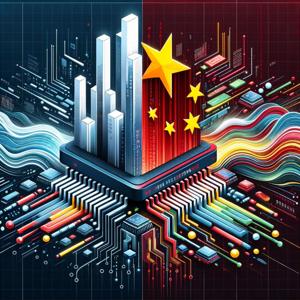
Let's start with the chip drama because it's wild. Trump just flipped the script entirely. Back in the Sullivan Tech Doctrine days, the Biden administration wanted to stay miles ahead of China in semiconductors through strict export controls. Then Trump comes in and decides chips are basically trading cards. He's now allowing Nvidia to sell H200 processors to China, their second most powerful AI chips, for a 25 percent revenue cut. According to Firstpost, this marks a complete reset from the strategic denial approach. Nvidia's CEO Jensen Huang was basically like, "Export controls failed anyway," so now we're doing billion-dollar deals instead of firewalls.
But here's where it gets spicy. Anthropic's Dario Amodei is losing his mind over this, calling it a crazy decision. He argues that semiconductors are literally one of the few advantages US AI companies still have, and we're just handing them over for a quick buck. Meanwhile, China's already proving they don't even need us. DeepSeek just released an AI model that's only months behind US capabilities, not years. According to reporting from Jesse Marks and others analyzing the shift, Trump's treating advanced semiconductors as negotiable commodities rather than national security crown jewels. That's the real story.
Now flip to the cybersecurity side, and it's equally intense. According to Deutsche Welle Chinese Edition, Beijing just ordered domestic companies to stop using American and Israeli cybersecurity software from Palo Alto Networks, Broadcom, Fortinet, and Check Point. They're claiming national security concerns about data collection, but experts say it's mostly performative since China barely lets Western cyber products in anyway. Meanwhile, the VOLTZITE threat group linked to China's Volt Typhoon has been compromised small-office routers at US electric utilities and telecom providers, establishing relay networks and stealing critical infrastructure diagrams. According to FBI Director Christopher Wray, this isn't just reconnaissance anymore. It's preparation for destructive attacks during a major crisis.
And get this, according to the Foundation for Defense of Democracies, China may have actually accessed US supercomputing resources through academic institutions, potentially fueling their nuclear weapons research. The National University of Defense and Technology gained access to NSF systems, directly undercutting US export controls.
The strategic implications are massive. According to analysis from the State Department's new Pax Silica initiative announced in December, the US is trying to build an insulated silicon ecosystem with Japan, South Korea, Singapore, and others. But here's the problem nobody wants to admit. China controls the rare earth minerals and critical material
This content was created in partnership and with the help of Artificial Intelligence AI.



 View all episodes
