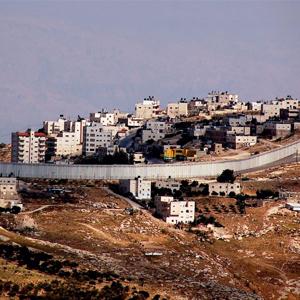
Occupied Thoughts

Occupied Thoughts

By Occupied Thoughts by FMEPNews
Download on the App Store

Occupied Thoughts episodes

  • Barred from Knesset Elections: Sami Abu Shehadeh on the State of Israeli "Democracy"
    Barred from Knesset Elections: Sami Abu Shehadeh on the State of Israeli "Democracy"
    In this episode of Occupied Thoughts, FMEP Fellow Peter Beinart speaks with Sami Abu Shehadeh, the leader of the Balad Party who was recently told by the Supreme Court that he would be deemed a terrorist and banned from running in the upcoming Knesset elections. Hear Sami explain why he decided to resign from Knesset, and what he makes of Israeli "democracy."
    For resources and bios, please visit: https://fmep.org/resource/barred-from-knesset-elections-sami-abu-shehadeh-on-the-state-of-israeli-democracy
    1 hr 4 min
  • Why Settler Violence is Out of Control
    In this episode of Occupied Thoughts, FMEP Fellow Peter Beinart speaks with journalist Dalia Hatuqa about what's really going on in the West Bank. They discuss the settlers who are moving into new areas of the West Bank, why the Palestinian Authority doesn’t try to stop settler violence, and how the Israel army and the settlers have converged. 
    Dalia Hatuqa is a multimedia journalist specializing in Israeli/Palestinian affairs, and regional Middle East issues as they pertain to business and economics, culture, art and U.S. foreign policy. She also writes about religion, minorities and immigration in the U.S. You can read her work in major outlets around the world, including the Washington Post, Foreign Policy, Foreign Affairs, NPR, BBC, the New York Review of Books, The Economist, Time, the Nation, the Intercept, Jewish Currents, the Guardian, and Al Jazeera, to name just a few. You can see her full bio and a compendium of her work at https://www.daliahatuqa.com
    Peter Beinart is a Non-Resident Fellow at the Foundation for Middle East Peace. He is also a Professor of Journalism and Political Science at the City University of New York, a Contributing opinion writer at the New York Times, an Editor-at-Large at Jewish Currents, and an MSNOW Political Commentator. His newest book (published 2025) is Being Jewish After the Destruction of Gaza: A Reckoning. He publishes regularly on https://peterbeinart.substack.com/.
    Original music by Jalal Yaquoub.

    43 min
  • Reviewing NAZA - a conversation with Mahmoud Mushtaha and Muhammad Shehada
    In this episode of Occupied Thoughts, FMEP Fellow Ahmed Moor speaks with journalist & researcher Mahmoud Mushtaha and researcher & writer Muhammad Shehada about the new Israeli documentary NAZA. All three are from Gaza; Mahmoud survived the genocide, leaving Gaza for the UK in 2024. They discuss Israeli impunity and the goal of the wholesale destruction of Gaza, and they articulate criticisms of the film. Also see Mahmoud's review of NAZA for +972 Magazine, "The moment a human life becomes ‘collateral damage’" (Sept 11, 2026).
    Mahmoud Mushtaha is a Palestinian journalist from Gaza, currently based in the UK, where he completed an MA in Global Media and Communication. He is the author of Sobrevivir al genocidio en Gaza (“Surviving the Genocide in Gaza”), his first book, published in Spanish.
    Muhammad Shehada is a Gazan researcher, writer, and human rights advocate and a visiting fellow with ECFR’s Middle East and North Africa programme. His work focuses on investigating human rights violations in Gaza and the West Bank, and more broadly in the Middle East and Europe, with an emphasis on the treatment of migrants, refugees, and civilians in conflict zones.
    Ahmed Moor is a Palestinian-American writer born in Gaza and a Fellow at FMEP. He is an advisory board member of the US Campaign for Palestinian rights, co-editor of After Zionism (Saqi Books) and is currently writing a book about Palestine. He also currently serves on the board of the Independence Media Foundation. His work has been published in The Guardian, The London Review of Books, The Nation, and elsewhere. He earned a BA at the University of Pennsylvania and an MPP at Harvard University. You can follow Ahmed on Substack at: https://ahmedmoor.substack.com and on X at @AhmedMoor.
    Original music by Jalal Yaquoub.
    44 min
  • "The Elimination Project:" Israel's Effort to Systematically Dismantle Palestinian Collective Life
    In this episode of Occupied Thoughts, FMEP Fellow Ahmed Moor speaks with B'Tselem Executive Director Yuli Novak about B'Tselem's newest report, "The Elimination Project," which "looks at the current reality not as a collection of isolated incidents or specific harms, but as part of a comprehensive mechanism of elimination that works to dismantle the conditions for continued Palestinian existence in the West Bank, while deepening Jewish control and supremacy in an irreversible manner." Yuli and Ahmed discuss the report, which draws from more than 2,000 interviews with Palestinians since October 2023 as well as three decades of B'Tselem's work in the West Bank. They also talk about growing incitement to violence and the upcoming Israeli elections.
    Additional resources:
    Yuli Novak's recent NYT op-ed: "Israel's Elimination Project," (9/14/26)
    July 2026 Occupied Thoughts episode with Ahmed Moor & Yuli Novak: Born into Apartheid: The Work of Dismantling Jewish Supremacy
    Yuli Novak is the Executive Director of B’Tselem. From 2012-2017, she was Executive Director of Breaking the Silence. In 2022, she published (in Hebrew) the memoir Who Do You Think You Are?, which will be published in English in 2027.
    Ahmed Moor is a Palestinian-American writer born in Gaza and a Fellow at FMEP. He is an advisory board member of the US Campaign for Palestinian rights, co-editor of After Zionism (Saqi Books) and is currently writing a book about Palestine. He also currently serves on the board of the Independence Media Foundation. His work has been published in The Guardian, The London Review of Books, The Nation, and elsewhere. He earned a BA at the University of Pennsylvania and an MPP at Harvard University. You can follow Ahmed on Substack at: https://ahmedmoor.substack.com and on X at @AhmedMoor.
    Original music by Jalal Yaquoub.
    52 min
  • "The Condition of Being Palestinian in English" Fady Joudah on Exhibit G
    In this episode of Occupied Thoughts, FMEP Fellow Ahmed Moor speaks with poet & physician Fady Joudah about Fady's new book, Exhibit G, which was released today by Milkweed Press and named on the 2026 National Book Award's Long List for Poetry They discuss the book's poetry, prose poems, and photographs, most of which come from the Gaza Soup Kitchen, and how Fady uses these to communicate the language and experience of daily living during this genocide. Fady asks, "what it is that Palestinians speak in a time like this?," and points to the ways that he and other Palestinian writers and artists are addressing an erasure of Palestinian life and society that has existed for decades and been ignored until the genocide made the erasure impossible to deny. Fady and Ahmed discuss the mulitfaceted nature of gaining accolades and exposure for the book and the growth of solidarity with Palestinians as these come "at the cost of genocide." Fady articulates "the condition of being Palestinian in English," in which Palestinians are "starved...for any kind of believability." Finally, Ahmed and Fady talk about Fady's background -- born in the United States to Nakba-refugee parents who grew up in Gaza and raised in Libya and Saudi Arabia, with extensive and extended family in Gaza -- and his love of poetry and deep attachment to Arabic. 
    Fady Joudah is the author of […], a finalist for the National Book Award and winner of the Lenore Marshall Poetry Prize, and Exhibit G. Exhibit G was released on September 22, 2026, by Milkweed Press: https://milkweed.org/book/exhibit-g
    Ahmed Moor is a Palestinian-American writer born in Gaza and a Fellow at FMEP. He is an advisory board member of the US Campaign for Palestinian rights, co-editor of After Zionism (Saqi Books) and is currently writing a book about Palestine. He also currently serves on the board of the Independence Media Foundation. His work has been published in The Guardian, The London Review of Books, The Nation, and elsewhere. He earned a BA at the University of Pennsylvania and an MPP at Harvard University. You can follow Ahmed on Substack at: https://ahmedmoor.substack.com and on X at @AhmedMoor.
    Original music by Jalal Yaquoub.
    51 min
  • How the Media Manufactured Consent for Genocide
    In this episode of FMEP's Occupied Thoughts podcast, FMEP President Lara Friedman speaks with historian and author Dr. Assal Rad about the media's role in the Gaza genocide, and about her newly-published book on this topic, "Don’t Say Palestine: How the Media Manufactured Consent for Genocide." [https://www.penguinrandomhouse.com/books/834977/dont-say-palestine-by-assal-rad/]. For resources related to this podcast, go to: www.fmep.org
    52 min
  • What Will Sanctions on Israel do?
    In this episode of Occupied Thoughts, FMEP Fellow Peter Beinart speaks with international lawyer Itay Epshtain about the recent decision by 12 countries, led by the UK and France and including Canada, Denmark, Finland, Iceland, Ireland, Norway, Poland, Portugal, Spain and Sweden, to UK, to impose sanctions on Israel, including import bans on goods from Israeli settlements in the West Bank. The new policies may also include sanctions against companies providing services, such as construction or financing, for Israeli settlements in the West Bank, personal sanctions against individual Israeli settlers, and a new bank on certain weapons used in the Israeli occupation of the West Bank. In their conversation, Peter and Itay look at how the International Court of Justice set the stage for these sanctions, how the UK and other countries will determine what sanctions to impose, and how Israeli banks and businesses are reacting to the prospect of being sanctioned.
    Itay Epshtain is a Senior Humanitarian Law and Policy Consultant, serving as a Special Advisor on International Law and Humanitarian Principles to the Norwegian Refugee Council (NRC) and Legal Advisor at the Center for Operational Analysis and Research (COAR). Formerly, the Policy and Protection Advisor of the NRC Palestine Office, West Bank Protection Consortium Chief of Party, International Humanitarian Law Advisor with Diakonia IHL Resource Centre, and Director of Amnesty International Israel Section.
    Peter Beinart is a Non-Resident Fellow at the Foundation for Middle East Peace. He is also a Professor of Journalism and Political Science at the City University of New York, a Contributing opinion writer at the New York Times, an Editor-at-Large at Jewish Currents, and an MSNOW Political Commentator. His newest book (published 2025) is Being Jewish After the Destruction of Gaza: A Reckoning. He publishes regularly on https://peterbeinart.substack.com/.
    Original music by Jalal Yaquoub.
    41 min
  • Six Months into the Iran War
    In this episode of Occupied Thoughts, FMEP Fellow Peter Beinart speaks with journalist and commentator Negar Mortazavi about the developments & dynamics around the now six-month old war in Iran. They discuss what the U.S. got wrong in its expectations for the war, why the MOU between the U.S. & Iran broke down, and how the economic warfare of sanctions is working. They also look at what is happening on the ground in Iran, including with the possibility of real opposition to the regime, and how the Iranian diaspora is navigating the war, opposition to the regime, and divisions in the diaspora. 
    Negar Mortazavi is an award-winning journalist and commentator, editor and host of the Iran Podcast, and a Senior Fellow at the Center for International Policy (CIP), based in Washington DC. She has been covering Iranian and Middle Eastern affairs as well as US foreign policy towards the Middle East for fifteen years. She is a frequent media commentator and has appeared on CNN, NBC, NPR, BBC, France24, Aljazeera, and other global outlets. She has written for Foreign Policy magazine, Politico, The Intercept, The Independent, and other publications, and is regularly invited to speak at panels and conferences around the world about Iranian affairs and US foreign policy.
    Peter Beinart is a Non-Resident Fellow at the Foundation for Middle East Peace. He is also a Professor of Journalism and Political Science at the City University of New York, a Contributing opinion writer at the New York Times, an Editor-at-Large at Jewish Currents, and an MSNOW Political Commentator. His newest book (published 2025) is Being Jewish After the Destruction of Gaza: A Reckoning. He publishes regularly on https://peterbeinart.substack.com/.
    Original music by Jalal Yaquob.
    29 min
  • The Jewish vote in Michigan, Florida, and Beyond
    In this episode of Occupied Thoughts, FMEP Fellow Ahmed Moor speaks with journalist Alex Kane (Jewish Currents) about the role that Palestine/Israel is playing in different elections around the country, the Jewish vote in Michigan and Florida, and how to think about the differences, similarities, and impacts of AIPAC versus J Street. 
    See this new article by  (Mari Cohen, Alex Kane, and Josh Nathan-Kazis in Jewish Currents (9/1/26): Could Jewish Democrats Actually Cost Abdul El-Sayed a Senate Seat?
    Alex Kane is a senior reporter at Jewish Currents, where he writes about the politics of Israel/Palestine in the United States. My work has also appeared in The Guardian, The Nation, In These Times, Ha'aretz, The Intercept, VICE, the Los Angeles Review of Books, Al Jazeera, The Forward and more.
    Ahmed Moor is a Palestinian-American writer born in Gaza and a Fellow at FMEP. He is an advisory board member of the US Campaign for Palestinian rights, co-editor of After Zionism (Saqi Books) and is currently writing a book about Palestine. He also currently serves on the board of the Independence Media Foundation. His work has been published in The Guardian, The London Review of Books, The Nation, and elsewhere. He earned a BA at the University of Pennsylvania and an MPP at Harvard University. You can follow Ahmed on Substack at: https://ahmedmoor.substack.com and on X at @AhmedMoor.
    Original music by Jalal Yaquoub.

    54 min
  • Navigating Bad-faith Accusations of Antisemitism
    In this episode of Occupied Thoughts, FMEP Fellow Peter Beinart speaks with researcher Ben Lorber about the "bad-faith disinfo[rmation] attacks" against Hasan Piker and others, which cast critiques of Israel as antisemitism. Peter and Ben look at the competition between the Left and the Right to explain Israel's behavior and define anti-Israel politics, with the Left offering a structural critique of Israel, naming imperialism and ethnonationalism, versus the Right's focus on what they identify as essentialist faults with Jewish character and identity. Ben and Peter also discuss how bad-faith accusations of antisemitism make it difficult to hold productive conversations about antisemitism, Israeli policy, and other political issues, how to think about "calling someone out" vs. "calling them in" over political disagreements; and how to think about political strategies for both short-term and long-term goals. 
    Ben Lorber is a writer, researcher and movement strategist. He works as Senior Research Analyst at Political Research Associates, a think tank that works to understand and counter authoritarian movements, where he focuses on antisemitism and white Christian nationalism. He is co-author of Safety Through Solidarity: A Radical Guide to Fighting Antisemitism (Melville House, 2024).
    Peter Beinart is a Non-Resident Fellow at the Foundation for Middle East Peace. He is also a Professor of Journalism and Political Science at the City University of New York, a Contributing opinion writer at the New York Times, an Editor-at-Large at Jewish Currents, and an MSNOW Political Commentator. His newest book (published 2025) is Being Jewish After the Destruction of Gaza: A Reckoning. He publishes regularly on https://peterbeinart.substack.com/.
    Original music by Jalal Yaquob
    37 min

About Occupied Thoughts

From the publisher's feed

From the Foundation for Middle East Peace (FMEP), Occupied Thoughts amplifies the voices of FMEP grantees and partners, offers critical framing, and promote new ideas and new angles on the many issues connected to achieving justice, security, and peace for Palestinians and Israelis.

More shows like Occupied Thoughts

The LRB Podcast by The London Review of Books

The LRB Podcast

303 Listeners

Democracy Now! Audio by Democracy Now!

Democracy Now! Audio

5,747 Listeners

Jacobin Radio by Jacobin

Jacobin Radio

1,461 Listeners

The Nation Podcasts by The Nation Magazine

The Nation Podcasts

429 Listeners

The Dig by Daniel Denvir

The Dig

1,578 Listeners

The Electronic Intifada Podcast by The Electronic Intifada

The Electronic Intifada Podcast

338 Listeners

The Intercept Briefing by The Intercept

The Intercept Briefing

6,106 Listeners

Politics Theory Other by Politics Theory Other

Politics Theory Other

180 Listeners

The Take by Al Jazeera

The Take

562 Listeners

Haaretz Podcast by Haaretz

Haaretz Podcast

295 Listeners

The Owen Jones Podcast by Owen Jones

The Owen Jones Podcast

163 Listeners

On the Nose by Jewish Currents

On the Nose

264 Listeners

Makdisi Street by Makdisi Bros.

Makdisi Street

487 Listeners

The Chris Hedges Report by Chris Hedges

The Chris Hedges Report

360 Listeners

Drop Site Livestream by Drop Site News

Drop Site Livestream

474 Listeners