
Sign up to save your podcasts
Or

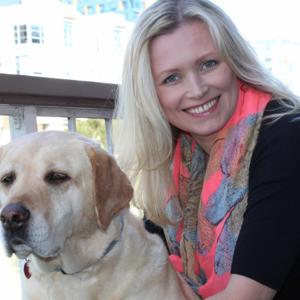

Recently, I went LIVE with Dr. Whitney Austin Gray, a public health leader and an executive at the International WELL Building Institute, to explore what it takes to move solutions from evidence into everyday reality.
We discussed the healthy building movement, the gap between knowing and doing, and why change often fails not because the science is weak, but because systems do not absorb it. Watch or listen on Substack, or find the audio on Spotify and Apple Podcasts.
Whitney’s work sits at the intersection of science and practice—translating what we know about human health into the environments we spend 90% of our lives in. Not as aspiration. Not as awareness. But as something that gets designed, tested, and, at its best, adopted at scale.
This conversation illustrates something I have been tracing across my recent work:
We do not lack solutions.We struggle to make what works normal.
Whitney brought that to life through the built environment. She described three ways public health tries to solve problems: educate them out, legislate them out, or design them out. Her own work sits squarely in that third category: creating conditions that support health by default, rather than relying on perfect awareness or individual behavior. That matters far beyond buildings.
A second thread that stayed with me is that standards are not just technical documents. At their best, they are vehicles for coordination and adoption. They help translate emerging knowledge into shared expectations. But they also force a difficult question: is it better to be perfectly right, or sufficiently adoptable to move the field forward? Whitney was candid about that tension.
And then there was a third idea that landed more quietly, but just as powerfully: environments do not merely surround us. They shape what becomes possible for us. We are often far quicker to blame people than to examine the conditions they are growing in. Whitney’s plant analogy is fitting.
There’s also a more personal thread running through this conversation—about service. Not as obligation or identity, but as something more fundamental:the way changemaking often shows up as creating conditions for others to thrive, even when the work itself goes unseen.
If recent Field Notes have named adoption, invisible work, and conditions as central to changemaking, Whitney offers a concrete case of what that looks like in practice—translated into a movement, a standard, and a living body of work.
Changemakers’ Handbook is an audience-supported publication focused on professionalizing changemaking in a post-solutions world. Consider subscribing to join future live conversations and to access all posts.
Across examples ranging from sanitation to air quality to clean water, she shows that change happens when conditions — not merely awareness — shift. When design, standards, and systems make new behaviors the default rather than the exception.
If you are interested in:
* how science becomes practice
* how standards help change spread
* why prevention remains harder than emergency response
* or what it means to create conditions for people to thrive
this conversation is worth your time.
References / further exploration
* International WELL Building Institute: www.WELLcertified.com
* WELL Building Standard: https://v2.wellcertified.com/en/wellv2/overview/
* Hidden Potential: The Science of Achieving Greater Things (2023) by Adam Grant: https://adamgrant.net/book/hidden-potential/
* Amy Webb on global trends: https://ftsg.com/member/amy-webb/
* My analysis of the opportunities that global trends create for changemaking: https://changemakershandbook.substack.com/p/playlist-megatrends
* Frederick Law Olmsted / Central Park as historical public-health design: https://www.centralparknyc.org/articles/how-public-health-influenced-the-creation-purpose-and-design-of-central-park
* Blue Zones research on longevity: www.bluezones.com
—
▶️ Watch or listen on Substack: changemakershandbook.substack.com ▶️ Also available on Spotify and Apple Podcasts.
If this resonates, share it — this is how more people find their way into this work.
Thank you to Susan Kain and everyone who tuned into my live video! Join me for my next live video in the app.
 View all episodes
 By Elena Bondareva
Recently, I went LIVE with Dr. Whitney Austin Gray, a public health leader and an executive at the International WELL Building Institute, to explore what it takes to move solutions from evidence into everyday reality.
We discussed the healthy building movement, the gap between knowing and doing, and why change often fails not because the science is weak, but because systems do not absorb it. Watch or listen on Substack, or find the audio on Spotify and Apple Podcasts.
Whitney’s work sits at the intersection of science and practice—translating what we know about human health into the environments we spend 90% of our lives in. Not as aspiration. Not as awareness. But as something that gets designed, tested, and, at its best, adopted at scale.
This conversation illustrates something I have been tracing across my recent work:
We do not lack solutions.We struggle to make what works normal.
Whitney brought that to life through the built environment. She described three ways public health tries to solve problems: educate them out, legislate them out, or design them out. Her own work sits squarely in that third category: creating conditions that support health by default, rather than relying on perfect awareness or individual behavior. That matters far beyond buildings.
A second thread that stayed with me is that standards are not just technical documents. At their best, they are vehicles for coordination and adoption. They help translate emerging knowledge into shared expectations. But they also force a difficult question: is it better to be perfectly right, or sufficiently adoptable to move the field forward? Whitney was candid about that tension.
And then there was a third idea that landed more quietly, but just as powerfully: environments do not merely surround us. They shape what becomes possible for us. We are often far quicker to blame people than to examine the conditions they are growing in. Whitney’s plant analogy is fitting.
There’s also a more personal thread running through this conversation—about service. Not as obligation or identity, but as something more fundamental:the way changemaking often shows up as creating conditions for others to thrive, even when the work itself goes unseen.
If recent Field Notes have named adoption, invisible work, and conditions as central to changemaking, Whitney offers a concrete case of what that looks like in practice—translated into a movement, a standard, and a living body of work.
Changemakers’ Handbook is an audience-supported publication focused on professionalizing changemaking in a post-solutions world. Consider subscribing to join future live conversations and to access all posts.
Across examples ranging from sanitation to air quality to clean water, she shows that change happens when conditions — not merely awareness — shift. When design, standards, and systems make new behaviors the default rather than the exception.
If you are interested in:
* how science becomes practice
* how standards help change spread
* why prevention remains harder than emergency response
* or what it means to create conditions for people to thrive
this conversation is worth your time.
References / further exploration
* International WELL Building Institute: www.WELLcertified.com
* WELL Building Standard: https://v2.wellcertified.com/en/wellv2/overview/
* Hidden Potential: The Science of Achieving Greater Things (2023) by Adam Grant: https://adamgrant.net/book/hidden-potential/
* Amy Webb on global trends: https://ftsg.com/member/amy-webb/
* My analysis of the opportunities that global trends create for changemaking: https://changemakershandbook.substack.com/p/playlist-megatrends
* Frederick Law Olmsted / Central Park as historical public-health design: https://www.centralparknyc.org/articles/how-public-health-influenced-the-creation-purpose-and-design-of-central-park
* Blue Zones research on longevity: www.bluezones.com
—
▶️ Watch or listen on Substack: changemakershandbook.substack.com ▶️ Also available on Spotify and Apple Podcasts.
If this resonates, share it — this is how more people find their way into this work.
Thank you to Susan Kain and everyone who tuned into my live video! Join me for my next live video in the app.