
Sign up to save your podcasts
Or



A tragic incident on Chicago’s CTA Pink Line revealed a hard truth many gun owners don’t want to confront: having a firearm does not mean you can control it.
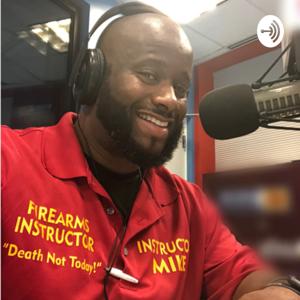
In this episode of On the Mic with Mike, Instructor Mike breaks down what really went wrong when a suspect with a knife was able to take a gun from a passenger and use it — killing one person and injuring another. This is not about sensationalism. This is about reality, responsibility, and restraint.
We talk honestly about:
• Why simply “having your gun on you” does not make you safe
• How quickly a firearm can be taken in close quarters
• Why drawing a weapon too early can turn you into the victim
• The difference between possession and control
• The dangers of overconfidence and under-training
• Why CTA environments make firearm deployment especially risky
• The uncomfortable truth about gun retention, distance, and decision-making
This episode is a reality check for anyone who carries — or plans to carry — a firearm. It challenges the fantasy version of self-defense and replaces it with something more important: training, humility, and judgment.
Because the question isn’t “Do you have a gun?”
The real question is:
“If you pull it… can you keep it?”
🎙️ On the Mic with Mike
Real talk. Real training. Real accountability.
You’ve been trained.
Many people are discussing the racial makeup of the jury in the Karmelo Anthony case. Some are asking why there are no Black jurors. Others are questioning whether he is truly receiving a trial by a jury of his peers.
But there is a deeper question worth asking:
How are jurors selected in the first place?
In this episode, Instructor Mike explores civic literacy, jury selection, voter registration, and why understanding systems matters. This is not a discussion about guilt or innocence. It is a discussion about participation, preparation, and responsibility.
If jurors are often drawn from voter registration records, driver’s license databases, and other public records, what happens when communities fail to teach young people how these systems work?
What does “a jury of your peers” actually mean?
Can a former police officer be objective?
Can an educator be objective?
Can anyone truly leave their life experiences at the courtroom door?
Join Instructor Mike as he examines a difficult question:
Are we upset with the system, or are we upset because we never learned how the system operates?
Illinois gun law has evolved through confusion, court battles, and the lived experiences of everyday people simply trying to travel safely with their firearms. In this episode of On the Mic with Mike, Instructor Mike breaks down two landmark cases — People v. Diggins and People v. McDade — that every responsible gun owner needs to understand.
From whether a center console counts as a “case,” to whether your gun case needs to be locked, these decisions shaped the way Illinois interprets safe firearm transport. And if you’re a FOID card holder, a concealed carrier, a security officer, or someone who just wants to stay on the right side of the law, this is essential training.
Instructor Mike cuts through the legal jargon and gives you clear, real-world guidance:
• ✔️ What Diggins really decided about vehicle consoles
• ✔️ Why McDade changed the meaning of “enclosed” forever
• ✔️ The difference between “closed” and “locked”
• ✔️ How these cases protect responsible gun owners
• ✔️ How people get arrested because no one ever trained them
Understanding the law is part of being a responsible firearm owner — and too many people are under-trained, not criminal. This episode keeps you informed, empowered, and prepared.
This is not legal theory. This is practical knowledge that keeps you free.
“This is Instructor Mike — and you’ve been trained.”
Today, we resurrect the On the Mic with Mike Podcast with today’s episode about not just being armed but being prepared. Prepared for what? Preparing our children for the world that lies ahead. Are we just waiting for the next school shooting to talk about the gun and grabbers who want to grab our firearms or are we being active mitigators and violence interrupters? Take six minutes out of your day and let’s talk about it.
From the publisher's feed