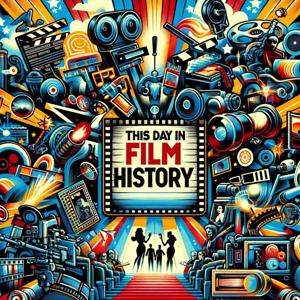
# The Birth of a Cinematic Legend: Orson Welles (May 1, 1915)
On May 1st, 1915, George Orson Welles was born in Kenosha, Wisconsin, and the cinema world would never be the same. While he wouldn't shake up Hollywood for another couple of decades, this date marks the beginning of one of film's most influential and controversial careers.
Welles was a genuine prodigy – a Shakespearean-performing, magic-practicing, radio-dominating wunderkind who would revolutionize filmmaking at the tender age of 25. His genius was apparent early; by age 10, he was performing in productions of Shakespeare, and by his teens, he'd already lied his way into professional theater gigs in Ireland by claiming to be a famous New York actor.
But it was his arrival in Hollywood that truly mattered for cinema history. In 1941, RKO Pictures gave this radio star an unprecedented contract: complete creative control. The result? **Citizen Kane**, widely considered the greatest film ever made. At 25, Welles co-wrote, directed, produced, and starred in this masterpiece that invented or popularized techniques still used today: deep focus cinematography, unconventional narrative structures, dramatic low-angle shots (they literally dug holes in the studio floor to get cameras low enough), and innovative sound design.
The film was a thinly-veiled critique of newspaper magnate William Randolph Hearst, who tried to destroy it before release. Though it flopped commercially and earned Welles powerful enemies, its influence cascaded through generations of filmmakers from Stanley Kubrick to Martin Scorsese to Paul Thomas Anderson.
Welles's career became a tragicomic tale of genius constrained by Hollywood's system. His follow-up, **The Magnificent Ambersons**, was butchered by studio executives who re-cut it while he was out of the country. His noir masterpiece **Touch of Evil** (1958) was similarly mangled, though a restored version now exists honoring his vision.
Forever short on funds and long on ambition, Welles spent decades self-financing projects, acting in commercials and less prestigious films to fund his artistic visions. His booming voice sold everything from wine to frozen peas (those outtakes are comedy gold), while he desperately tried to complete passion projects.
Yet even his "lesser" works showed flashes of brilliance: **The Lady from Shanghai**'s hall-of-mirrors shootout, **F for Fake**'s pioneering essay-film format, and **Chimes at Midnight**'s muddy, brutal battle sequence that influenced Kenneth Branagh and countless others.
Welles died in 1985, leaving behind unfinished films, countless "what-ifs," and an undeniable legacy. He proved that cinema could be art, that breaking rules could create new languages of expression, and that a director's vision mattered.
So on this May 1st, we celebrate not just a birthday, but the beginning of a force of nature who taught us that film could be daring, challenging, and utterly transformative. Happy birthday, Orson – cinema has never recovered from you, and thank goodness for that.
Some great Deals https://amzn.to/49SJ3Qs
For more check out http://www.quietplease.ai
This content was created in partnership and with the help of Artificial Intelligence AI
This episode includes AI-generated content.



 View all episodes