
Sign up to save your podcasts
Or

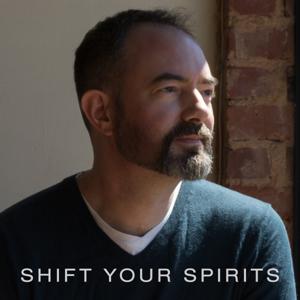

Janelle Hardy is a dancer, artist, and writer who teaches the Art of Personal Mythmaking, a transformational memoir-writing program.
She loves weaving embodiment prompts together with creativity and ancient tales (like fairytales/ myths/ folklore/ etc) as a way of supporting growth and healing.
This interview features a 7-minute guided visualization to unblock creativity by tapping into the body.
janellehardy.com
Slade's Books & Courses
Get an intuitive reading with Slade
Automatic Intuition
Edit your pledge on Patreon
Janelle:
So this is a really round-about sort of story because I didn't really know when I started teaching the work that I do, that it was actually about memoir-writing.
I'll leave you with that statement and then circle back to it again.
Slade:
Okay.
Janelle:
I'm from the far north of Canada. The far north-west, which is the Yukon Territory, and for context for people that aren't Canadian (even some Canadians don't know where I'm from). It's beside Alaska and above British Columbia. It's beautiful. It's so wild. I'm not living there now, but I talk about it because I feel so connected to that place.
I'm also from a family... I think I have a common experience to a lot of people in North America and in colonized countries where my ancestry, you know, I'd be considered white, but my ancestry is varied and mostly unknown. There were some family secrets that were whispered as I was growing up.
That experience of growing up really attached to a landscape. And then learning that my roots in that landscape are only as deep as my grandparents having moved up there and met each other and settled down there, and wondering, Who am I? Where did I come from?
And then struggling with some health challenges that didn't feel like they belonged to me really kind of pitched me on this path of curiosity and inquiry and kind of roaming all over the place in terms of what I studied and where I lived.
So...
See, this is the trouble with collecting my thoughts around all of my offshoots of interest, which, for a long time, really mystified me.
I was really into painting. I was also really into writing. I was also really into dance. I wanted to be a dancer. I also wanted to live in other cultures, so I was an exchange student to Japan and to Russia and to another part of Canada, Ontario, which doesn't really sound like being an exchange student, but the Yukon is really different than southern Canada, in terms of lifestyle and how people think about themselves and their relation to the country that they're in.
For example, in the Yukon, we refer to 'going outside' as leaving the Yukon to the rest of Canada, or outsiders coming to the Yukon, right? So there's a real strong identity wrapped up in being a Yukoner. And then, the other part of my realization was, I feel this intense claim to being a Yukoner to being part of this world, and it actually doesn't belong to me. There's a history of First Nations people there that is thousands of years old and is being erased and denied.
So how can I reconcile my love and longing for this place with the understanding that my roots don't originate there and I don't get to claim it as only my own.
All of these curiosities and wonderings pushed me out to study and travel and do all sorts of things, including becoming a single mother at 23 and having chronic fatigue. Throughout all that time, the one thing that kept me steady was a creative practice. And it didn't matter what the creative practice was.
I'm a really big believer in creative energy and the life force, that kind of erotic creative life force that's in all of us. When it's in flow, we get to choose the medium that suits what we're trying to express best.
And for some people, they just latch on to the one medium and they're a writer and that's all they are. Entirely. For other people, it's kind of peripatetic and maybe a bit dilettantish. Sometimes I've labelled myself as not being able to commit to something, but I've let go of that label and realized that I have the ability and desire to use different mediums to explore different facets of my creative energy, depending on what it is that's wanting to come through.
So I might go through a phase of dance and choreography, which happened a lot in my mid-20s. That's a time when I earned a masters degree in dance. And then I really got into painting. And then I got a horrible creative block for years, where I had all the ideas and I actually couldn't write. I couldn't paint. I couldn't...
It was so painful. It was so painful, this state. But it also taught me a lot. So I felt the bubbling force of my creative desiring, creative energy, and I had all the ideas and I encountered my own resistance and procrastination, no matter where I went.
During that time, some of the jobs I was doing involved writing for a local coming events magazine and a couple of national magazines. What I noticed was, while I really enjoyed it, and for some reason was able to write about things when I was being paid, although the pay was terrible, but I was able to do the task when I set the intention outside of myself.
And then I also became really angry that I couldn't prioritize my own desire for creative expression enough that I could work on my own projects during that time. I was only able to do it if it had a functional function in society, which was making some money and being of service to an employer.
So all of that to say, most of my writing has always been creative non-fiction. It's almost never fiction or fantasy or imagined stories in that way. It's always been about finding a way to share an experience I've had in the world, either my own personal experience in order to understand myself, or, in the case of when I was writing these profiles on artists that were coming to perform in the Yukon, interviewing them and being able to describe their personality, physicality, art and the venue in a way that would invite people in.
Slade:
It's kind of freaking me out how much you're really speaking to me in this moment.
I've been working a lot with issues around the struggle that I have, writing fiction, versus all of the prolific amount of stuff that I put out into the world around my paranormal memoirs, and Shift Your Spirits, and these interviews. And I can write articles. I can write blog posts. I can write for this audience because, like you said, it's sort of my job and there's something very liberating, weirdly, about, it's an official thing and I have to do it every week.
I didn't even really think of it in terms of the blocks that I have around my novels as being particularly about something attached to, Oh it's just this thing that I'm making for myself that doesn't have this official, sanctioned place to be in the world. It's not being asked for by other people. It's something that I'm bringing through for myself.
And it was really interesting. I don't remember the exact words of how you said that, but I thought, Oh! I get that. I understand that. That's a piece of the puzzle for me.
So the wild synchronicity is that you and I are here, speaking for the very first time ever, and we're having this conversation. And I had just told you before we started recording that I have had an energy healing session, a clearing, around creative blocks. And I've also been to a chiropractor and a massage therapist yesterday, because there's a physical manifestation in my neck, like nerve impingement and my spine and neck.
You... Something I want to say really quick and then I want to bring you back to this idea of blocks and how they're related to the body, but I wanted to say, when you were talking about your journey and how hard it was for you to sort of justify the idea of committing to one form of creative expression, one of the things that was a real turning point for me in my life was when I accepted the fact that I couldn't choose and I didn't have to.
And that I would be all of those things together, and that's just what my path was. That, you know, I am an intuitive, and a novelist, and a interviewer voice talent. You know? Whatever! I am all of those things and I think most creative people are really eclectic. And sometimes the things that...
And this is something I've been talking about a lot with clearing creative blocks. There is a purpose that you choose for yourself and then there's sometimes a purpose that's chosen for you by the world. And I feel like, as creative people, sometimes it's that hit song, it's that one performance that you did. It's that one job that you landed that just was the right place at the right time. And maybe you become known for that one thing. And people ask that and expect that of you.
It becomes this identifying thing that YOU didn't necessarily choose as much as IT chose YOU.
So it makes perfect sense to me why you're all those things. And knowing that you work with creativity and writing and mythmaking, and that you talk to me about how you work through creative blocks through the body, makes complete sense to me. That you're a dancer.
It really is the intersection of all those things, right? It's you being a little bit of everything that you are. At least to me, in this moment, it's what you represent.
To get back to this idea of the creative block and how it's connected to the body, talk to me about, first of all, when you were really blocked, what you discovered set you free. And then how you've learned to guide other people through that.
Janelle:
Okay. That's a really good question.
My answer won't apply to everyone, but I think there's a lot of useful tools people listening can get out of my misery.
Slade:
Yeah! Absolutely.
Janelle:
Being creatively blocked as a creative person, number one, I think it actually makes us sick. Because it takes a lot of effort to shut the flow down. Being in the flow and having energetic as well as physical movement as a constant experience is actually our natural state.
But we live in cultures, and by saying 'we', I'm kind of speaking to the experience I grew up in, being in North America, in an English-speaking culture colonized originally by England, and Canada, still being governed by England, tenuously. So we have a cultural inheritance that is really damaging.
And the cultural inheritance is the idea of productivity being important in service of capitalism, of making money, of being an employee to someone else, having skills that someone else wants to pay to make money off of you for. We also have an inheritance of domination and we carry with us... And this is most intensely felt for people of European white ancestry, but anyone of colour growing up in a culture like this also receives these unspoken rules and values as well.
We grow up learning that self-control involves contraction, tightening and dominating. Ownership of our body and our emotions and our inner state. We grow up understanding that what is considered attractive and valuable and wonderful in our culture is really limited. And if we don't fit, we need to feel shame and try to improve ourselves.
Can you kind of get a sense that all of these non-verbal values that we grow up with involves tightening and shrinking and contracting and shutting down, in order to be okay, or be acceptable?
Slade:
Umhmm.
Janelle:
So with this kind of cultural inheritance, as well as a lack of deep grounding and roots, most of the cultures living in the Americas of all backgrounds no longer speak their indigenous languages. My ancestry's not English. It's quite a mix, but Scottish people never spoke English. Welsh people never spoke English. Arcadians never spoke English. There's a small bit of First Nations in my ancestry from Quebec and Canada. They were not English-speaking cultures.
When language is lost, we also lose a great deal. We lose music, we lose language. We lose a connection to our roots.
And then all we have to grasp onto, and we lose our stories. All we have to grasp onto is this very one-dimensional colonizer culture that really profits a lot off of teaching shame and shrinking us.
The way that that relates to creative blocks, I think, is that it's really hard to be in flow if you feel like you're not good enough in any way. What some people do is, they figure out compensations around the tightening and the contracting and the shrinking. But then what happens is the creative flow comes and goes in 'bursts of inspiration' and flashes of insight and really intense, forceful rush of creativity that people get, afraid of not jumping in and staying up all night, buzzing away with it, because if it goes away, when will it come back? It might be three more years, right?
We have all these ideas about our inherent creative flow that are warped by a constant experience of being taught to shut down and contract and deny that flow. In our bodies, we really feel it through tightening, through physical tension, even though most people in North America live very sedentary lives, there's actually no reason, if someone is doing a lot of sitting or desk work, to feel as tense as they do.
As a bodyworker, I've spent 12 years working on peoples' bodies hands-on, it's astonishing how much tension there is in people that actually don't use their bodies. Part of it is related to this idea that we need to make an effort. We have to be appearing to be working hard. We have to be tightening up just in case... It becomes internalized.
'If anyone looks at me, I'm clearly a hard worker because I appear that way because my brows are furrowed while I tense my shoulders and type.' Or whatever it is.
Slade:
Right. Look busy.
Janelle:
Yeah. Looking busy. Busy making... That's a whole other tangent of how much energy
 View all episodes
 By Slade Roberson

4.9
106106 ratings
Janelle Hardy is a dancer, artist, and writer who teaches the Art of Personal Mythmaking, a transformational memoir-writing program.
She loves weaving embodiment prompts together with creativity and ancient tales (like fairytales/ myths/ folklore/ etc) as a way of supporting growth and healing.
This interview features a 7-minute guided visualization to unblock creativity by tapping into the body.
janellehardy.com
Slade's Books & Courses
Get an intuitive reading with Slade
Automatic Intuition
Edit your pledge on Patreon
Janelle:
So this is a really round-about sort of story because I didn't really know when I started teaching the work that I do, that it was actually about memoir-writing.
I'll leave you with that statement and then circle back to it again.
Slade:
Okay.
Janelle:
I'm from the far north of Canada. The far north-west, which is the Yukon Territory, and for context for people that aren't Canadian (even some Canadians don't know where I'm from). It's beside Alaska and above British Columbia. It's beautiful. It's so wild. I'm not living there now, but I talk about it because I feel so connected to that place.
I'm also from a family... I think I have a common experience to a lot of people in North America and in colonized countries where my ancestry, you know, I'd be considered white, but my ancestry is varied and mostly unknown. There were some family secrets that were whispered as I was growing up.
That experience of growing up really attached to a landscape. And then learning that my roots in that landscape are only as deep as my grandparents having moved up there and met each other and settled down there, and wondering, Who am I? Where did I come from?
And then struggling with some health challenges that didn't feel like they belonged to me really kind of pitched me on this path of curiosity and inquiry and kind of roaming all over the place in terms of what I studied and where I lived.
So...
See, this is the trouble with collecting my thoughts around all of my offshoots of interest, which, for a long time, really mystified me.
I was really into painting. I was also really into writing. I was also really into dance. I wanted to be a dancer. I also wanted to live in other cultures, so I was an exchange student to Japan and to Russia and to another part of Canada, Ontario, which doesn't really sound like being an exchange student, but the Yukon is really different than southern Canada, in terms of lifestyle and how people think about themselves and their relation to the country that they're in.
For example, in the Yukon, we refer to 'going outside' as leaving the Yukon to the rest of Canada, or outsiders coming to the Yukon, right? So there's a real strong identity wrapped up in being a Yukoner. And then, the other part of my realization was, I feel this intense claim to being a Yukoner to being part of this world, and it actually doesn't belong to me. There's a history of First Nations people there that is thousands of years old and is being erased and denied.
So how can I reconcile my love and longing for this place with the understanding that my roots don't originate there and I don't get to claim it as only my own.
All of these curiosities and wonderings pushed me out to study and travel and do all sorts of things, including becoming a single mother at 23 and having chronic fatigue. Throughout all that time, the one thing that kept me steady was a creative practice. And it didn't matter what the creative practice was.
I'm a really big believer in creative energy and the life force, that kind of erotic creative life force that's in all of us. When it's in flow, we get to choose the medium that suits what we're trying to express best.
And for some people, they just latch on to the one medium and they're a writer and that's all they are. Entirely. For other people, it's kind of peripatetic and maybe a bit dilettantish. Sometimes I've labelled myself as not being able to commit to something, but I've let go of that label and realized that I have the ability and desire to use different mediums to explore different facets of my creative energy, depending on what it is that's wanting to come through.
So I might go through a phase of dance and choreography, which happened a lot in my mid-20s. That's a time when I earned a masters degree in dance. And then I really got into painting. And then I got a horrible creative block for years, where I had all the ideas and I actually couldn't write. I couldn't paint. I couldn't...
It was so painful. It was so painful, this state. But it also taught me a lot. So I felt the bubbling force of my creative desiring, creative energy, and I had all the ideas and I encountered my own resistance and procrastination, no matter where I went.
During that time, some of the jobs I was doing involved writing for a local coming events magazine and a couple of national magazines. What I noticed was, while I really enjoyed it, and for some reason was able to write about things when I was being paid, although the pay was terrible, but I was able to do the task when I set the intention outside of myself.
And then I also became really angry that I couldn't prioritize my own desire for creative expression enough that I could work on my own projects during that time. I was only able to do it if it had a functional function in society, which was making some money and being of service to an employer.
So all of that to say, most of my writing has always been creative non-fiction. It's almost never fiction or fantasy or imagined stories in that way. It's always been about finding a way to share an experience I've had in the world, either my own personal experience in order to understand myself, or, in the case of when I was writing these profiles on artists that were coming to perform in the Yukon, interviewing them and being able to describe their personality, physicality, art and the venue in a way that would invite people in.
Slade:
It's kind of freaking me out how much you're really speaking to me in this moment.
I've been working a lot with issues around the struggle that I have, writing fiction, versus all of the prolific amount of stuff that I put out into the world around my paranormal memoirs, and Shift Your Spirits, and these interviews. And I can write articles. I can write blog posts. I can write for this audience because, like you said, it's sort of my job and there's something very liberating, weirdly, about, it's an official thing and I have to do it every week.
I didn't even really think of it in terms of the blocks that I have around my novels as being particularly about something attached to, Oh it's just this thing that I'm making for myself that doesn't have this official, sanctioned place to be in the world. It's not being asked for by other people. It's something that I'm bringing through for myself.
And it was really interesting. I don't remember the exact words of how you said that, but I thought, Oh! I get that. I understand that. That's a piece of the puzzle for me.
So the wild synchronicity is that you and I are here, speaking for the very first time ever, and we're having this conversation. And I had just told you before we started recording that I have had an energy healing session, a clearing, around creative blocks. And I've also been to a chiropractor and a massage therapist yesterday, because there's a physical manifestation in my neck, like nerve impingement and my spine and neck.
You... Something I want to say really quick and then I want to bring you back to this idea of blocks and how they're related to the body, but I wanted to say, when you were talking about your journey and how hard it was for you to sort of justify the idea of committing to one form of creative expression, one of the things that was a real turning point for me in my life was when I accepted the fact that I couldn't choose and I didn't have to.
And that I would be all of those things together, and that's just what my path was. That, you know, I am an intuitive, and a novelist, and a interviewer voice talent. You know? Whatever! I am all of those things and I think most creative people are really eclectic. And sometimes the things that...
And this is something I've been talking about a lot with clearing creative blocks. There is a purpose that you choose for yourself and then there's sometimes a purpose that's chosen for you by the world. And I feel like, as creative people, sometimes it's that hit song, it's that one performance that you did. It's that one job that you landed that just was the right place at the right time. And maybe you become known for that one thing. And people ask that and expect that of you.
It becomes this identifying thing that YOU didn't necessarily choose as much as IT chose YOU.
So it makes perfect sense to me why you're all those things. And knowing that you work with creativity and writing and mythmaking, and that you talk to me about how you work through creative blocks through the body, makes complete sense to me. That you're a dancer.
It really is the intersection of all those things, right? It's you being a little bit of everything that you are. At least to me, in this moment, it's what you represent.
To get back to this idea of the creative block and how it's connected to the body, talk to me about, first of all, when you were really blocked, what you discovered set you free. And then how you've learned to guide other people through that.
Janelle:
Okay. That's a really good question.
My answer won't apply to everyone, but I think there's a lot of useful tools people listening can get out of my misery.
Slade:
Yeah! Absolutely.
Janelle:
Being creatively blocked as a creative person, number one, I think it actually makes us sick. Because it takes a lot of effort to shut the flow down. Being in the flow and having energetic as well as physical movement as a constant experience is actually our natural state.
But we live in cultures, and by saying 'we', I'm kind of speaking to the experience I grew up in, being in North America, in an English-speaking culture colonized originally by England, and Canada, still being governed by England, tenuously. So we have a cultural inheritance that is really damaging.
And the cultural inheritance is the idea of productivity being important in service of capitalism, of making money, of being an employee to someone else, having skills that someone else wants to pay to make money off of you for. We also have an inheritance of domination and we carry with us... And this is most intensely felt for people of European white ancestry, but anyone of colour growing up in a culture like this also receives these unspoken rules and values as well.
We grow up learning that self-control involves contraction, tightening and dominating. Ownership of our body and our emotions and our inner state. We grow up understanding that what is considered attractive and valuable and wonderful in our culture is really limited. And if we don't fit, we need to feel shame and try to improve ourselves.
Can you kind of get a sense that all of these non-verbal values that we grow up with involves tightening and shrinking and contracting and shutting down, in order to be okay, or be acceptable?
Slade:
Umhmm.
Janelle:
So with this kind of cultural inheritance, as well as a lack of deep grounding and roots, most of the cultures living in the Americas of all backgrounds no longer speak their indigenous languages. My ancestry's not English. It's quite a mix, but Scottish people never spoke English. Welsh people never spoke English. Arcadians never spoke English. There's a small bit of First Nations in my ancestry from Quebec and Canada. They were not English-speaking cultures.
When language is lost, we also lose a great deal. We lose music, we lose language. We lose a connection to our roots.
And then all we have to grasp onto, and we lose our stories. All we have to grasp onto is this very one-dimensional colonizer culture that really profits a lot off of teaching shame and shrinking us.
The way that that relates to creative blocks, I think, is that it's really hard to be in flow if you feel like you're not good enough in any way. What some people do is, they figure out compensations around the tightening and the contracting and the shrinking. But then what happens is the creative flow comes and goes in 'bursts of inspiration' and flashes of insight and really intense, forceful rush of creativity that people get, afraid of not jumping in and staying up all night, buzzing away with it, because if it goes away, when will it come back? It might be three more years, right?
We have all these ideas about our inherent creative flow that are warped by a constant experience of being taught to shut down and contract and deny that flow. In our bodies, we really feel it through tightening, through physical tension, even though most people in North America live very sedentary lives, there's actually no reason, if someone is doing a lot of sitting or desk work, to feel as tense as they do.
As a bodyworker, I've spent 12 years working on peoples' bodies hands-on, it's astonishing how much tension there is in people that actually don't use their bodies. Part of it is related to this idea that we need to make an effort. We have to be appearing to be working hard. We have to be tightening up just in case... It becomes internalized.
'If anyone looks at me, I'm clearly a hard worker because I appear that way because my brows are furrowed while I tense my shoulders and type.' Or whatever it is.
Slade:
Right. Look busy.
Janelle:
Yeah. Looking busy. Busy making... That's a whole other tangent of how much energy