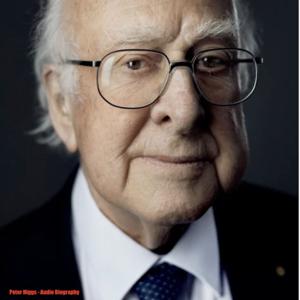
Peter Higgs: A Life in Pursuit of the Fundamental
Early Life and Education Peter Ware Higgs was born on May 29, 1929, in Newcastle upon Tyne, England. His parents, Thomas Ware Higgs and Gertrude Maude Coghill, were both involved in the arts - his father was a sound engineer for the BBC, and his mother was a former classical pianist. Despite his parents' artistic inclinations, young Peter showed an early interest in science and mathematics.
Higgs' childhood was marked by the tumultuous events of World War II. He spent much of his early years moving between London, Bristol, and Devon, as his family sought safety from the German bombings. Despite the disruptions, Higgs excelled academically and earned a scholarship to attend Cotham Grammar School in Bristol.
After completing his secondary education, Higgs went on to study at King's College, London. He initially pursued a degree in mathematics but later switched to physics, feeling that it offered a more profound understanding of the world. In 1950, he graduated with a first-class honors degree in physics.
Higgs continued his studies at King's College, earning a master's degree in 1952 and a Ph.D. in 1954. His doctoral thesis focused on molecular vibrations and helped lay the groundwork for his later work in theoretical physics.
Early Career and the Higgs Mechanism After completing his Ph.D., Higgs took up a research fellowship at the University of Edinburgh. It was during this time that he began to delve deeper into the fundamental questions of particle physics. In the early 1960s, physicists were grappling with a perplexing problem: how to explain the origin of mass in the universe.
At the time, the prevailing theory was the Standard Model of particle physics, which described the fundamental particles and forces that make up the universe. However, the Standard Model had a glaring omission - it could not explain why some particles, like protons and electrons, had mass, while others, like photons, did not.
Higgs set out to tackle this problem. In 1964, he published a series of papers proposing a mechanism that could give particles mass. According to Higgs, the universe is permeated by an invisible field, now known as the Higgs field. As particles move through this field, they interact with it and acquire mass. The more strongly a particle interacts with the Higgs field, the more massive it becomes.
Crucially, Higgs' theory also predicted the existence of a new particle, which came to be known as the Higgs boson. This particle was essentially a ripple in the Higgs field and was the key to verifying the existence of the field itself.
Higgs was not alone in proposing this mechanism. Around the same time, several other physicists, including François Englert and Robert Brout in Belgium, and Carl Hagen, Gerald Guralnik, and Tom Kibble in the United States, independently came up with similar ideas. However, it was Higgs' name that became most closely associated with the theory, and the particle its
This content was created in partnership and with the help of Artificial Intelligence AI.



 View all episodes
