
Sign up to save your podcasts
Or

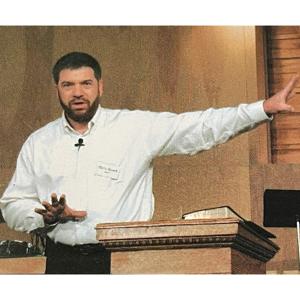

The central message of this sermon is that worship is an inherent and universal aspect of human nature, and that it can take many forms, both good and bad. The teacher argues that people often worship idols, which are tangible or intangible things they elevate to a position of ultimate value and importance, rather than worshipping the true Creator God. However, the sermon suggests that this is not necessarily a negative phenomenon in itself, but rather a reflection of our fundamental need for connection and significance. The teacher points out that even the ancient Israelites, who were commanded to worship only one God, often worshipped a lamb - an animal that is depicted as weak and helpless - and asks why they would do this. The answer lies in the biblical narrative of Abraham's willingness to sacrifice Isaac, where God provides a lamb instead, indicating that true worship involves recognizing our own inadequacy and weakness, and looking to God for provision and redemption. This idea advances the belief that humans are fundamentally flawed and in need of divine intervention, and it highlights the importance of humility and recognition of one's limitations as essential components of genuine faith. The takeaway from this sermon is that true worship involves recognizing our own inability to provide or save ourselves, and instead, looking to God for provision and redemption.
 View all episodes
 By cstpb
5
22 ratings
The central message of this sermon is that worship is an inherent and universal aspect of human nature, and that it can take many forms, both good and bad. The teacher argues that people often worship idols, which are tangible or intangible things they elevate to a position of ultimate value and importance, rather than worshipping the true Creator God. However, the sermon suggests that this is not necessarily a negative phenomenon in itself, but rather a reflection of our fundamental need for connection and significance. The teacher points out that even the ancient Israelites, who were commanded to worship only one God, often worshipped a lamb - an animal that is depicted as weak and helpless - and asks why they would do this. The answer lies in the biblical narrative of Abraham's willingness to sacrifice Isaac, where God provides a lamb instead, indicating that true worship involves recognizing our own inadequacy and weakness, and looking to God for provision and redemption. This idea advances the belief that humans are fundamentally flawed and in need of divine intervention, and it highlights the importance of humility and recognition of one's limitations as essential components of genuine faith. The takeaway from this sermon is that true worship involves recognizing our own inability to provide or save ourselves, and instead, looking to God for provision and redemption.