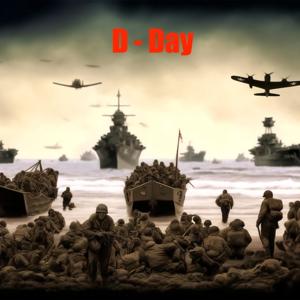
The Meticulous Choreography: Planning and Preparation for the D-Day Invasion On June 6, 1944, the greatest coordinated military operation in modern history was set into motion with the D-Day invasion of Normandy, France during World War II. Codenamed Operation Overlord, this bold Allied mission to establish a foothold in Nazi-occupied Western Europe and begin liberating the continent involved years of painstaking planning, intelligence-gathering, and preparation on a massive scale. From the highest-ranking generals and political leaders down to every grunt and sailor tasked with hitting the beaches, D-Day was an incredible feat of strategy, logistics, deception, and multi-national coordination. Only through the tireless work and brilliant strategizing of thousands did the invasion have any realistic chance of not just scratching the surface of Hitler's Fortress Europe, but smashing it wide open to turn the tide of the war. The sheer numbers involved in D-Day are staggering even by today's standards - over 5,000 ships and landing craft, nearly 12,000 aircraft, combined land forces of over 160,000 American, British, Canadian and other Allied troops. All this awesome firepower and manpower had to be meticulously positioned and choreographed for the initial invasion - and it was years in the making. In fact, the early roots of planning for an eventual cross-Channel invasion of northern France and the critical deep-water port facilities date back to 1943. That's when the senior British and American military leadership began methodically war-gaming potential invasion sites and operational plans during a pivotal series of high-level strategic meetings in locations like Quebec, Cairo and Tehran. Initial Complications and Challenges Even from the start, the Overlord planners faced a daunting array of challenges. First and foremost, France's wide sandy beaches running along the Normandy coast were among the most forbidding possible amphibious invasion sites. With wide tidal ranges resulting in dangerously changing terrain, the entire area was thoroughly laced with menacing Nazi coastal defenses including mines, anti-tank ditches, bunkers, and heavy artillery batteries. Additionally, the closest viable deep-water harbors were dozens of miles away from the potential beachhead sites under consideration - meaning invading troops and equipment would eventually require construction of temporary, artificial harbors to enable follow-on buildup and supply chains. Beyond the tactical challenges, the entire notion of an invasion also faced major political hurdles. The Soviet leadership was adamant that any direct assault into Western Europe should constitute a "second front" once Nazi forces were already severely drained on the Eastern Front during the ongoing Russian counteroffensive. Allied commanders like Eisenhower and Patton also butted heads with prudent types like British Field Marshal Alan Brooke who bristled at the invasion's high casualty projections. Slo
This content was created in partnership and with the help of Artificial Intelligence AI.



 View all episodes



