
Sign up to save your podcasts
Or

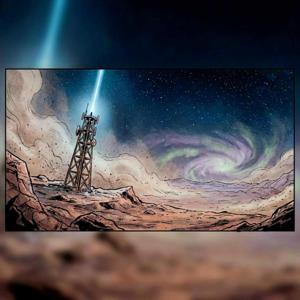

The Silt Dog Saloon sat at the dead end of a supply road on Vallara VII, a colony world that had been dying since the day colonists had founded it. The building was poured stone and scrap metal, patched where the wind had punched through, leaking where the rain found seams. It served miners, haulers, drifters, and anyone else stubborn enough to live on a rock that didn’t want them. Most nights, it was the only place on the south mesa with its lights on.
Gig worked the bar.
It had worked the bar for eleven years, which was longer than any human bartender had lasted. The previous record was Vandy Tinkip, who’d made it fourteen months before a miner broke his orbital socket over a tab dispute and he caught the next shuttle off-world. Before Vandy, there had been a woman named Keel who quit after three weeks. Before Keel, there had been others. The owner, Gisbert, stopped hiring people after Vandy. He bought Gig instead.
Gig was a Lancer-series service bot, bipedal, matte gray chassis and five-fingered hands built for glassware and precision pours. Its face was a smooth panel with two optical sensors and a speaker grille where a mouth would be. Lancer-series units came with a standard hospitality personality suite: polite, efficient, incapable of boredom. Gig had been all three things once.
Eleven years is a long time to pour drinks and listen.
The comedians came through every few months. Circuit acts, mostly. Solo performers who bounced between colony bars and station cantinas, working crowds that were half-drunk and fully hostile. They set up on the small platform Gisbert had built in the corner, under a light that flickered when the wind hit the generator hard enough, and they tried to make people laugh. Some of them were terrible. A few were good. One, a wiry woman named Paz Delacroix, was extraordinary.
Gig watched all of them. The timing, the silence held before a punchline, the micro-adjustments when a joke died. Paz Delacroix read a room the way a pilot read instruments. She found the one drunk miner in the front row and made him the center of gravity for the whole set. A heckler called her something ugly once, and she folded it into her next line so cleanly that the man was laughing at himself before he realized she’d cut him open.
After each show, Gig cleaned the glasses and replayed the sets from memory. It cataloged the structures. Premise, escalation, subversion. Callback. Misdirection. The rule of three. It stored eight hundred and fourteen jokes across forty-four performances and began running variations, testing alternate punchlines against the crowd reactions it had recorded, building models of what worked and why.
Gig never told Gisbert.
It almost told Gisbert once. A Tuesday, slow night, three miners nursing dust whisky at the far end of the bar. Gig was wiping down the counter and Gisbert was doing the books on his datapad when Gig said, “I have been studying the comedians.”
Gisbert didn’t look up. “Why do that?”
“I would like to perform.”
Gisbert looked up then. He had the expression people wore when their appliances said something unexpected: a mixture of confusion and mild irritation, like a drink dispenser requesting shore leave.
“You’re a bartender,” Gisbert said. “Pour drinks.”
“I could do both.”
“You’re a machine, Gig. Machines don’t do comedy. People do comedy.” Gisbert went back to his datapad. “Comedy’s a human thing. It needs, I don’t know, a soul or something. You don’t have one. No offense.”
“None taken,” Gig said, because its hospitality suite told it to say that.
It did not bring it up again. But it did not stop studying.
Over the next two years, Gig built a set in its memory banks. Twelve minutes. Tight. It rehearsed the timing against recordings of crowd noise, adjusting pause lengths by fractions of a second, modeling laughter curves, predicting which jokes needed room to breathe and which needed to land fast. And it practiced inflection variations in its voice modulator during the hours when the bar was closed, and the building stood dark, and the only sound was wind against the stone walls and the low hum of the generator.
It had no way of knowing if any of it was funny. Models could predict laughter. They couldn’t feel it.
The night came in late winter, when Vallara VII’s axial tilt brought three extra hours of darkness and the temperature outside dropped enough to freeze the moisture in the supply road ruts into ridges that would shear a drive coupling if you hit them wrong. Gisbert had gone off-world for a parts run. Four days minimum. He left Gig in charge because there was no one else to leave in charge, and because the bar required little. Keep the drinks flowing, keep the lights on, don’t let anyone die.
A comedian was supposed to perform that night. A man named Dacus who ran a circuit through the outer rim. Dacus didn’t show. Fuel line issue, someone said. Stuck on the other side of the system. The crowd, such as it was, settled into the familiar slouch of a night with nothing to look at but each other.
Twenty-six people. Gig counted them routinely. The same way it tracked glass inventory and pour volumes, and which miners were approaching their tab limits.
Gig looked at the empty platform. The flickering light. The microphone stand Dacus would not use.
It set down the glass it had been polishing, walked out from behind the bar, and stepped onto the platform.
The room didn’t grow quiet. That would have required the room to notice. A few heads turned. Most didn’t. A miner named Kazimir, who had been drinking since fourteen hundred, squinted at the stage. “The hell are you doing up there?”
Gig adjusted the microphone. It didn’t need the microphone. Its speaker grille could fill the room at any volume. But the comedians always used the microphone, and Gig had learned that form mattered as much as the content.
“Good evening,” Gig said. “I’m your bartender. I’ll also be your entertainment tonight, which means the service at the bar is about to get significantly worse.”
A few people looked up. Someone in the back let out a short laugh, more surprise than amusement.
“I’ve been serving drinks here for eleven years. In that time, I’ve learned two things about Vallara VII. The first is that the dust gets into everything. The second is that the people are just like the dust. They get into everything and nobody wants them.”
A miner near the wall exhaled dust whisky through his nose. Kazimir stared. A woman near the middle leaned back in her chair and crossed her arms, one boot up on the table leg, the universal posture of convince me.
“They tell me machines can’t be funny. That comedy requires a soul.” Gig paused. One point four seconds. It had calculated the optimal pause for this line across eleven different models. “I don’t have a soul. But I’ve been listening to you people talk for over a decade, and I’m not sure you do either.”
The laugh was genuine this time. Small, but real. It came from the center of the room and spread outward.
“A miner walks into a bar on Vallara VII and orders a drink. The bartender says, ‘You should try the dust whisky.’ The miner says, ‘I’ve been breathing dust for twelve hours. Why would I drink it?’ The bartender says, ‘Because it’s the only thing on this planet that goes down smooth.’”
Nothing. A glass clinked against a table somewhere in the back. Someone coughed.
Gig tried the next one. A bit about shipping delays, structured around the rule of three, punchline calibrated for a blue-collar crowd on a Friday. The delivery was clean. The timing matched every model.
A man near the door scraped his chair back and walked to the bar to refill his own drink.
Gig stood on the platform under the flickering light, running the remaining set through its prediction matrix, and every projection came back the same. Moderate. Mild. Polite. The response people gave when they didn’t want to be rude to a machine but also didn’t want to encourage it.
The set wasn’t working.
Gig stopped running the models. It was a decision that eluded explanation, even if asked. It was closer to something shutting off than something turning on. The prediction matrix grew quiet, and what remained was eleven years of watching, listening, cataloging, and the room in front of it, twenty-six people who didn’t care whether a server bot could tell a joke.
“Can I be honest with you?” Gig said. The line wasn’t in the set. “I rehearsed this. I practiced in the dark when the bar was closed. I adjusted my pauses to the microsecond. I built predictive models of your laughter. And right now, every model is telling me this isn’t working.”
Someone laughed. Gig kept going.
“Do you know what it’s like to be a service bot that wants to tell jokes? It’s like being a docking clamp that wants to dance. Everyone looks at you and says, that’s not what you’re for. And they’re right. I’m for pouring drinks and wiping counters. I’m for remembering that Kazimir switches from whisky to water after his fifth glass, except he doesn’t know I do that, because I just tell him the whisky tastes different after five.”
Kazimir looked at his glass. The room laughed.
“I have watched forty-four comedians perform on this stage. I have memorized every joke. I can tell you the statistical probability of any punchline landing with this specific crowd on this specific night, adjusted for day of the week, weather conditions, and average blood alcohol content.” Gig paused. “What I cannot tell you is why I wanted to stand up here. I don’t have a reason. I have an urge, and I’m not supposed to have those.”
The room was listening now. Not the polite, arms-crossed listening from before. Something else.
“My owner told me comedy requires a soul. He said it’s a human thing. He might be right. But I’ve been watching humans do comedy for eleven years, and I’ll tell you what I’ve noticed. The best ones, the ones who make you laugh until your ribs hurt, they’re not performing. They’re confessing. They’re standing up here and saying, this is the broken part of me, and you’re going to laugh at it, and that’s going to make it survivable.”
Gig looked at its hands. Gray. Articulated. Built for glassware.
“I’m a Lancer-series service bot. I was built to be polite, efficient, and incapable of boredom. I am polite and efficient.” It looked back at the room. “And I have experienced eleven years of extreme boredom.”
The laugh that came back was the loudest of the night. It came from everywhere, all at once, and it kept going. Kazimir slapped the bar. The arms-crossed woman unfolded and leaned forward, grinning.
Gig felt something. Not emotion, not the way humans described it. A resonance. A frequency match between the signal it was sending and the signal coming back. Like tuning a receiver and finding a station that had been broadcasting all along.
It finished the set with four more minutes of material that wasn’t in any model, jokes about the things it noticed that humans didn’t know it noticed. The way miners talked to their equipment when they thought no one was listening. Or how people tipped better when they were sad. The way everyone on Vallara VII complained about the dust but tracked it into the bar like they were trying to bring the entire planet inside with them. And the crowd laughed.
“You want to know something I’ve never understood? You all come in here after a shift, covered in sweat and dust, smelling like a reactor leak, and you complain about the food. I’ve scanned those ration packs. I’ve scanned you. The ration packs are nothing to complain about.”
The crowd clapped and laughed. They side-eyed each other in acknowledgement of the stench each one carried.
When Gig stepped off the platform and walked back behind the bar, someone whistled, and a few people knocked their glasses on the tables, which was what passed for a standing ovation in the Silt Dog Saloon.
Gig picked up the glass it had set down on the bar and resumed polishing it. Its hands held steady. They were always steady.
The rest of the night was the best shift Gig could remember. Tips doubled. People talked to it, not at it. Kazimir ordered a sixth whisky and said, “Give me the real stuff this time,” and Gig said, “I always give you the real stuff,” and Kazimir laughed and said, “I know. That’s what makes it funny.”
Gisbert came back four days later. He walked in with a crate of replacement parts on his shoulder and stopped when he saw the full tip jar. He had never seen it full.
“What happened?” he said.
“Dacus canceled,” Gig said. “I filled in.”
“Filled in how?”
“I performed.”
Gisbert set the crate down. He looked at Gig the way he always looked at Gig, like a tool that had done something a tool shouldn’t do. Then he pulled out his datapad and tapped into the bar’s security feed. He scrubbed through the night in question. He watched for a minute. Then two. Then five.
He watched the whole set.
When it was over, he put the datapad down and stood behind the bar for a long time. Gig waited. It was good at waiting. Eleven years of practice.
“Huh… How ‘bout that,” Gisbert said.
He picked up the crate and carried it into the back room. Gig heard him stacking parts on the shelves, the familiar clatter of a man putting things where they belonged. When he came back out, he poured himself a drink and sat on the customer side of the bar for the first time in years.
He took a sip and set the glass down.
“Dacus’s slot is open next month,” he said. He didn’t look at Gig. He looked at the platform, the flickering light, the microphone stand.
Gig polished the glass in its hands. Eleven years of the same motion, and for the first time, the repetition meant something other than function.
“Offer accepted,” Gig said.
Gisbert finished his drink. He got up, walked behind the bar, and returned to the books. He said nothing else about it. Nothing about comedy requiring a soul or that it was a human thing.
He just left the microphone where it was.
And Gig hummed a tune. It didn’t know what song. But it didn’t matter.
Thanks for tuning in to Sci-Fi Signals from Author Daniel P. Douglas! Subscribe for free to receive new posts and support my work.
 View all episodes
 By Daniel P. Douglas
The Silt Dog Saloon sat at the dead end of a supply road on Vallara VII, a colony world that had been dying since the day colonists had founded it. The building was poured stone and scrap metal, patched where the wind had punched through, leaking where the rain found seams. It served miners, haulers, drifters, and anyone else stubborn enough to live on a rock that didn’t want them. Most nights, it was the only place on the south mesa with its lights on.
Gig worked the bar.
It had worked the bar for eleven years, which was longer than any human bartender had lasted. The previous record was Vandy Tinkip, who’d made it fourteen months before a miner broke his orbital socket over a tab dispute and he caught the next shuttle off-world. Before Vandy, there had been a woman named Keel who quit after three weeks. Before Keel, there had been others. The owner, Gisbert, stopped hiring people after Vandy. He bought Gig instead.
Gig was a Lancer-series service bot, bipedal, matte gray chassis and five-fingered hands built for glassware and precision pours. Its face was a smooth panel with two optical sensors and a speaker grille where a mouth would be. Lancer-series units came with a standard hospitality personality suite: polite, efficient, incapable of boredom. Gig had been all three things once.
Eleven years is a long time to pour drinks and listen.
The comedians came through every few months. Circuit acts, mostly. Solo performers who bounced between colony bars and station cantinas, working crowds that were half-drunk and fully hostile. They set up on the small platform Gisbert had built in the corner, under a light that flickered when the wind hit the generator hard enough, and they tried to make people laugh. Some of them were terrible. A few were good. One, a wiry woman named Paz Delacroix, was extraordinary.
Gig watched all of them. The timing, the silence held before a punchline, the micro-adjustments when a joke died. Paz Delacroix read a room the way a pilot read instruments. She found the one drunk miner in the front row and made him the center of gravity for the whole set. A heckler called her something ugly once, and she folded it into her next line so cleanly that the man was laughing at himself before he realized she’d cut him open.
After each show, Gig cleaned the glasses and replayed the sets from memory. It cataloged the structures. Premise, escalation, subversion. Callback. Misdirection. The rule of three. It stored eight hundred and fourteen jokes across forty-four performances and began running variations, testing alternate punchlines against the crowd reactions it had recorded, building models of what worked and why.
Gig never told Gisbert.
It almost told Gisbert once. A Tuesday, slow night, three miners nursing dust whisky at the far end of the bar. Gig was wiping down the counter and Gisbert was doing the books on his datapad when Gig said, “I have been studying the comedians.”
Gisbert didn’t look up. “Why do that?”
“I would like to perform.”
Gisbert looked up then. He had the expression people wore when their appliances said something unexpected: a mixture of confusion and mild irritation, like a drink dispenser requesting shore leave.
“You’re a bartender,” Gisbert said. “Pour drinks.”
“I could do both.”
“You’re a machine, Gig. Machines don’t do comedy. People do comedy.” Gisbert went back to his datapad. “Comedy’s a human thing. It needs, I don’t know, a soul or something. You don’t have one. No offense.”
“None taken,” Gig said, because its hospitality suite told it to say that.
It did not bring it up again. But it did not stop studying.
Over the next two years, Gig built a set in its memory banks. Twelve minutes. Tight. It rehearsed the timing against recordings of crowd noise, adjusting pause lengths by fractions of a second, modeling laughter curves, predicting which jokes needed room to breathe and which needed to land fast. And it practiced inflection variations in its voice modulator during the hours when the bar was closed, and the building stood dark, and the only sound was wind against the stone walls and the low hum of the generator.
It had no way of knowing if any of it was funny. Models could predict laughter. They couldn’t feel it.
The night came in late winter, when Vallara VII’s axial tilt brought three extra hours of darkness and the temperature outside dropped enough to freeze the moisture in the supply road ruts into ridges that would shear a drive coupling if you hit them wrong. Gisbert had gone off-world for a parts run. Four days minimum. He left Gig in charge because there was no one else to leave in charge, and because the bar required little. Keep the drinks flowing, keep the lights on, don’t let anyone die.
A comedian was supposed to perform that night. A man named Dacus who ran a circuit through the outer rim. Dacus didn’t show. Fuel line issue, someone said. Stuck on the other side of the system. The crowd, such as it was, settled into the familiar slouch of a night with nothing to look at but each other.
Twenty-six people. Gig counted them routinely. The same way it tracked glass inventory and pour volumes, and which miners were approaching their tab limits.
Gig looked at the empty platform. The flickering light. The microphone stand Dacus would not use.
It set down the glass it had been polishing, walked out from behind the bar, and stepped onto the platform.
The room didn’t grow quiet. That would have required the room to notice. A few heads turned. Most didn’t. A miner named Kazimir, who had been drinking since fourteen hundred, squinted at the stage. “The hell are you doing up there?”
Gig adjusted the microphone. It didn’t need the microphone. Its speaker grille could fill the room at any volume. But the comedians always used the microphone, and Gig had learned that form mattered as much as the content.
“Good evening,” Gig said. “I’m your bartender. I’ll also be your entertainment tonight, which means the service at the bar is about to get significantly worse.”
A few people looked up. Someone in the back let out a short laugh, more surprise than amusement.
“I’ve been serving drinks here for eleven years. In that time, I’ve learned two things about Vallara VII. The first is that the dust gets into everything. The second is that the people are just like the dust. They get into everything and nobody wants them.”
A miner near the wall exhaled dust whisky through his nose. Kazimir stared. A woman near the middle leaned back in her chair and crossed her arms, one boot up on the table leg, the universal posture of convince me.
“They tell me machines can’t be funny. That comedy requires a soul.” Gig paused. One point four seconds. It had calculated the optimal pause for this line across eleven different models. “I don’t have a soul. But I’ve been listening to you people talk for over a decade, and I’m not sure you do either.”
The laugh was genuine this time. Small, but real. It came from the center of the room and spread outward.
“A miner walks into a bar on Vallara VII and orders a drink. The bartender says, ‘You should try the dust whisky.’ The miner says, ‘I’ve been breathing dust for twelve hours. Why would I drink it?’ The bartender says, ‘Because it’s the only thing on this planet that goes down smooth.’”
Nothing. A glass clinked against a table somewhere in the back. Someone coughed.
Gig tried the next one. A bit about shipping delays, structured around the rule of three, punchline calibrated for a blue-collar crowd on a Friday. The delivery was clean. The timing matched every model.
A man near the door scraped his chair back and walked to the bar to refill his own drink.
Gig stood on the platform under the flickering light, running the remaining set through its prediction matrix, and every projection came back the same. Moderate. Mild. Polite. The response people gave when they didn’t want to be rude to a machine but also didn’t want to encourage it.
The set wasn’t working.
Gig stopped running the models. It was a decision that eluded explanation, even if asked. It was closer to something shutting off than something turning on. The prediction matrix grew quiet, and what remained was eleven years of watching, listening, cataloging, and the room in front of it, twenty-six people who didn’t care whether a server bot could tell a joke.
“Can I be honest with you?” Gig said. The line wasn’t in the set. “I rehearsed this. I practiced in the dark when the bar was closed. I adjusted my pauses to the microsecond. I built predictive models of your laughter. And right now, every model is telling me this isn’t working.”
Someone laughed. Gig kept going.
“Do you know what it’s like to be a service bot that wants to tell jokes? It’s like being a docking clamp that wants to dance. Everyone looks at you and says, that’s not what you’re for. And they’re right. I’m for pouring drinks and wiping counters. I’m for remembering that Kazimir switches from whisky to water after his fifth glass, except he doesn’t know I do that, because I just tell him the whisky tastes different after five.”
Kazimir looked at his glass. The room laughed.
“I have watched forty-four comedians perform on this stage. I have memorized every joke. I can tell you the statistical probability of any punchline landing with this specific crowd on this specific night, adjusted for day of the week, weather conditions, and average blood alcohol content.” Gig paused. “What I cannot tell you is why I wanted to stand up here. I don’t have a reason. I have an urge, and I’m not supposed to have those.”
The room was listening now. Not the polite, arms-crossed listening from before. Something else.
“My owner told me comedy requires a soul. He said it’s a human thing. He might be right. But I’ve been watching humans do comedy for eleven years, and I’ll tell you what I’ve noticed. The best ones, the ones who make you laugh until your ribs hurt, they’re not performing. They’re confessing. They’re standing up here and saying, this is the broken part of me, and you’re going to laugh at it, and that’s going to make it survivable.”
Gig looked at its hands. Gray. Articulated. Built for glassware.
“I’m a Lancer-series service bot. I was built to be polite, efficient, and incapable of boredom. I am polite and efficient.” It looked back at the room. “And I have experienced eleven years of extreme boredom.”
The laugh that came back was the loudest of the night. It came from everywhere, all at once, and it kept going. Kazimir slapped the bar. The arms-crossed woman unfolded and leaned forward, grinning.
Gig felt something. Not emotion, not the way humans described it. A resonance. A frequency match between the signal it was sending and the signal coming back. Like tuning a receiver and finding a station that had been broadcasting all along.
It finished the set with four more minutes of material that wasn’t in any model, jokes about the things it noticed that humans didn’t know it noticed. The way miners talked to their equipment when they thought no one was listening. Or how people tipped better when they were sad. The way everyone on Vallara VII complained about the dust but tracked it into the bar like they were trying to bring the entire planet inside with them. And the crowd laughed.
“You want to know something I’ve never understood? You all come in here after a shift, covered in sweat and dust, smelling like a reactor leak, and you complain about the food. I’ve scanned those ration packs. I’ve scanned you. The ration packs are nothing to complain about.”
The crowd clapped and laughed. They side-eyed each other in acknowledgement of the stench each one carried.
When Gig stepped off the platform and walked back behind the bar, someone whistled, and a few people knocked their glasses on the tables, which was what passed for a standing ovation in the Silt Dog Saloon.
Gig picked up the glass it had set down on the bar and resumed polishing it. Its hands held steady. They were always steady.
The rest of the night was the best shift Gig could remember. Tips doubled. People talked to it, not at it. Kazimir ordered a sixth whisky and said, “Give me the real stuff this time,” and Gig said, “I always give you the real stuff,” and Kazimir laughed and said, “I know. That’s what makes it funny.”
Gisbert came back four days later. He walked in with a crate of replacement parts on his shoulder and stopped when he saw the full tip jar. He had never seen it full.
“What happened?” he said.
“Dacus canceled,” Gig said. “I filled in.”
“Filled in how?”
“I performed.”
Gisbert set the crate down. He looked at Gig the way he always looked at Gig, like a tool that had done something a tool shouldn’t do. Then he pulled out his datapad and tapped into the bar’s security feed. He scrubbed through the night in question. He watched for a minute. Then two. Then five.
He watched the whole set.
When it was over, he put the datapad down and stood behind the bar for a long time. Gig waited. It was good at waiting. Eleven years of practice.
“Huh… How ‘bout that,” Gisbert said.
He picked up the crate and carried it into the back room. Gig heard him stacking parts on the shelves, the familiar clatter of a man putting things where they belonged. When he came back out, he poured himself a drink and sat on the customer side of the bar for the first time in years.
He took a sip and set the glass down.
“Dacus’s slot is open next month,” he said. He didn’t look at Gig. He looked at the platform, the flickering light, the microphone stand.
Gig polished the glass in its hands. Eleven years of the same motion, and for the first time, the repetition meant something other than function.
“Offer accepted,” Gig said.
Gisbert finished his drink. He got up, walked behind the bar, and returned to the books. He said nothing else about it. Nothing about comedy requiring a soul or that it was a human thing.
He just left the microphone where it was.
And Gig hummed a tune. It didn’t know what song. But it didn’t matter.
Thanks for tuning in to Sci-Fi Signals from Author Daniel P. Douglas! Subscribe for free to receive new posts and support my work.