
Sign up to save your podcasts
Or

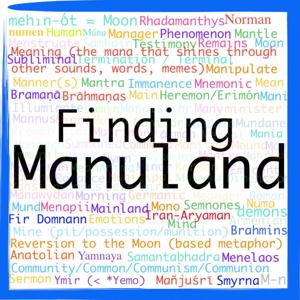

My favourite subject, and it all begins in Kherson — whether it’s the UN Commission of Inquiry on War Crimes in Ukraine or the Yamnaya community. A relatively small number of individuals created the language, the linguistic structures, the words we use in almost every sentence, the religions, the soul’s immanence in many Indo-European religions, including what I would characterise as Christianity and Buddhism. Created by this community, which is just amazing in itself, because most of us grow up with a mental model of Greece, Rome, maybe ancient Egypt before Greece, and then our cultures. It turns out this is not true. Greek and Italic culture, Italic and Celtic languages, as far as we know, formed inside a mixture of the Yamnaya community from this area in Kherson, Mykolaiv Oblast, right around the river where Russia and Ukraine — this has been an intersection point, an interaction point for millennia — out of an interaction between migrating Yamnaya from there after 2500 BCE, westwards near Odessa, just east of Odessa, and a community of people already there. Linguists and archaeologists have suspected this for decades.
Jung explains why he believes archetypes are part of the collective unconscious of humanity: he can’t understand where else they could have come from. He talks about the wildest migration theories, which we now know since the 2015 ancient DNA revolution are scientific facts — the genetic content of people from India to Ireland whose ancestry comes from what they call the steppe, what I call ancient Ukrainian.
For me, a lot of my work is about re-archetyping Ukraine inside the mental models of humanity. I realised, as many of us did, that there was a problem — whether it was former German policy or the policy of many of our governments. They were perceiving, and perhaps many of us did this too before becoming aware of Ukraine’s importance, not only in our current moment but over time, that Russia was managing by monopolising the myth of Russia’s superiority over Ukraine, archetyping Ukraine as not a real country. Every time Vladimir Putin speaks, he’s re-archetyping Russia as this great power. Many of us and our friends perhaps still perceive Russia’s culture — Dostoevsky, ballet — as somehow justifying its genocide in Ukraine. I’m a great fan of those writers because they’re very insightful and helpful to us.
But I realised from the very beginning of the full-scale invasion, without understanding it as archetyping at the time, that my mission was to campaign for parity of esteem between Ukraine and other modern nation states which have won the monopoly, by fair means or foul. Certain communities after World War II managed to become UN members, including Ukraine, a founding member of the United Nations, which signed the UN Charter in 1945.
As I dug deeper and followed this path from working in eastern Ukraine, I accidentally discovered the Yamnaya when property developers were destroying this extraordinary structure in a posh suburb of Dnipro. It made the front page of the New York Times. The local people were protesting, so in my capacity as a monitor, I went to discover what was going on. These property developers had destroyed a Yamnaya burial mound in which was buried the local monarch and various other people throughout the millennia, including the last person buried there — the head of the collective farm, believe it or not, around 1932. Delusions of grandeur, and continuity. Underneath the mound, when they destroyed it, was found a stone circle created by one of the major ingredient cultures in the Yamnaya.
Through that, I began, from a position of extreme scepticism, to trace the linguistic journey of certain people carrying not just a language, not just words, vocabulary, sounds and meanings. There are about a thousand sounds and meanings in what we call Proto-Indo-European, or what I call ancient Ukrainian — the language spoken by the Yamnaya between 4100 BCE and 2500 BCE. I recognise these dates are uncharted territory for most people. Our history begins maybe around 1000 BCE with King David in the Bible. Part of my mission is to re-archetype our mental models — our idea of not just Ukraine but humanity, human history, European history, and Ukrainians’ position in it — to create new structures and frameworks. Because that’s how what I call disinfolklore and disinformation works: it creates untruthful frameworks in our minds. People inside MAGA, in the MAGA disinfolklore galaxy, have all these in-jokes, they know things you and I wouldn’t. This is how Russian disinformation is so successful — it’s not about intelligence or education, it’s about how people’s minds are changed.
I’m quite upfront about this when I outline these histories. The ancient DNA studies are published in Nature and Science, the preeminent scientific journals. I stay away from anything not properly backed up. Feel free to follow up on anything to do with the Indo-European connection.
Part of what helped me see this pattern — and this is what I really do, I hunt for patterns in data — is that I assimilate information, as many of us do on X. As we now know from the third report on Foreign Information Manipulation and Interference by the European Union, released recently and which I highly recommend along with the first two reports, X was involved in 86% of over 40,000 FIMI instances collected. This is where we are. Many of us have ethical dilemmas about whether we should be on X, and most of us are also on Bluesky and other places. But the fight is here and the examples are here.
I saw Margarita Simonyan tweeting again in her folksy disinfolklore way — she does this a lot, telling stories, as indeed does Donald. They tell stories of frankly horrifying things. For instance, the way Donald communicated, I think in March 2024, that if the head of a major NATO country said they couldn’t pay for their NATO membership and asked would you protect us, he said he’d tell them to “do whatever the hell they want with you.” This was then reported by CNN as fact, though we’re not clear whether it ever happened. These folksy stories get taken up.
Simonyan tonight is talking about how people in the offices in Moscow are saying that if Germany gives weapons to Ukraine, Ukraine won’t be able to do anything with them without Germany’s help, therefore Germany is complicit and they’ll have to strike Berlin. This is a classic piece of disinfolklore — there’s a distancing in the narrative form, presented as a folksy story. “People in the offices of Moscow” — the image is she’s just heard gossip.
She’s done this before, at the St. Petersburg Economic Forum in June 2022. Many of us will remember this, where she said “people in Moscow are saying all our hope is in the famine.” She was sitting beside Putin himself, dressed in green — which is why I call her Maid Margarita Simonyan, like a reverse Robin Hood. This is an aspect of the disinfolklore analytical method: we can use folklore archetypes to interpret and combat those who are themselves using folksy archetypes.
She said people in Moscow are saying all our hope is in the famine — meaning there will be famine in Africa, migrants will come to Europe, and the EU will release sanctions because “it’s impossible for us not to be friends.” This is the folksy banter of the schoolyard — a seven-year-old speaking to their best friend after an argument: it’s impossible not to be friends. But this isn’t a schoolyard chat. It’s a conversation beside the head of state of a country at war, planning to starve millions in Africa in a madcap attempt — something you’d only see in Don Quixote or a folktale. The plan to win in Ukraine is to starve millions of Africans, provoke Europeans into lifting sanctions, become friends with Europe, and abandon Ukraine. The way she tells it, it sounds like solid Russian strategy told in a folksy way. It’s absolutely horrifying when you parse it, but it passes most people by. It enters their minds.
These are folktale archetypes, folksy stories communicating horrifying things. It’s a pattern they use, and it’s really effective because people like us share them — they provoke something in our emotions. Even if we think we’re harming the former president by characterising him as drunk, we’re still repeating the meme. The horrifyingness is slyly communicated, the energy continues, pinging around the world. Thankfully, today we see great advances in our political leadership over what we’ve experienced since February 2022.
But this method of communication has impacted President Biden’s policy. “Don’t poke the bear” is a disinfolklore meme, probably the most successful one ever. It actually impacts foreign policy — it stopped America properly helping Ukraine. International relations itself, the entire discourse, is full of these metaphors and disinfolklore memes, represented as means of communicating foreign policy and strategy affecting the lives and deaths of millions. Whereas in fact, these strategies are only communicated by and through these means.
What I have spotted, which as far as I’m aware no other writers have really noticed, is this continuity across multiple narrative forms and discourses. It’s obvious in anthropology, folklore studies, or Jungian psychology when they reference myths, archetypes, and storytelling. But the same dynamic is at play inside international relations discourse, inside the speeches of many of our leading politicians until recently, and obviously everything Donald says — he speaks this folklore fluently. The folksy stories, the January 6th anthem of the insurrectionists, the songs used in rallies, the folksy way of speaking about Al Capone, the archetyping of Melania as a character using haute couture clothes made by Ukrainian fashion designers in LA — Dressx — who supply comic book aesthetics for people like Elon Musk and Melania Trump who want to archetype themselves as characters in our information space by referencing superheroes or characters from contemporary folktale.
That’s a sample of the scale. Because I noticed that many of the mythological founders in Indo-European peoples had this MN sound in their monikers: Manu, the first human in Indic culture; Yama, who comes from Aryaman — there it is, Aryaman, which gave its name to Iran — becoming Yama in India, with this MN sound, one of the founders in ancient Iranian culture from pre-Zoroastrian times. In Ireland, Manannán. In Wales, Manawydan. In Germanic culture, Mannus, the first human. In Greece, Minos. In Armenia, Menua. All these MN sounds.
And then this other sound, RT — right, rita, truth in Sanskrit, arta in ancient Iranian, in Darius’s inscriptions. Darius founded the Achaemenid Empire — there’s the MN again — about 700 to 300 BCE, before Alexander the so-called Great. These RT sounds — the claim to monopolise what is right, unified right. These sounds recur again and again, patterns which seem to have some impact on our psyche, our minds — MN in mind as well.
I think it’s these sounds embedded in stories, whether the stories are what we might consider folklore. And now I think we have to consider what folklore is: it’s what’s on TikTok, what we’re reading on X, the war lore that we discuss. These are modern manifestations of folklore. What’s common to them and to the Brothers Grimm and other community-forming tropes and informational units, like Russian propaganda in Russian-occupied Ukraine where I started looking at this in detail — what they have in common is these sounds inside them that recur, these patterns that have been around for thousands of years attached to the same meanings. MN is in meaning as well. They shine through, like different meanings shine through different signifiers.
That’s the level I’m on. I know the Russians are looking at this linguistic level too, connecting symbols, signs, sounds, and images to what Jung called our unconscious — not our collective unconscious, but our individual unconscious. The stories are a means of communicating these and somehow controlling us. I don’t fully understand it, but I see the patterns and they’re empirical — empirical patterns through time, through culture. We see them every day. I collect them all the time.
That’s really my focus, what I bring that’s new. I was shocked to see how Russia was using generative AI to represent Western leaders as cartoonish characters to help brainwash children in Russia. Then I saw at a recent meeting that many of our leaders were shown using generative AI as children — this was applauded and seen as fun. It is fun, but it’s very dangerous, dark stuff.
I’ve tried to come up with a means of parsing any data, and I hope my twelve tools in my disinfolklore algorithm would help us see through nefarious attempts to manipulate our minds — like Russians using generative AI to represent foreign leaders as cartoonishly bad characters and embed those archetypes in minds. I saw early clues in Russian films about Gogol, who’s a Ukrainian writer but went to Russia to try to educate Moscow about Ukraine as a culture. All the Russians could see in his work was folktale, quaint characters. They did the same in a patronising way to Lesya Ukrainka — looking at Ukraine as a place of little, quaint people. A bit like how a previous generation of English people used leprechauns to archetype Irish people as inferior. Thankfully, that’s dead now.
As an Irish person, part of my identity let me see this family resemblance. But it can be a positive power too. What Russia is doing to the minds of Ukrainians inside the occupation and inside Russia — they are on the cutting edge of this, and the tools they’re using, whether generative AI or narrative tools, are very much what I’m trying to combat and give us the tools to see. We’re not really at the races generally in our culture. If we just got to know what the Russians are doing, that gives us a menu of what we shouldn’t be doing by accident, and what we’re up against.
Reading Harry Potter and things like that — I think reading Harry Potter is very innocuous. I know many people get exercised about its author. But as an artist myself, I’m amazed at what she achieved. Magic — it’s really important to understand how magic works, war magic, not to be afraid of it but to become familiar with it, because what the Russians manage to do, what Trump manages to do, is magical. We understand magic and magical tales.
Primarily, this is where we get our archetypes. I understand this from my own experience — from cartoons, from Disney, from Grimm’s fairy tales, from Chitty Chitty Bang Bang’s Child Catcher. Both good and bad archetypes. This is how I perceived reality when I arrived in eastern Ukraine in 2015, in this beautiful, halcyon, Arcadian forested area. From the first moment, I saw something folkloric about it. I didn’t understand what it was. That’s the intuition I’ve been uncovering. And at this point in my work, I can report that since we do take in archetypes as children from folktales, if we want to win the war for the next generation, we need to understand how these archetypes work and use them wisely.
 View all episodes
 By Decoding Trolls
My favourite subject, and it all begins in Kherson — whether it’s the UN Commission of Inquiry on War Crimes in Ukraine or the Yamnaya community. A relatively small number of individuals created the language, the linguistic structures, the words we use in almost every sentence, the religions, the soul’s immanence in many Indo-European religions, including what I would characterise as Christianity and Buddhism. Created by this community, which is just amazing in itself, because most of us grow up with a mental model of Greece, Rome, maybe ancient Egypt before Greece, and then our cultures. It turns out this is not true. Greek and Italic culture, Italic and Celtic languages, as far as we know, formed inside a mixture of the Yamnaya community from this area in Kherson, Mykolaiv Oblast, right around the river where Russia and Ukraine — this has been an intersection point, an interaction point for millennia — out of an interaction between migrating Yamnaya from there after 2500 BCE, westwards near Odessa, just east of Odessa, and a community of people already there. Linguists and archaeologists have suspected this for decades.
Jung explains why he believes archetypes are part of the collective unconscious of humanity: he can’t understand where else they could have come from. He talks about the wildest migration theories, which we now know since the 2015 ancient DNA revolution are scientific facts — the genetic content of people from India to Ireland whose ancestry comes from what they call the steppe, what I call ancient Ukrainian.
For me, a lot of my work is about re-archetyping Ukraine inside the mental models of humanity. I realised, as many of us did, that there was a problem — whether it was former German policy or the policy of many of our governments. They were perceiving, and perhaps many of us did this too before becoming aware of Ukraine’s importance, not only in our current moment but over time, that Russia was managing by monopolising the myth of Russia’s superiority over Ukraine, archetyping Ukraine as not a real country. Every time Vladimir Putin speaks, he’s re-archetyping Russia as this great power. Many of us and our friends perhaps still perceive Russia’s culture — Dostoevsky, ballet — as somehow justifying its genocide in Ukraine. I’m a great fan of those writers because they’re very insightful and helpful to us.
But I realised from the very beginning of the full-scale invasion, without understanding it as archetyping at the time, that my mission was to campaign for parity of esteem between Ukraine and other modern nation states which have won the monopoly, by fair means or foul. Certain communities after World War II managed to become UN members, including Ukraine, a founding member of the United Nations, which signed the UN Charter in 1945.
As I dug deeper and followed this path from working in eastern Ukraine, I accidentally discovered the Yamnaya when property developers were destroying this extraordinary structure in a posh suburb of Dnipro. It made the front page of the New York Times. The local people were protesting, so in my capacity as a monitor, I went to discover what was going on. These property developers had destroyed a Yamnaya burial mound in which was buried the local monarch and various other people throughout the millennia, including the last person buried there — the head of the collective farm, believe it or not, around 1932. Delusions of grandeur, and continuity. Underneath the mound, when they destroyed it, was found a stone circle created by one of the major ingredient cultures in the Yamnaya.
Through that, I began, from a position of extreme scepticism, to trace the linguistic journey of certain people carrying not just a language, not just words, vocabulary, sounds and meanings. There are about a thousand sounds and meanings in what we call Proto-Indo-European, or what I call ancient Ukrainian — the language spoken by the Yamnaya between 4100 BCE and 2500 BCE. I recognise these dates are uncharted territory for most people. Our history begins maybe around 1000 BCE with King David in the Bible. Part of my mission is to re-archetype our mental models — our idea of not just Ukraine but humanity, human history, European history, and Ukrainians’ position in it — to create new structures and frameworks. Because that’s how what I call disinfolklore and disinformation works: it creates untruthful frameworks in our minds. People inside MAGA, in the MAGA disinfolklore galaxy, have all these in-jokes, they know things you and I wouldn’t. This is how Russian disinformation is so successful — it’s not about intelligence or education, it’s about how people’s minds are changed.
I’m quite upfront about this when I outline these histories. The ancient DNA studies are published in Nature and Science, the preeminent scientific journals. I stay away from anything not properly backed up. Feel free to follow up on anything to do with the Indo-European connection.
Part of what helped me see this pattern — and this is what I really do, I hunt for patterns in data — is that I assimilate information, as many of us do on X. As we now know from the third report on Foreign Information Manipulation and Interference by the European Union, released recently and which I highly recommend along with the first two reports, X was involved in 86% of over 40,000 FIMI instances collected. This is where we are. Many of us have ethical dilemmas about whether we should be on X, and most of us are also on Bluesky and other places. But the fight is here and the examples are here.
I saw Margarita Simonyan tweeting again in her folksy disinfolklore way — she does this a lot, telling stories, as indeed does Donald. They tell stories of frankly horrifying things. For instance, the way Donald communicated, I think in March 2024, that if the head of a major NATO country said they couldn’t pay for their NATO membership and asked would you protect us, he said he’d tell them to “do whatever the hell they want with you.” This was then reported by CNN as fact, though we’re not clear whether it ever happened. These folksy stories get taken up.
Simonyan tonight is talking about how people in the offices in Moscow are saying that if Germany gives weapons to Ukraine, Ukraine won’t be able to do anything with them without Germany’s help, therefore Germany is complicit and they’ll have to strike Berlin. This is a classic piece of disinfolklore — there’s a distancing in the narrative form, presented as a folksy story. “People in the offices of Moscow” — the image is she’s just heard gossip.
She’s done this before, at the St. Petersburg Economic Forum in June 2022. Many of us will remember this, where she said “people in Moscow are saying all our hope is in the famine.” She was sitting beside Putin himself, dressed in green — which is why I call her Maid Margarita Simonyan, like a reverse Robin Hood. This is an aspect of the disinfolklore analytical method: we can use folklore archetypes to interpret and combat those who are themselves using folksy archetypes.
She said people in Moscow are saying all our hope is in the famine — meaning there will be famine in Africa, migrants will come to Europe, and the EU will release sanctions because “it’s impossible for us not to be friends.” This is the folksy banter of the schoolyard — a seven-year-old speaking to their best friend after an argument: it’s impossible not to be friends. But this isn’t a schoolyard chat. It’s a conversation beside the head of state of a country at war, planning to starve millions in Africa in a madcap attempt — something you’d only see in Don Quixote or a folktale. The plan to win in Ukraine is to starve millions of Africans, provoke Europeans into lifting sanctions, become friends with Europe, and abandon Ukraine. The way she tells it, it sounds like solid Russian strategy told in a folksy way. It’s absolutely horrifying when you parse it, but it passes most people by. It enters their minds.
These are folktale archetypes, folksy stories communicating horrifying things. It’s a pattern they use, and it’s really effective because people like us share them — they provoke something in our emotions. Even if we think we’re harming the former president by characterising him as drunk, we’re still repeating the meme. The horrifyingness is slyly communicated, the energy continues, pinging around the world. Thankfully, today we see great advances in our political leadership over what we’ve experienced since February 2022.
But this method of communication has impacted President Biden’s policy. “Don’t poke the bear” is a disinfolklore meme, probably the most successful one ever. It actually impacts foreign policy — it stopped America properly helping Ukraine. International relations itself, the entire discourse, is full of these metaphors and disinfolklore memes, represented as means of communicating foreign policy and strategy affecting the lives and deaths of millions. Whereas in fact, these strategies are only communicated by and through these means.
What I have spotted, which as far as I’m aware no other writers have really noticed, is this continuity across multiple narrative forms and discourses. It’s obvious in anthropology, folklore studies, or Jungian psychology when they reference myths, archetypes, and storytelling. But the same dynamic is at play inside international relations discourse, inside the speeches of many of our leading politicians until recently, and obviously everything Donald says — he speaks this folklore fluently. The folksy stories, the January 6th anthem of the insurrectionists, the songs used in rallies, the folksy way of speaking about Al Capone, the archetyping of Melania as a character using haute couture clothes made by Ukrainian fashion designers in LA — Dressx — who supply comic book aesthetics for people like Elon Musk and Melania Trump who want to archetype themselves as characters in our information space by referencing superheroes or characters from contemporary folktale.
That’s a sample of the scale. Because I noticed that many of the mythological founders in Indo-European peoples had this MN sound in their monikers: Manu, the first human in Indic culture; Yama, who comes from Aryaman — there it is, Aryaman, which gave its name to Iran — becoming Yama in India, with this MN sound, one of the founders in ancient Iranian culture from pre-Zoroastrian times. In Ireland, Manannán. In Wales, Manawydan. In Germanic culture, Mannus, the first human. In Greece, Minos. In Armenia, Menua. All these MN sounds.
And then this other sound, RT — right, rita, truth in Sanskrit, arta in ancient Iranian, in Darius’s inscriptions. Darius founded the Achaemenid Empire — there’s the MN again — about 700 to 300 BCE, before Alexander the so-called Great. These RT sounds — the claim to monopolise what is right, unified right. These sounds recur again and again, patterns which seem to have some impact on our psyche, our minds — MN in mind as well.
I think it’s these sounds embedded in stories, whether the stories are what we might consider folklore. And now I think we have to consider what folklore is: it’s what’s on TikTok, what we’re reading on X, the war lore that we discuss. These are modern manifestations of folklore. What’s common to them and to the Brothers Grimm and other community-forming tropes and informational units, like Russian propaganda in Russian-occupied Ukraine where I started looking at this in detail — what they have in common is these sounds inside them that recur, these patterns that have been around for thousands of years attached to the same meanings. MN is in meaning as well. They shine through, like different meanings shine through different signifiers.
That’s the level I’m on. I know the Russians are looking at this linguistic level too, connecting symbols, signs, sounds, and images to what Jung called our unconscious — not our collective unconscious, but our individual unconscious. The stories are a means of communicating these and somehow controlling us. I don’t fully understand it, but I see the patterns and they’re empirical — empirical patterns through time, through culture. We see them every day. I collect them all the time.
That’s really my focus, what I bring that’s new. I was shocked to see how Russia was using generative AI to represent Western leaders as cartoonish characters to help brainwash children in Russia. Then I saw at a recent meeting that many of our leaders were shown using generative AI as children — this was applauded and seen as fun. It is fun, but it’s very dangerous, dark stuff.
I’ve tried to come up with a means of parsing any data, and I hope my twelve tools in my disinfolklore algorithm would help us see through nefarious attempts to manipulate our minds — like Russians using generative AI to represent foreign leaders as cartoonishly bad characters and embed those archetypes in minds. I saw early clues in Russian films about Gogol, who’s a Ukrainian writer but went to Russia to try to educate Moscow about Ukraine as a culture. All the Russians could see in his work was folktale, quaint characters. They did the same in a patronising way to Lesya Ukrainka — looking at Ukraine as a place of little, quaint people. A bit like how a previous generation of English people used leprechauns to archetype Irish people as inferior. Thankfully, that’s dead now.
As an Irish person, part of my identity let me see this family resemblance. But it can be a positive power too. What Russia is doing to the minds of Ukrainians inside the occupation and inside Russia — they are on the cutting edge of this, and the tools they’re using, whether generative AI or narrative tools, are very much what I’m trying to combat and give us the tools to see. We’re not really at the races generally in our culture. If we just got to know what the Russians are doing, that gives us a menu of what we shouldn’t be doing by accident, and what we’re up against.
Reading Harry Potter and things like that — I think reading Harry Potter is very innocuous. I know many people get exercised about its author. But as an artist myself, I’m amazed at what she achieved. Magic — it’s really important to understand how magic works, war magic, not to be afraid of it but to become familiar with it, because what the Russians manage to do, what Trump manages to do, is magical. We understand magic and magical tales.
Primarily, this is where we get our archetypes. I understand this from my own experience — from cartoons, from Disney, from Grimm’s fairy tales, from Chitty Chitty Bang Bang’s Child Catcher. Both good and bad archetypes. This is how I perceived reality when I arrived in eastern Ukraine in 2015, in this beautiful, halcyon, Arcadian forested area. From the first moment, I saw something folkloric about it. I didn’t understand what it was. That’s the intuition I’ve been uncovering. And at this point in my work, I can report that since we do take in archetypes as children from folktales, if we want to win the war for the next generation, we need to understand how these archetypes work and use them wisely.