
Sign up to save your podcasts
Or

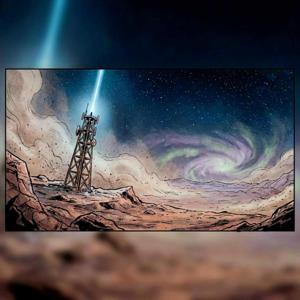

Candelas “Mustang” Camino stole ships for a living. And no one called her Candelas. If someone did, it did not end well for them.
Mustang had rules about stealing ships. She broke most of them. But the one she kept was simple. Know who pays you, and know why. On Neonara, under a sky the color of rust and old copper, she had followed that rule exactly far enough to land herself on a rooftop across from Magistrate Mahfouz’s private dock, watching a ship a client paid her to steal.
The ship was ugly. Which surprised her.
Rich Ethnarch Kingdom men liked their toys loud. Gold inlay, chromed hull plating, reactor glow tuned to whatever color was fashionable in society that quarter. This ship had none of that. It was a slate-gray mid-hauler, atmospheric-capable, modified for long range, stripped of anything that would catch a patrol’s eye. Practical. The ship for a man who wants to move something and does not want to be asked what.
Mustang did not like it.
She was crouched behind a ventilation stack, pilot’s hat pulled low, her hand on the bolt in her jacket pocket. The bolt had come from the first ship she ever stole, the one Wally taught her on. She had worn it smooth. Tonight it felt heavier than usual.
Neonara’s capital sprawled below her in the early dark. Prayer towers with speakers that called the faithful four times a day. Women walking with their eyes down and their heads covered. A Kingdom rim colony ran on the same script as the core worlds. Just poorer, and with fewer witnesses.
The magistrate’s dock sat where the streets ran out, and the salt flats began. The Hassani Hulls ship rested on landing struts inside a hangar with the bay doors open to the night. Two guards at the front. One inside. Security systems that a better thief might have respected.
She had cataloged the dock in three passes.
The first was five days ago, walking past the hangar with her cover pulled low. She counted paces between the service alley and the rear maintenance panel. She noted which of the hangar’s four external sensors tracked movement and which tracked heat. The two failed in different weather, and she wanted to know which one to hide from on which night.
She had stopped at a textile stall on the way back. Thin fabric hanging from wire, faded patterns, a woman behind the counter with a face that had learned to show nothing. A girl beside her, nine or ten, stacking folded cloth with small, careful hands. The girl glanced up at Mustang and looked down again fast, the way the Kingdom taught girls.
Mustang bought a length of gray cloth she did not need. She paid in hard Geld. The woman counted the coins twice.
“You’re not from here,” the woman said. Quiet. Not a question.
“Passing through.”
The woman set down the cloth she had been folding. “My sister’s girl passed through too. Last year.” She slid Mustang’s purchase across the counter between them. “Told us she had work at the magistrate’s house. Never came back for her things.”
Mustang stood still until the shift in her chest passed.
“I’m sorry,” she said.
The woman nodded. She did not look at the girl beside her. The girl kept stacking cloth.
“Safe travels,” the woman said, nothing more, and she turned to the next customer.
Mustang had walked back to her rental, a cheap room off the main concourse, turning the cloth over in her hands. She told herself it was a frontier story. Everyone on the frontier had a story like it. The magistrate’s house was not the magistrate’s dock.
She had told herself many things.
The second pass, three days ago at dusk, from the rooftop of an abandoned spice stall. Forty-one minutes between guard changes. The outgoing guard walked the perimeter counterclockwise before handing off, which gave her ninety seconds between his last sweep of the back and his partner’s first sweep of the front. Like a tide. The window repeated.
The third, during the small hours of last night, walking the service trench barefoot to test the drainage grates. Two of them rang under her weight. She marked which. She would step over those tonight.
Wally’s first rule. You don’t steal the ship, kid. You steal the building. The ship is what you carry out.
Her comm vibrated once. A single pulse. The buyer’s signal, confirming the window.
She had met him through a broker on Velcyn Station six weeks earlier. Hakim Nawaz, he called himself. Kingdom core-world vowels, a jacket cut stiff with weave-lining under the leather, and the watchful eye of a man used to leaving fast. Thirty thousand in hard Geld, half up front.
“Mahfouz keeps a Hassani on his private dock,” Nawaz had said. He stirred a drink he never finished. “My people want it off his books. Call it a private dispute. The hauler clears the dock, the magistrate eats the loss, my people sleep better. You get paid.”
It was a flat story. A boring story. Mustang had heard a hundred like it, and ninety of them had been true enough to bank.
She had believed this one because she wanted to. For the better part of a year, she wanted to hit an Ethnarch Kingdom magistrate, and Nawaz had handed her one. She had not asked the second question. Why this ship?
And now she crouched on a rooftop, looking at a hauler too plain for a magistrate’s vanity, and the bolt in her pocket sat warm against her hand.
She moved.
The back of the hangar came up on her left. She dropped into the service trench without breaking stride, stepped over the two grates that would have rung, and reached the rear maintenance panel with her shoulder turned to present the smallest silhouette to the thermal sensor above the door. Two layers of insulated fabric, a hood pulled over her cover, gloves thick enough to read as ambient against the wall.
She pulled the gloves off with her teeth and tucked them into her jacket.
A standard Kingdom Series 700 service lock secured the maintenance panel. She carried three tools for it. A pressure shim thin enough to slide between the bolt and the strike plate. A mini magnetic rake. And a tool Wally had made for her, a shaped wire with a ceramic head, filed down over the course of a long winter on a station she could no longer remember the name of.
She slid the shim home and felt it bind.
Her hand stopped. The shim was not seating. Someone had replaced the strike plate. Newer alloy, tighter tolerance.
That kind of upgrade went on a panel after an incident. Someone had walked up to this door in the last five days and decided it needed to hold longer next time. She had not walked the hangar in the daylight since pass two. Whatever happened here, she had missed it.
Her hand stayed on the shim. The strike plate. The hauler with the working scars. The textile woman counting Geld twice. None of it sat right.
Wally’s voice in the back of her head, from a station with no name.
The lock you planned for is not the lock in front of you. The lock in front of you is the one you have to open.
She withdrew the shim slowly and set the rake aside. She took out Wally’s wire and worked the pins in the order he had taught her for an upgraded strike, which was not the order for a standard one. The first pin set on the second pass. Second on the third. She walked the last two together, the wire filed for that exact pairing on a different lock, on a different job, on a different world.
The panel came open with no sound at all.
Wally’s second rule. A ship in a hangar is already yours. You just have to convince it.
She was inside before the interior guard finished his second cinder stick.
She knew he smoked because she had watched him on pass two. Kingdom service guards were not supposed to smoke on duty, but the interior guard was forty-something and bored. Two an hour, near the forward port access where the draft pulled the smell out through the bay doors. He would be there now for another three minutes. She did not need that long.
She circled the ship on its dark side.
Scars marked the hull. Not the scars of battle. The scars of work. Docking rubs. Cargo scrapes. A patched plasma burn near the port thruster. This ship had been places. A rich man’s showpiece did not look like this. A working ship did.
She climbed the ramp.
The interior told her everything in eight seconds.
They had retrofitted the passenger compartment. Rows of narrow bunks, four high, with restraints. Industrial air scrubbers mounted at the corners. A sanitation trench that drained into a recessed tank. Lights not designed for comfort. Forward, a normal crew section. Aft, a normal cargo section. But midship? A kennel for people.
Mustang stood still.
They are using this ship to move girls.
The buyer wanted a clean vessel to replace a compromised one. Mahfouz ran the ship. Nawaz was not a rival. Nawaz was the next operator in a chain who needed a vehicle with no recent history on any manifest anyone cared about.
The nearest bunk had a restraint left hanging. Webbing, a metal buckle, a length of strap looped down from the upper anchor, the way a strap hangs when someone undid it in a hurry and never came back to stow it.
She sat down beneath it. Her shoulder brushed the strap as she lowered herself, and the buckle swung against her arm. She did not move it. She let it rest where it had fallen.
She thought more about the woman counting Geld twice. The girl beside her, nine or ten, stacked folded cloth with small, careful hands. My sister’s girl passed through too. Last year. Never came back for her things…
She held the bolt against her palm and waited for her hand to stop. It took longer than she wanted.
Then she stood up and got to work.
She was going to steal the ship. That had been the plan walking in, and it was still the plan. She was going to deliver it to Hakim Nawaz and collect her hard Geld. Burning a buyer mid-contract closed doors she still needed open.
But she was also going to rig the ship.
She crossed to the nav console and opened the transponder housing with a quarter-turn of the recessed latch. Three boards inside, stacked. She knew the geography of Kingdom-manufactured transponders the way Wally had taught her to know any console: by working past them rather than around them. The top board was the primary encoder, hot, monitored on every diagnostic sweep. A splice there would register before she made orbit. The middle board was the secondary broadcast, quieter, audited weekly. The bottom board was the emergency beacon, untouchable. She wanted the middle one.
She pulled a broadcast loop transmitter from the inside pocket of her jacket. Palm-sized, matte black, with three leads and a pressure-activated switch, built over two evenings in a rented room on Velcyn Station for a different job she had passed on when the buyer lied about the cargo. She had kept the device because she kept every device. Wally’s third rule. Never throw a tool. You don’t know what the next lock looks like.
She spliced the loop into the secondary at the relay junction. A splice at the junction read as a routine maintenance tap. She sealed it with a heat-cure resin that dried in thirty seconds and matched service maintenance standards.
She fed the loop the raw manifest data from the ship’s own logs. Routes. Ports. Previous cargo declarations, which she now understood meant something very different from the words on the screen. Crew registrations. Docking authorizations. The whole ugly record of a ship that had been doing this for longer than she wanted to count.
The loop would stay silent until the ship cleared Neonara’s atmosphere and handed off to interplanetary traffic control. Then the secondary would wake up and broadcast the full manifest on official government frequencies, rim-wide, for as long as the ship stayed powered. Maybe even a Galactic Federation Marshal or two would pick it up outside Kingdom space. The primary would keep broadcasting a clean identification, which meant anyone trying to match the two signals would conclude the ship was both itself and not itself.
They might act. They might not. But the buyers could not un-broadcast it, and the ports could not un-receive it. Somewhere, someone with a badge and a bad mood would start pulling a thread.
It was not a rescue. It was a noise. A signal.
Mustang closed the housing, wiped her prints, and walked to the pilot’s seat. She had practiced Hassani ignition sequences in the dark while Wally stood behind her, asking questions about cargo fees.
The engines woke loud. The interior guard’s shouting carried through the bay before the side hatch sealed.
Sidearm blasters rose at the hangar mouth. The first energy bolt slapped the port thruster cowling and Mustang felt it in her teeth. A second hit somewhere aft. A third blew an exterior sensor array and the console lit up with warnings she did not have time to read.
She rode the hauler ten meters above the salt, ground effect cushioning the belly, and ran for the jagged line of mountains on the horizon. Her hands held steady on the yoke.
The salt streamed white beneath her in the running lights. The mountains came up fast. She pulled the nose hard at their base, took the hauler straight up, and let Neonara’s rust sky fall away beneath her as the atmospheric flaps cut into the thin air.
She redlined the engines until she made the handoff to Hakim Nawaz in orbit beyond Neonara’s dead moon.
He waited in a corvette that cost more than he pretended, parked next to her runabout, where she had left it five days ago. He shuttled over with two men. They boarded the hauler and went straight midship. Not the cargo hold. Not the cockpit. The bunks. One of them ran a hand along the restraint anchors, checking the welds, the way a man checks a tool he is about to put back into service.
Then Nawaz paid her the remaining hard Geld, counted into a satchel, and did not make eye contact while he did it.
Mustang watched him not look at her, and she let him not look. A man who would not meet her eyes was a man who knew exactly what the ship was for, because he was the one taking it back into the trade. That assumption, that she did not know, was the most useful thing he was going to give her tonight.
“Pleasure doing business,” he said, in his core Kingdom world vowels.
“Sure,” she said.
Mustang flew her runabout and left Nawaz and the dead moon behind. She arrived at a rim colony port that did not care who landed there, as long as someone paid for the privilege.
On the way in, she read the sector chatter.
Federation Marshal traffic on an open frequency. Unidentified vessel skirting the edge of Kingdom space, broadcasting illicit manifest data. Coordinated interdiction orders across four jurisdictions. Rim authorities on alert. Names being matched to ports. Ports being matched to other ships.
Nawaz’s stolen hauler had gone dark ninety minutes after the handoff. Too late. The manifest had already been in the sky.
Mustang put her runabout down, paid her fees, and walked to the bar Wally kept on the east end of the port concourse. He was behind the counter, the way he always was when he was not on a job, with his sleeves rolled up and a rag over one shoulder. He saw her in the doorway and nodded once.
She sat at the end of the bar. He poured without asking. Rim whiskey, neat, two glasses. He set one in front of her and kept one for himself.
Over the rim of his glass, he watched her for a moment. He had a way of looking at her that was not quite concern and not quite diagnosis. It was the look he had given her since she was twenty-three and new and trying to pretend she was not. She had never figured out how to make him stop.
“You look like hell,” he said.
“Thanks.”
“You eat anything today?”
“Don’t remember.”
He nodded as if that confirmed something. He pulled a covered dish from under the counter, scooped stew onto a plate, and set it in front of her without comment. She looked at it. The steam rose between them.
“Eat,” he said. “Talk after. Or not. Your call.”
She picked up the spoon.
After a while, he said, “Clean job?”
She turned the glass in her fingers. The bolt was in her pocket, warm now.
“Clean enough.”
“Uh-huh.” He set his glass down. “Anybody follow you in?”
“No.”
“Anybody going to?”
“Not tonight.”
He looked at her again. She knew he was cataloging her the way she cataloged a hangar. The new scuff on her left sleeve. How she held her spoon. That her jacket stayed on.
“You want me to stop asking,” he said.
“Yes.”
“All right.”
He refilled her glass and his own. He did not ask the next question. But he stayed there, across the bar, doing bar work that did not need doing, for as long as she stayed at the counter. That was the answer she wanted, and he knew it, and he gave it to her without making her say so.
She ate the stew. She drank the whiskey. After a while she set the spoon down and said, to the counter more than to him, “Wal.”
“Yeah, kid.”
“The ones who go missing on Neonara.” She did not look up. “They don’t all come back.”
He set down the rag and exhaled. “No,” he said. “They don’t.”
That was all she said, and all he said. But a patrol channel lit up somewhere, and somewhere a port clerk’s hands went cold, and Wally Maroun poured her a third glass.
On the frontier, every signal tells a story. This one said: she had stolen the building, the ship, and the lies they were going to tell about it.
Thanks for tuning in to Sci-Fi Signals from Author Daniel P. Douglas! Subscribe for free to receive new posts and support my work.
 View all episodes
 By Daniel P. Douglas
Candelas “Mustang” Camino stole ships for a living. And no one called her Candelas. If someone did, it did not end well for them.
Mustang had rules about stealing ships. She broke most of them. But the one she kept was simple. Know who pays you, and know why. On Neonara, under a sky the color of rust and old copper, she had followed that rule exactly far enough to land herself on a rooftop across from Magistrate Mahfouz’s private dock, watching a ship a client paid her to steal.
The ship was ugly. Which surprised her.
Rich Ethnarch Kingdom men liked their toys loud. Gold inlay, chromed hull plating, reactor glow tuned to whatever color was fashionable in society that quarter. This ship had none of that. It was a slate-gray mid-hauler, atmospheric-capable, modified for long range, stripped of anything that would catch a patrol’s eye. Practical. The ship for a man who wants to move something and does not want to be asked what.
Mustang did not like it.
She was crouched behind a ventilation stack, pilot’s hat pulled low, her hand on the bolt in her jacket pocket. The bolt had come from the first ship she ever stole, the one Wally taught her on. She had worn it smooth. Tonight it felt heavier than usual.
Neonara’s capital sprawled below her in the early dark. Prayer towers with speakers that called the faithful four times a day. Women walking with their eyes down and their heads covered. A Kingdom rim colony ran on the same script as the core worlds. Just poorer, and with fewer witnesses.
The magistrate’s dock sat where the streets ran out, and the salt flats began. The Hassani Hulls ship rested on landing struts inside a hangar with the bay doors open to the night. Two guards at the front. One inside. Security systems that a better thief might have respected.
She had cataloged the dock in three passes.
The first was five days ago, walking past the hangar with her cover pulled low. She counted paces between the service alley and the rear maintenance panel. She noted which of the hangar’s four external sensors tracked movement and which tracked heat. The two failed in different weather, and she wanted to know which one to hide from on which night.
She had stopped at a textile stall on the way back. Thin fabric hanging from wire, faded patterns, a woman behind the counter with a face that had learned to show nothing. A girl beside her, nine or ten, stacking folded cloth with small, careful hands. The girl glanced up at Mustang and looked down again fast, the way the Kingdom taught girls.
Mustang bought a length of gray cloth she did not need. She paid in hard Geld. The woman counted the coins twice.
“You’re not from here,” the woman said. Quiet. Not a question.
“Passing through.”
The woman set down the cloth she had been folding. “My sister’s girl passed through too. Last year.” She slid Mustang’s purchase across the counter between them. “Told us she had work at the magistrate’s house. Never came back for her things.”
Mustang stood still until the shift in her chest passed.
“I’m sorry,” she said.
The woman nodded. She did not look at the girl beside her. The girl kept stacking cloth.
“Safe travels,” the woman said, nothing more, and she turned to the next customer.
Mustang had walked back to her rental, a cheap room off the main concourse, turning the cloth over in her hands. She told herself it was a frontier story. Everyone on the frontier had a story like it. The magistrate’s house was not the magistrate’s dock.
She had told herself many things.
The second pass, three days ago at dusk, from the rooftop of an abandoned spice stall. Forty-one minutes between guard changes. The outgoing guard walked the perimeter counterclockwise before handing off, which gave her ninety seconds between his last sweep of the back and his partner’s first sweep of the front. Like a tide. The window repeated.
The third, during the small hours of last night, walking the service trench barefoot to test the drainage grates. Two of them rang under her weight. She marked which. She would step over those tonight.
Wally’s first rule. You don’t steal the ship, kid. You steal the building. The ship is what you carry out.
Her comm vibrated once. A single pulse. The buyer’s signal, confirming the window.
She had met him through a broker on Velcyn Station six weeks earlier. Hakim Nawaz, he called himself. Kingdom core-world vowels, a jacket cut stiff with weave-lining under the leather, and the watchful eye of a man used to leaving fast. Thirty thousand in hard Geld, half up front.
“Mahfouz keeps a Hassani on his private dock,” Nawaz had said. He stirred a drink he never finished. “My people want it off his books. Call it a private dispute. The hauler clears the dock, the magistrate eats the loss, my people sleep better. You get paid.”
It was a flat story. A boring story. Mustang had heard a hundred like it, and ninety of them had been true enough to bank.
She had believed this one because she wanted to. For the better part of a year, she wanted to hit an Ethnarch Kingdom magistrate, and Nawaz had handed her one. She had not asked the second question. Why this ship?
And now she crouched on a rooftop, looking at a hauler too plain for a magistrate’s vanity, and the bolt in her pocket sat warm against her hand.
She moved.
The back of the hangar came up on her left. She dropped into the service trench without breaking stride, stepped over the two grates that would have rung, and reached the rear maintenance panel with her shoulder turned to present the smallest silhouette to the thermal sensor above the door. Two layers of insulated fabric, a hood pulled over her cover, gloves thick enough to read as ambient against the wall.
She pulled the gloves off with her teeth and tucked them into her jacket.
A standard Kingdom Series 700 service lock secured the maintenance panel. She carried three tools for it. A pressure shim thin enough to slide between the bolt and the strike plate. A mini magnetic rake. And a tool Wally had made for her, a shaped wire with a ceramic head, filed down over the course of a long winter on a station she could no longer remember the name of.
She slid the shim home and felt it bind.
Her hand stopped. The shim was not seating. Someone had replaced the strike plate. Newer alloy, tighter tolerance.
That kind of upgrade went on a panel after an incident. Someone had walked up to this door in the last five days and decided it needed to hold longer next time. She had not walked the hangar in the daylight since pass two. Whatever happened here, she had missed it.
Her hand stayed on the shim. The strike plate. The hauler with the working scars. The textile woman counting Geld twice. None of it sat right.
Wally’s voice in the back of her head, from a station with no name.
The lock you planned for is not the lock in front of you. The lock in front of you is the one you have to open.
She withdrew the shim slowly and set the rake aside. She took out Wally’s wire and worked the pins in the order he had taught her for an upgraded strike, which was not the order for a standard one. The first pin set on the second pass. Second on the third. She walked the last two together, the wire filed for that exact pairing on a different lock, on a different job, on a different world.
The panel came open with no sound at all.
Wally’s second rule. A ship in a hangar is already yours. You just have to convince it.
She was inside before the interior guard finished his second cinder stick.
She knew he smoked because she had watched him on pass two. Kingdom service guards were not supposed to smoke on duty, but the interior guard was forty-something and bored. Two an hour, near the forward port access where the draft pulled the smell out through the bay doors. He would be there now for another three minutes. She did not need that long.
She circled the ship on its dark side.
Scars marked the hull. Not the scars of battle. The scars of work. Docking rubs. Cargo scrapes. A patched plasma burn near the port thruster. This ship had been places. A rich man’s showpiece did not look like this. A working ship did.
She climbed the ramp.
The interior told her everything in eight seconds.
They had retrofitted the passenger compartment. Rows of narrow bunks, four high, with restraints. Industrial air scrubbers mounted at the corners. A sanitation trench that drained into a recessed tank. Lights not designed for comfort. Forward, a normal crew section. Aft, a normal cargo section. But midship? A kennel for people.
Mustang stood still.
They are using this ship to move girls.
The buyer wanted a clean vessel to replace a compromised one. Mahfouz ran the ship. Nawaz was not a rival. Nawaz was the next operator in a chain who needed a vehicle with no recent history on any manifest anyone cared about.
The nearest bunk had a restraint left hanging. Webbing, a metal buckle, a length of strap looped down from the upper anchor, the way a strap hangs when someone undid it in a hurry and never came back to stow it.
She sat down beneath it. Her shoulder brushed the strap as she lowered herself, and the buckle swung against her arm. She did not move it. She let it rest where it had fallen.
She thought more about the woman counting Geld twice. The girl beside her, nine or ten, stacked folded cloth with small, careful hands. My sister’s girl passed through too. Last year. Never came back for her things…
She held the bolt against her palm and waited for her hand to stop. It took longer than she wanted.
Then she stood up and got to work.
She was going to steal the ship. That had been the plan walking in, and it was still the plan. She was going to deliver it to Hakim Nawaz and collect her hard Geld. Burning a buyer mid-contract closed doors she still needed open.
But she was also going to rig the ship.
She crossed to the nav console and opened the transponder housing with a quarter-turn of the recessed latch. Three boards inside, stacked. She knew the geography of Kingdom-manufactured transponders the way Wally had taught her to know any console: by working past them rather than around them. The top board was the primary encoder, hot, monitored on every diagnostic sweep. A splice there would register before she made orbit. The middle board was the secondary broadcast, quieter, audited weekly. The bottom board was the emergency beacon, untouchable. She wanted the middle one.
She pulled a broadcast loop transmitter from the inside pocket of her jacket. Palm-sized, matte black, with three leads and a pressure-activated switch, built over two evenings in a rented room on Velcyn Station for a different job she had passed on when the buyer lied about the cargo. She had kept the device because she kept every device. Wally’s third rule. Never throw a tool. You don’t know what the next lock looks like.
She spliced the loop into the secondary at the relay junction. A splice at the junction read as a routine maintenance tap. She sealed it with a heat-cure resin that dried in thirty seconds and matched service maintenance standards.
She fed the loop the raw manifest data from the ship’s own logs. Routes. Ports. Previous cargo declarations, which she now understood meant something very different from the words on the screen. Crew registrations. Docking authorizations. The whole ugly record of a ship that had been doing this for longer than she wanted to count.
The loop would stay silent until the ship cleared Neonara’s atmosphere and handed off to interplanetary traffic control. Then the secondary would wake up and broadcast the full manifest on official government frequencies, rim-wide, for as long as the ship stayed powered. Maybe even a Galactic Federation Marshal or two would pick it up outside Kingdom space. The primary would keep broadcasting a clean identification, which meant anyone trying to match the two signals would conclude the ship was both itself and not itself.
They might act. They might not. But the buyers could not un-broadcast it, and the ports could not un-receive it. Somewhere, someone with a badge and a bad mood would start pulling a thread.
It was not a rescue. It was a noise. A signal.
Mustang closed the housing, wiped her prints, and walked to the pilot’s seat. She had practiced Hassani ignition sequences in the dark while Wally stood behind her, asking questions about cargo fees.
The engines woke loud. The interior guard’s shouting carried through the bay before the side hatch sealed.
Sidearm blasters rose at the hangar mouth. The first energy bolt slapped the port thruster cowling and Mustang felt it in her teeth. A second hit somewhere aft. A third blew an exterior sensor array and the console lit up with warnings she did not have time to read.
She rode the hauler ten meters above the salt, ground effect cushioning the belly, and ran for the jagged line of mountains on the horizon. Her hands held steady on the yoke.
The salt streamed white beneath her in the running lights. The mountains came up fast. She pulled the nose hard at their base, took the hauler straight up, and let Neonara’s rust sky fall away beneath her as the atmospheric flaps cut into the thin air.
She redlined the engines until she made the handoff to Hakim Nawaz in orbit beyond Neonara’s dead moon.
He waited in a corvette that cost more than he pretended, parked next to her runabout, where she had left it five days ago. He shuttled over with two men. They boarded the hauler and went straight midship. Not the cargo hold. Not the cockpit. The bunks. One of them ran a hand along the restraint anchors, checking the welds, the way a man checks a tool he is about to put back into service.
Then Nawaz paid her the remaining hard Geld, counted into a satchel, and did not make eye contact while he did it.
Mustang watched him not look at her, and she let him not look. A man who would not meet her eyes was a man who knew exactly what the ship was for, because he was the one taking it back into the trade. That assumption, that she did not know, was the most useful thing he was going to give her tonight.
“Pleasure doing business,” he said, in his core Kingdom world vowels.
“Sure,” she said.
Mustang flew her runabout and left Nawaz and the dead moon behind. She arrived at a rim colony port that did not care who landed there, as long as someone paid for the privilege.
On the way in, she read the sector chatter.
Federation Marshal traffic on an open frequency. Unidentified vessel skirting the edge of Kingdom space, broadcasting illicit manifest data. Coordinated interdiction orders across four jurisdictions. Rim authorities on alert. Names being matched to ports. Ports being matched to other ships.
Nawaz’s stolen hauler had gone dark ninety minutes after the handoff. Too late. The manifest had already been in the sky.
Mustang put her runabout down, paid her fees, and walked to the bar Wally kept on the east end of the port concourse. He was behind the counter, the way he always was when he was not on a job, with his sleeves rolled up and a rag over one shoulder. He saw her in the doorway and nodded once.
She sat at the end of the bar. He poured without asking. Rim whiskey, neat, two glasses. He set one in front of her and kept one for himself.
Over the rim of his glass, he watched her for a moment. He had a way of looking at her that was not quite concern and not quite diagnosis. It was the look he had given her since she was twenty-three and new and trying to pretend she was not. She had never figured out how to make him stop.
“You look like hell,” he said.
“Thanks.”
“You eat anything today?”
“Don’t remember.”
He nodded as if that confirmed something. He pulled a covered dish from under the counter, scooped stew onto a plate, and set it in front of her without comment. She looked at it. The steam rose between them.
“Eat,” he said. “Talk after. Or not. Your call.”
She picked up the spoon.
After a while, he said, “Clean job?”
She turned the glass in her fingers. The bolt was in her pocket, warm now.
“Clean enough.”
“Uh-huh.” He set his glass down. “Anybody follow you in?”
“No.”
“Anybody going to?”
“Not tonight.”
He looked at her again. She knew he was cataloging her the way she cataloged a hangar. The new scuff on her left sleeve. How she held her spoon. That her jacket stayed on.
“You want me to stop asking,” he said.
“Yes.”
“All right.”
He refilled her glass and his own. He did not ask the next question. But he stayed there, across the bar, doing bar work that did not need doing, for as long as she stayed at the counter. That was the answer she wanted, and he knew it, and he gave it to her without making her say so.
She ate the stew. She drank the whiskey. After a while she set the spoon down and said, to the counter more than to him, “Wal.”
“Yeah, kid.”
“The ones who go missing on Neonara.” She did not look up. “They don’t all come back.”
He set down the rag and exhaled. “No,” he said. “They don’t.”
That was all she said, and all he said. But a patrol channel lit up somewhere, and somewhere a port clerk’s hands went cold, and Wally Maroun poured her a third glass.
On the frontier, every signal tells a story. This one said: she had stolen the building, the ship, and the lies they were going to tell about it.
Thanks for tuning in to Sci-Fi Signals from Author Daniel P. Douglas! Subscribe for free to receive new posts and support my work.