
Sign up to save your podcasts
Or

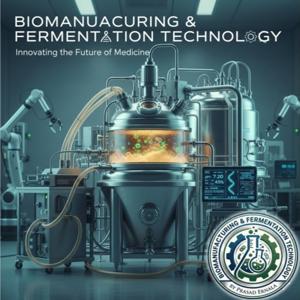

In this episode of industrial fermentation, the harvest phase marks a critical transition where the focus shifts from maximizing growth to preserving product integrity. At manufacturing scales, large volumes of broth remain biologically active for hours after feeding stops, making the product highly susceptible to enzymatic degradation and oxidative damage. Maintaining quality requires biological state control, as physical limitations like thermal inertia prevent the instant cooling or arrest of metabolic activity. Effective management relies on multi-parameter monitoring, such as tracking respiratory gas levels and pH shifts, to determine the precise moment for harvest. Ultimately, My analysis highlights that post-fermentation handling must be treated as a rigorous engineering process to ensure that upstream gains are not lost to residual metabolism before purification begins.
 View all episodes
 By prasad ernala
In this episode of industrial fermentation, the harvest phase marks a critical transition where the focus shifts from maximizing growth to preserving product integrity. At manufacturing scales, large volumes of broth remain biologically active for hours after feeding stops, making the product highly susceptible to enzymatic degradation and oxidative damage. Maintaining quality requires biological state control, as physical limitations like thermal inertia prevent the instant cooling or arrest of metabolic activity. Effective management relies on multi-parameter monitoring, such as tracking respiratory gas levels and pH shifts, to determine the precise moment for harvest. Ultimately, My analysis highlights that post-fermentation handling must be treated as a rigorous engineering process to ensure that upstream gains are not lost to residual metabolism before purification begins.