
Sign up to save your podcasts
Or

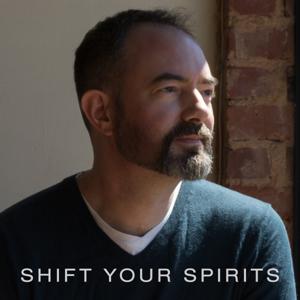

A personal solo episode about losing the joy for my writing and a breakthrough I recently experienced healing issues around creativity, self-esteem, and perfectionism.
Akimbo Seth Godin's Podcast
Leaders' Call to Adventure Lori Ference podcast
Silent All These Years Tori Amos
Slade's Books & Courses
Get an intuitive reading with Slade
Automatic Intuition
Edit your pledge on Patreon
There are a lot of you listening to this who I personally really wanted to tell this story to.
Like, not as an episode but just in my life. It's actually easier just to make it a podcast episode and tell the story at once. I've texted a few people. I've called a few people over the last week. I've called Seth and made him listen to me talk about it for an hour and a half. And then I went to text my friend Jeff last night to catch him up on what had been going on with me and I thought, 'Oh god, this is just all too much for texting.'
For some reason, it feels more self-indulgent to keep calling people individually and gushing about my creative breakthroughs and my angst and all that kind of stuff. It just seems to be more appropriate to actually do a personal podcast episode which you can fast forward or choose not to listen to.
For those of you who are choosing to listen to this, you're my friends too and you have expressed interest in my personal episodes and me sharing things from my personal life. Actual issues that I'm dealing with. It humanizes the whole thing, right? And it reminds you that I am not a guru sitting up here with a bunch of wisdom about this stuff. I am someone who is playing with all these tools and all this language, and observing, and trying to share a part of my process as a way of motivating you and bringing you along with me.
So this all goes back to all that solar eclipse madness we had in 2017.
At the time that I'm recording this, it is towards the end of August 2018, if you're listening from the future and you need some time context there. But back to the big eclipse in 2017, at the end of the summer. It was about a year ago, and the bookends for all the eclipse stuff that was going on last year was about the sign of Leo, and the opposite sign of Leo, which is Aquarius.
There was this thematic dynamic and there were sort of two questions that the eclipses were bringing up for you. And the fact that I am a Leo and Jeff, incidentally, who I wanted to tell this story to, is Leo as well. And so, one of the reasons why I felt so exhausted in trying to catch him up on this in text messages, we've been having this conversation for well over a year about both of us, and how we've been going through this. Not to mention all the clients and people I do readings for, where we've had conversations about this.
So this is just my personal experience with all this stuff.
But for all of us, there was a theme. There IS a theme with the solar eclipses that we've been through and all this retrograde stuff with an eclipse is kind of like, 'Oh, by the way, here's a bonus lesson for you. Just to make sure you got that all worked out.
The Leo is really asking us: How are you a star? What's your light? What do you have to give the world?
The Aquarius is about: Who's receiving that light? Who's observing it? Who can see it? Who is impacted by it?
I didn't make this up, by the way.
I heard something Seth Godin talking about it on his podcast Akimbo. I'll try to find the exact episode and link to it. But if you want to check out Akimbo, I think it was one of the first three episodes that he did for that whole podcast. But he had an episode about Making Things for the Weirdos. So this is the thing I didn't make up. For the edge, not the middle.
The idea of what makes something super popular, what makes something mainstream. Things were not created for the mainstream. They aren't created for the middle. If you create something that's gonna appeal to everyone, you're going to re-invent the colour beige. You're going to reconstitute oatmeal.
The way in which things become popular and mainstream is that they are picked up by the weirdos. By the fringes. By the tastemakers and the hipsters and the people who are on the edge. The Lantern-bearers who are out in the woods guiding the lost back to the light. Back to civilization. It's found on the edge in the margins.
And so, people who are early adopter of things that end up being very popular and cool are very proud of themselves for discovering something, and appreciate something that is new and difficult and hard to categorize and that not everyone gets. If you've ever had those friends who always want to be the one who finds the new band before anyone else and who always wants to listen to something that everyone else finds off-putting or reads something that's really difficult.
It's part of their ego-pride that they are able to go places the rest of us can't go. Or go there FIRST. They discover things and then they pass it to us.
The way that that life cycle works for things that become popular, that are loved by a lot of people, they start with the weirdos. So if you're trying to make something cool, according to Seth Godin's concept or theory, you start out by making things for the weirdos. Go for the fringe! Be weird, because that's where it gets picked up and that's where you're going to create something original.
With that in mind, it's been on my mind and it's a theme that plays into this episode and this personal story.
So I have two author friends, Kim and Brandon.
Brandon and I talk about a lot more than on the show because he's a science-fiction author. He does a lot of research on the topics that we're interested in. You know, the ascension of humanity, psychic information from the collective, ancient civilizations. He works a lot of this stuff into his books, and so he ends up coming up on the show sometimes because our conversations overlap.
Kim is someone who also listens to this show. Incidentally, it's really kind of cool because I went to this writer's conference. It was called the Best-Seller Summit, I think, two years ago, in Nashville. I first gravitated, the very first night, to Brandon and before I left there, I had met Kim and discovered that she was another one of these people that I'd gone on to college with, but didn't know while I was AT college. Susan Hyatt's one of those people as well.
I feel like they're special because we were just destined to find each other at some point.
It's interesting that those are the two people that I brought away from that experience. Usually when I go to any conference, I pick up one major soul family member at least. And that's one of the things that I look forward to whenever I travel. Especially if it's work-related or has a project at its centre.
Kim and Brandon, incidentally, I was telling people about my idea for this podcast as a content marketing strategy at that conference. And I was talking about this basic concept for it. And it's interesting that the two people that I connected with and became friends with there, are also very much listeners of this show. Like, they genuinely listen to this show the way all of you do, who are fans of this content, this topic.
So that's how we met.
And I have an ongoing relationship with both of them. Brandon is very much a sort-of coach to me and someone that I look up to and admire for his productivity and his work ethic. Kim is my, I call her my Author Therapist. She's the person who talks me off the ledge and who I call when I really need to be vulnerable about being a fiction author.
Listen, guys. Fiction authors - we are a neurotic bunch of cats, okay? We are tortured. And I know that sounds really ridiculous to say, but you just have to assume that I'm telling you about some part of my life that you don't see as much as this part. There's this other place where I'm this angsty artist and I'm not the only one. We're all that way for some reason. Anyway.
We do require a lot of emotional support and it's a little bit crazy because we get really, really worked up and really sometimes depressed and neurotic and all kinds of negative energy that we have to work through. And dealing with things that are entirely imaginary. So if you were to be a fly on the wall listening to us talk, and you weren't an author, I always think, 'Gawd, people would think we are NUTS!'
But anyway. There you have it.
It's a little bit of a curse and a calling. We do not feel that it's necessarily something that we chose. We feel that it's something that we have to do. It was ordained by the creative life force and intelligence in the Universe. So it's a struggle.
Something that really happened for me this year that came to a head was, you may have seen me before posting word counts on my projects as I'm working on them. I do NaNoWriMo sometimes in November every year - National Novel Writing Month. That's something that we do is we post our word counts daily to motivate each other or to hold ourselves accountable. It's something that author friends, especially on social media, do in a lot of groups and communities.
My friend Brandon was posting about how he was raising his word counts. Brandon has been on a trajectory for a couple of years of producing a lot of work really quickly. He's writing serialized science fiction and releasing a lot of books per year. There's an entire community of authors who work this way, and he's trying to learn some of those skills and apply them to increase his own productivity.
So he's posting about how he's getting higher and higher in his daily word counts. I remember a point at which he posted something about being up to 5,000 words a day. And I was comparing myself to that on a day when I literally had a word count on my novel of like, 400 words. It took me like an hour and a half to produce those 400 words. And just to give you an idea, I usually write for a two hour session, and I like to get somewhere between 1,500 and 2,000 words.
So my fiction goal per day really is a lowball 1,000 words a day.
So here's Brandon, writing about 5,000 words a day, which of course he's comparing himself to people who are writing 10, and 12,000. But I compared myself to that and I just really got down in the dumps about it. And felt like I was just crawling towards my goals and got really in my head about it.
First red flag here is comparing yourself to others, right?
I love the quote, 'Comparison is the thief of joy.' I think that is mostly attributed to Theodore Roosevelt. It's one of my mantras. At this time, unfortunately, wasn't enough to get me out of this ditch that I got into with my writing over the course of the last year or so.
So I was telling my other author friend, Kim, about this. I was talking about, 'Ohmygod, Brandon's doing so great. I'm so happy for him. But I am comparing myself to him and feeling like, just such a loser.' I was telling her, 'I'm just slowing down more and more. I'm barely getting 500 words of fiction written per day...'
Kim's listening to me and she's such a wonderful, sweet soul. She holds space so well for these hair-pulling sessions of mine. And she just asked me a really simple question. She said, 'Well, what about your non-fiction?'
I was stumped for a moment. And I thought, 'Ohmygod, I don't even COUNT non-fiction anymore.'
I've been writing non-fiction professionally every day for over a decade. For like, 13 years or something like that, if we get really technical. I do email-readings, notes for phone readings, channelling, automatic writing sessions for the readings that I do, I do posts in my Automatic Intuition community. I answer email questions. I answer questions on Quora and Facebook. I write scripts for guided meditations.
I write scripts for these podcasts. I write show notes before the shows as an outline, and then I write show notes after the shows to create the blog posts and the metadata for this podcast. I write the introductions segments pretty much word for word, the way that I perform them. The outros and the channelled messages, the Oracle segment.
I write blog posts. I've written thousands of blog posts at this point. I don't even really know exactly how big my archive is. I write email newsletters. I've been doing that for, you know, 15 years. I write transcripts sometimes. Tutorials.
I write classes on the various topics that I speak about. Intuition, connecting with your guides, the Money Shift, all that kinds of stuff. I wrote a workbook for my mentoring clients, for the Automatic Intuition professional community and that's basically like a textbook.
Every day I write morning pages. And then sometimes I write afternoon morning pages. But they're not morning pages anymore. They're associative writing exercises. They're brainstorming.
So as I'm going, all of that stuff flashed through my head when she asked, 'What about your non-fiction? What's your word count for that?'
And I thought, 'Ohmygod, I can't even put a number on that.' But as we were conversing, I just sort of grabbing handfuls of those things in my mind and I was thinking, 'Wow. Yeah. I write 5, 6, 7, 8, 9, 10,000 words a day sometimes. There's probably very few days of the week where I don't at least write 1,000 or 2. Whether I'm working on my novels or not.
So it was so crazy. I was like, 'Hold on a minute! THAT’S ALL THE WRITING I’M NOT COUNTING. I'm not counting it! I'm not giving myself credit for it. I don't write it down. I don't log it. I don't track it. I don't beat myself up about it. I also don't lift myself up with it. Or give myself any credit for it whatsoever.
That's really messed up, y'all!
That's crazy that I'm doing that. I'm sitting here almost in tears because I wrote a piddly 400 words on my novel, and completely discounting the other 5, 6, 7,000 words that I wrote that day. And I'm walking around telling myself, 'I'm not prolific. I'm not productive. I'm such a loser. I'm crawling. I produce hardly any work. I'm only working 2 hours a day.'
NONE of that is accurate.
It's such a loud ego-programmed radio sta
 View all episodes
 By Slade Roberson

4.9
106106 ratings
A personal solo episode about losing the joy for my writing and a breakthrough I recently experienced healing issues around creativity, self-esteem, and perfectionism.
Akimbo Seth Godin's Podcast
Leaders' Call to Adventure Lori Ference podcast
Silent All These Years Tori Amos
Slade's Books & Courses
Get an intuitive reading with Slade
Automatic Intuition
Edit your pledge on Patreon
There are a lot of you listening to this who I personally really wanted to tell this story to.
Like, not as an episode but just in my life. It's actually easier just to make it a podcast episode and tell the story at once. I've texted a few people. I've called a few people over the last week. I've called Seth and made him listen to me talk about it for an hour and a half. And then I went to text my friend Jeff last night to catch him up on what had been going on with me and I thought, 'Oh god, this is just all too much for texting.'
For some reason, it feels more self-indulgent to keep calling people individually and gushing about my creative breakthroughs and my angst and all that kind of stuff. It just seems to be more appropriate to actually do a personal podcast episode which you can fast forward or choose not to listen to.
For those of you who are choosing to listen to this, you're my friends too and you have expressed interest in my personal episodes and me sharing things from my personal life. Actual issues that I'm dealing with. It humanizes the whole thing, right? And it reminds you that I am not a guru sitting up here with a bunch of wisdom about this stuff. I am someone who is playing with all these tools and all this language, and observing, and trying to share a part of my process as a way of motivating you and bringing you along with me.
So this all goes back to all that solar eclipse madness we had in 2017.
At the time that I'm recording this, it is towards the end of August 2018, if you're listening from the future and you need some time context there. But back to the big eclipse in 2017, at the end of the summer. It was about a year ago, and the bookends for all the eclipse stuff that was going on last year was about the sign of Leo, and the opposite sign of Leo, which is Aquarius.
There was this thematic dynamic and there were sort of two questions that the eclipses were bringing up for you. And the fact that I am a Leo and Jeff, incidentally, who I wanted to tell this story to, is Leo as well. And so, one of the reasons why I felt so exhausted in trying to catch him up on this in text messages, we've been having this conversation for well over a year about both of us, and how we've been going through this. Not to mention all the clients and people I do readings for, where we've had conversations about this.
So this is just my personal experience with all this stuff.
But for all of us, there was a theme. There IS a theme with the solar eclipses that we've been through and all this retrograde stuff with an eclipse is kind of like, 'Oh, by the way, here's a bonus lesson for you. Just to make sure you got that all worked out.
The Leo is really asking us: How are you a star? What's your light? What do you have to give the world?
The Aquarius is about: Who's receiving that light? Who's observing it? Who can see it? Who is impacted by it?
I didn't make this up, by the way.
I heard something Seth Godin talking about it on his podcast Akimbo. I'll try to find the exact episode and link to it. But if you want to check out Akimbo, I think it was one of the first three episodes that he did for that whole podcast. But he had an episode about Making Things for the Weirdos. So this is the thing I didn't make up. For the edge, not the middle.
The idea of what makes something super popular, what makes something mainstream. Things were not created for the mainstream. They aren't created for the middle. If you create something that's gonna appeal to everyone, you're going to re-invent the colour beige. You're going to reconstitute oatmeal.
The way in which things become popular and mainstream is that they are picked up by the weirdos. By the fringes. By the tastemakers and the hipsters and the people who are on the edge. The Lantern-bearers who are out in the woods guiding the lost back to the light. Back to civilization. It's found on the edge in the margins.
And so, people who are early adopter of things that end up being very popular and cool are very proud of themselves for discovering something, and appreciate something that is new and difficult and hard to categorize and that not everyone gets. If you've ever had those friends who always want to be the one who finds the new band before anyone else and who always wants to listen to something that everyone else finds off-putting or reads something that's really difficult.
It's part of their ego-pride that they are able to go places the rest of us can't go. Or go there FIRST. They discover things and then they pass it to us.
The way that that life cycle works for things that become popular, that are loved by a lot of people, they start with the weirdos. So if you're trying to make something cool, according to Seth Godin's concept or theory, you start out by making things for the weirdos. Go for the fringe! Be weird, because that's where it gets picked up and that's where you're going to create something original.
With that in mind, it's been on my mind and it's a theme that plays into this episode and this personal story.
So I have two author friends, Kim and Brandon.
Brandon and I talk about a lot more than on the show because he's a science-fiction author. He does a lot of research on the topics that we're interested in. You know, the ascension of humanity, psychic information from the collective, ancient civilizations. He works a lot of this stuff into his books, and so he ends up coming up on the show sometimes because our conversations overlap.
Kim is someone who also listens to this show. Incidentally, it's really kind of cool because I went to this writer's conference. It was called the Best-Seller Summit, I think, two years ago, in Nashville. I first gravitated, the very first night, to Brandon and before I left there, I had met Kim and discovered that she was another one of these people that I'd gone on to college with, but didn't know while I was AT college. Susan Hyatt's one of those people as well.
I feel like they're special because we were just destined to find each other at some point.
It's interesting that those are the two people that I brought away from that experience. Usually when I go to any conference, I pick up one major soul family member at least. And that's one of the things that I look forward to whenever I travel. Especially if it's work-related or has a project at its centre.
Kim and Brandon, incidentally, I was telling people about my idea for this podcast as a content marketing strategy at that conference. And I was talking about this basic concept for it. And it's interesting that the two people that I connected with and became friends with there, are also very much listeners of this show. Like, they genuinely listen to this show the way all of you do, who are fans of this content, this topic.
So that's how we met.
And I have an ongoing relationship with both of them. Brandon is very much a sort-of coach to me and someone that I look up to and admire for his productivity and his work ethic. Kim is my, I call her my Author Therapist. She's the person who talks me off the ledge and who I call when I really need to be vulnerable about being a fiction author.
Listen, guys. Fiction authors - we are a neurotic bunch of cats, okay? We are tortured. And I know that sounds really ridiculous to say, but you just have to assume that I'm telling you about some part of my life that you don't see as much as this part. There's this other place where I'm this angsty artist and I'm not the only one. We're all that way for some reason. Anyway.
We do require a lot of emotional support and it's a little bit crazy because we get really, really worked up and really sometimes depressed and neurotic and all kinds of negative energy that we have to work through. And dealing with things that are entirely imaginary. So if you were to be a fly on the wall listening to us talk, and you weren't an author, I always think, 'Gawd, people would think we are NUTS!'
But anyway. There you have it.
It's a little bit of a curse and a calling. We do not feel that it's necessarily something that we chose. We feel that it's something that we have to do. It was ordained by the creative life force and intelligence in the Universe. So it's a struggle.
Something that really happened for me this year that came to a head was, you may have seen me before posting word counts on my projects as I'm working on them. I do NaNoWriMo sometimes in November every year - National Novel Writing Month. That's something that we do is we post our word counts daily to motivate each other or to hold ourselves accountable. It's something that author friends, especially on social media, do in a lot of groups and communities.
My friend Brandon was posting about how he was raising his word counts. Brandon has been on a trajectory for a couple of years of producing a lot of work really quickly. He's writing serialized science fiction and releasing a lot of books per year. There's an entire community of authors who work this way, and he's trying to learn some of those skills and apply them to increase his own productivity.
So he's posting about how he's getting higher and higher in his daily word counts. I remember a point at which he posted something about being up to 5,000 words a day. And I was comparing myself to that on a day when I literally had a word count on my novel of like, 400 words. It took me like an hour and a half to produce those 400 words. And just to give you an idea, I usually write for a two hour session, and I like to get somewhere between 1,500 and 2,000 words.
So my fiction goal per day really is a lowball 1,000 words a day.
So here's Brandon, writing about 5,000 words a day, which of course he's comparing himself to people who are writing 10, and 12,000. But I compared myself to that and I just really got down in the dumps about it. And felt like I was just crawling towards my goals and got really in my head about it.
First red flag here is comparing yourself to others, right?
I love the quote, 'Comparison is the thief of joy.' I think that is mostly attributed to Theodore Roosevelt. It's one of my mantras. At this time, unfortunately, wasn't enough to get me out of this ditch that I got into with my writing over the course of the last year or so.
So I was telling my other author friend, Kim, about this. I was talking about, 'Ohmygod, Brandon's doing so great. I'm so happy for him. But I am comparing myself to him and feeling like, just such a loser.' I was telling her, 'I'm just slowing down more and more. I'm barely getting 500 words of fiction written per day...'
Kim's listening to me and she's such a wonderful, sweet soul. She holds space so well for these hair-pulling sessions of mine. And she just asked me a really simple question. She said, 'Well, what about your non-fiction?'
I was stumped for a moment. And I thought, 'Ohmygod, I don't even COUNT non-fiction anymore.'
I've been writing non-fiction professionally every day for over a decade. For like, 13 years or something like that, if we get really technical. I do email-readings, notes for phone readings, channelling, automatic writing sessions for the readings that I do, I do posts in my Automatic Intuition community. I answer email questions. I answer questions on Quora and Facebook. I write scripts for guided meditations.
I write scripts for these podcasts. I write show notes before the shows as an outline, and then I write show notes after the shows to create the blog posts and the metadata for this podcast. I write the introductions segments pretty much word for word, the way that I perform them. The outros and the channelled messages, the Oracle segment.
I write blog posts. I've written thousands of blog posts at this point. I don't even really know exactly how big my archive is. I write email newsletters. I've been doing that for, you know, 15 years. I write transcripts sometimes. Tutorials.
I write classes on the various topics that I speak about. Intuition, connecting with your guides, the Money Shift, all that kinds of stuff. I wrote a workbook for my mentoring clients, for the Automatic Intuition professional community and that's basically like a textbook.
Every day I write morning pages. And then sometimes I write afternoon morning pages. But they're not morning pages anymore. They're associative writing exercises. They're brainstorming.
So as I'm going, all of that stuff flashed through my head when she asked, 'What about your non-fiction? What's your word count for that?'
And I thought, 'Ohmygod, I can't even put a number on that.' But as we were conversing, I just sort of grabbing handfuls of those things in my mind and I was thinking, 'Wow. Yeah. I write 5, 6, 7, 8, 9, 10,000 words a day sometimes. There's probably very few days of the week where I don't at least write 1,000 or 2. Whether I'm working on my novels or not.
So it was so crazy. I was like, 'Hold on a minute! THAT’S ALL THE WRITING I’M NOT COUNTING. I'm not counting it! I'm not giving myself credit for it. I don't write it down. I don't log it. I don't track it. I don't beat myself up about it. I also don't lift myself up with it. Or give myself any credit for it whatsoever.
That's really messed up, y'all!
That's crazy that I'm doing that. I'm sitting here almost in tears because I wrote a piddly 400 words on my novel, and completely discounting the other 5, 6, 7,000 words that I wrote that day. And I'm walking around telling myself, 'I'm not prolific. I'm not productive. I'm such a loser. I'm crawling. I produce hardly any work. I'm only working 2 hours a day.'
NONE of that is accurate.
It's such a loud ego-programmed radio sta