
Sign up to save your podcasts
Or

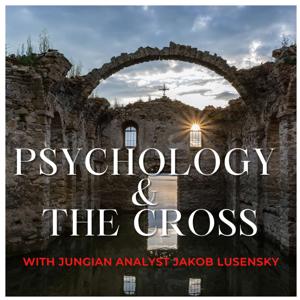


“I'm not a machine,” Jung insists in one of his last recorded interviews. What might his resistance tell us about our relationship to technology today?
An audio essay by Jakob Lusensky, featuring Jung’s original voice, on artificial intelligence, faith and the work of becoming psychologically mature.
From the upcoming essay Living from the Centre, exploring Jung’s religious attitude in an age of AI.
Music licensed under creativecommons.org: Ketsa - From deep down
References
Amodei, D. (2026, January). The adolescence of technology: Confronting and overcoming the risks of powerful AI. https://darioamodei.com/essay/the-adolescence-of-technology
Jung, C. G. (1970). The undiscovered self (present and future). In Civilization in transition (R. F. C. Hull, Trans., 2nd ed., Collected Works, Vol. 10, paras. 488–588). Princeton University Press. (Original work published 1957)
McLuhan, M. (1964). Understanding media: The extensions of man. McGraw-Hill.
Nordenstreng, K. (1961, February). Interview with Carl Gustav Jung [Audio recording]. Finnish Broadcasting Company (Yle). https://sites.tuni.fi/kaarle/interview-with-carl-gustav-jung/
In this short reflection, I return to the final page of Jung’s Red Book, where he left a single handwritten word: Möglichkeit. Possibility.
What does it mean to continue dreaming Jung’s work onward, responding to the questions of our own present and future?
I also introduce the newly launched Center of the Cross, an emerging space for dialogue and new encounters between Jungian psychology and Christianity.
Read the original essay on Substack: Möglichkeit
Explore the Center: cross.center
Music licensed under creativecommons.org: Ketsa - From deep down
Leonard Cohen on songwriting, self-respect and getting up at 4:30. In this excerpt from his 1992 conversation with Paul Zollo, Cohen shares the patient work of finding a song, and the appetite to redeem the day so that it does not go down in debt.
First part of interview as audio.
Full text of interview.
Can psychology take religious experience seriously without reducing it to psychological explanations? Did Jung succeed in remaining a psychologist of religion, or did his psychology gradually become a theology of its own?
In this episode, I speak with Jungian scholar Matei Iagher, author of The Making and Unmaking of the Psychology of Religion, about the largely forgotten field of psychology of religion from which Jung's work emerged.
We explore what Jung inherited from this tradition and what he made distinctly his own: his attempt to hold together scientific psychology and religious experience, the relationship between his psychology and Christianity, and whether he discovered something universal in the world's religions or universalized his own experience.
Toward the end, our conversation returns to The Red Book and a provocative possibility: that we might need to move beyond the familiar language of archetypes and individuation and return to the more immediate language of Jung's original experience.
References and people mentioned
William James - The Varieties of Religious Experience
Théodore Flournoy
Rudolf Otto - The Idea of the Holy
Friedrich Schleiermacher
Max Müller
Mircea Eliade
James W. Heisig - Imago Dei: A Study in C. G. Jung's Psychology of Religion
C. G. Jung - The Red Book
The music played in this episode is licensed under creativecommons.org: Ketsa - From deep down
In this episode, Jungian scholar Paul Bishop joins Jungian analyst-in-training Emma Iovoli to explore Nietzsche’s Thus Spoke Zarathustra and C.G. Jung’s complex relationship with Nietzsche.
Drawing on Bishop’s recent book, Jung and the Epic of Transformation, Volume 3, they explore some of Zarathustra’s most powerful images, from the eagle and serpent to the camel, lion and child, and what they reveal about psychological transformation.
The conversation moves from Jung and Nietzsche’s encounters with the depths of the psyche to Christianity, the death of God, and the question of what transformation might mean today. In an age of AI and post-humanism, what does it mean to overcome ourselves without losing sight of what it means to be human?
Purchase Paul Bishops latest book.
The music played in this episode is licensed under creativecommons.org: Ketsa - From deep down
What is the goal of psychoanalysis? Is it greater self-knowledge, or the recovery of our capacity simply to be?
In this third Freudian/Jungian conversation with psychoanalyst Donald Carveth we explore Winnicott's notion of the true self alongside Jung's understanding of the Self, individuation, and the religious attitude. We discuss conscience and the superego, the image of God (imago Dei), love, community, and why Jung increasingly turned toward Christianity in his later work.
The two earlier Freudian/Jungian conversations are found here and here.
For more psychoanalytic thinking visit Don's youtube page.
The music played in this episode is licensed under creativecommons.org: Ketsa - From deep down
Pope Leo XIV's Magnifica Humanitas may be one of the most important reflections yet on artificial intelligence and the future of humanity.
In this conversation, Jakob Lusensky and Sean McGrath explore the encyclical's central question: What does it mean to be human in an age of AI? Along the way they discuss Jung, technology, transhumanism, work, community, suffering, and why a human face that asks to be gazed upon may remain at the center of our history.
The music played in this episode is licensed under creativecommons.org: Ketsa - From deep down
This is a reading of the introduction to Magnifica - Humanitas - On Safeguarding the human person in the time of Artificial Intelligence, by Pope Leo XIV. For the full encyclical visit the following link.
Join the live stream conversation with Sean McGrath about this text Wednesday 17th of June at 3:15 pm CEST on this link.
The reading of the introduction is done by Emma Lovoli, Jungian analyst in training at ISAP. You can read her Substack here.
After our excursion along the currents of our collective dreams, we now turn our attention back to Psychology on the Cross. For this conversation, I invited Jungian scholar Ann Conrad Lammers to discuss Emma Jung: Dedicated to the Soul, a book she recently edited together with Thomas Fischer and Medea Hoch.
It's a wonderful book that brings Emma out of Carl Jung's shadow, revealing the full range of her creative work through essays, poems, dreams, and paintings. Throughout this conversation, Ann will also read a poem and two dreams from this important publication.
Biography
Ann Conrad Lammers is a Jungian scholar who has worked and written at the crossroads of theology and psychology for the past forty years. Her doctoral work at Yale University led to the book In God's Shadow: The Collaboration of Victor White and C.G. Jung, and she is also the editor of their correspondence. An earlier conversation about this book can be found here.
Music played in this episode"From deep down" by ketsa.uk. Licensed under creativecommons.org by NC-ND 4.0.
From the publisher's feed

15,235 Listeners

1,609 Listeners

1,849 Listeners
342 Listeners

514 Listeners

1,029 Listeners

584 Listeners

1,348 Listeners

597 Listeners

1,659 Listeners
868 Listeners

354 Listeners

29,128 Listeners

2,437 Listeners
7 Listeners