
Sign up to save your podcasts
Or

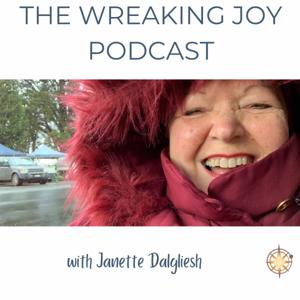

Welcome back to Wreaking More Joy.
I’m Janette Dalgliesh, and in this season, Rekindle, we’re exploring how women can rekindle the romance with our purpose, our joy, and our personal power — especially in our working lives.
If you’ve been here from the beginning — or even if you’ve joined partway through — I want to begin this final episode of Season 1 with gratitude.
Thank you for your attention.
Thank you for your willingness to question the stories you’ve been taught about work, worth, effort, and what it means to live a meaningful life as a woman of purpose.
This first season was never about fixing you, because you’re not broken.
It was never about becoming more productive, more impressive, or more palatable.
It was about remembering something essential; something many of us were trained to abandon very early on.
On the surface, Rekindle has been about women’s working lives.
But underneath that, it has always been about this question:
How do women tap into the joy of contributing and fulfilling our purpose without sacrificing ourselves in the process?
Because most of us were taught a very specific equation:
* Contribution equals depletion.
* Meaningful work equals exhaustion.
* Caring deeply means burning yourself out.
And if you believed that was the price of making a difference, I want you to hear this clearly: that model is broken.
We began by naming the quiet ache that so many women carry; that moment when your work still matters, but no longer feeds you.
Not because you’re ungrateful.
Not because you’ve failed.
But because something inside you is asking for a more sustainable relationship with your purpose.
We explored why women feel we have to work twice as hard: not as a confidence issue, but as a historical inheritance carried in the nervous system.
We talked about what happens when the brain thinks your career is a survival situation, and how “prove-it mode” is not a flaw, but a learned response.
We reclaimed Saturn; not as punishment, but as the one who teaches us structure, pacing, and the radical importance of celebrating the path, not just the destination.
We invited Jupiter; the great expander, who helps us imagine futures our brains can’t predict from the past, and reminds us that innovation doesn’t come from playing it safe.
We met Venus, who restores our right to name desire — even impossible desire — without shame or justification.
We honoured Mars, not as hustle or force, but as clean, self-trusting action.
We spoke about the Sun, the Solar Principle of individuation, the persistent pull toward becoming who you actually are.
And we balanced that with the Moon, who reminds us that we are relational beings, longing for belonging, care, and connection.
Together, these forces all tell a very different story about what meaningful work can look like.
Most women were taught to focus on being competent, useful, resilient.
We were taught to endure and to tolerate the discomfort of fitting into the system that wasn’t built for us.
But if we want to contribute at full volume over the long term, not in short, heroic bursts followed by collapse, joy is not optional.
Joy is what keeps the nervous system regulated.
Joy is what allows creativity to flow.
Joy is what restores perspective.
Joy is what prevents bitterness from taking root.
Joy is what makes leadership sustainable.
A woman devoted to having joy in her life is not frivolous; she is strategic.
Here’s the uncomfortable truth: many systems benefit when women are tired, self-doubting, and disconnected from pleasure.
Joy is not a reward for doing everything right.
It is nervous-system information.
It tells the body “You are safe enough to expand.”
And expansion is where innovation, leadership, courage, and meaningful change live.
This is why joy has always been political and, in women’s hands, why it has been dangerous.
Joy says ‘my state of being is not dependent upon what those in power have decided for me’.
Joy can co-exist with grief and exhaustion and anxiety, not as a band-aid to cover up the rot of suffering, but as an act of grace for ourselves, a form of self-replenishment and a fuel for the long work of actual change.
And here is something I want to say explicitly, because it’s easy to miss:
Joy is not something you either have or don’t have, and it’s not a reward or an afterthought.
Joy is not toxic positivity or spiritual bypassing.
It is an essential skill we build through discipline.
Like any skill, it requires practice, attention, willingness to explore new ways, and devotion.
And joy can become a fierce component of getting through tough times.
I first learned this vicariously from my parents, relating stories of how they found and made joy, as teenagers in very different parts of England, enduring the Blitz and the nightly bombing raids and the strange terror of the shelters.
I learned it in the 1980s, sitting in an impromptu cèilidh with my future in-laws and their neighbours, in a back street of Belfast with helicopters overhead and young armed British soldiers in the street, sharing the laughter and applause as my sweetie and I contributed a Bob Dylan protest song to the mix.
I learned it while turning the twice daily bomb checks in Harrods into a creative, competitive game of ‘how can we do this without letting the customers catch us at it?’
I learned it at my beloved father’s deathbed, as family gathered to share - with him and with each other - memories and stories of love and laughter, to the point I thought we might get barred from the hospital for being too loud (we weren’t).
I’ve learned it sitting at the feet of Black women, and women from the queer community, and women living with disability and chronic illness, whose relentless devotion to joy is not a denial of suffering, but an essential part of thriving.
In many ways, I’ve been learning it every day of my life. Joy is a work in progress, I’ll never get it done, and I’m getting better at it all the time.
Joy is an act of political resistance AND a skill for healing AND a nuanced experience that we cannot dictate or describe for each other, because joy is so exquisitely personal.
Rekindling the romance with your purpose in the world does not mean quitting everything, instantly finding the perfect job, or forcing joy into every minute of every day
It means fully accepting your whole emotional landscape, without shame or guilt for how you feel
It means developing a relationship with joy that you can rely on
It means noticing when your work stops feeding you, and responding with compassion not punishment or self-abandonment
And it means shaping your purpose in ways that honour your humanity
Rekindling is not a moment.
It is a decision, and a commitment - and it should also be a delightful spark of possibility that has part of you thinking ‘ooooooh, I wonder what could happen next??’
This is the end of Season 1, Rekindle, but not the end of Wreaking More Joy.
This podcast and Substack will continue to explore women’s relationships with purpose, power, joy, and work, with as much depth, nuance, and tenderness as I can muster.
But for now, I want to leave you with this:
* You do not have to earn your right to exist in your work; you already have it, by existing
* You do not have to bleed to be valuable.
* You do not have to choose between contribution and joy
And if no one has told you this lately please remember that what you are doing matters, who you are matters, and you are allowed to let it feel good.
Thank you for walking this season with me.
It’s been an honour.
Until next time, please be gentle with yourself, practice joy like the discipline it is, and keep wreaking more of it out in the world.
 View all episodes
 By Janette Dalgliesh
Welcome back to Wreaking More Joy.
I’m Janette Dalgliesh, and in this season, Rekindle, we’re exploring how women can rekindle the romance with our purpose, our joy, and our personal power — especially in our working lives.
If you’ve been here from the beginning — or even if you’ve joined partway through — I want to begin this final episode of Season 1 with gratitude.
Thank you for your attention.
Thank you for your willingness to question the stories you’ve been taught about work, worth, effort, and what it means to live a meaningful life as a woman of purpose.
This first season was never about fixing you, because you’re not broken.
It was never about becoming more productive, more impressive, or more palatable.
It was about remembering something essential; something many of us were trained to abandon very early on.
On the surface, Rekindle has been about women’s working lives.
But underneath that, it has always been about this question:
How do women tap into the joy of contributing and fulfilling our purpose without sacrificing ourselves in the process?
Because most of us were taught a very specific equation:
* Contribution equals depletion.
* Meaningful work equals exhaustion.
* Caring deeply means burning yourself out.
And if you believed that was the price of making a difference, I want you to hear this clearly: that model is broken.
We began by naming the quiet ache that so many women carry; that moment when your work still matters, but no longer feeds you.
Not because you’re ungrateful.
Not because you’ve failed.
But because something inside you is asking for a more sustainable relationship with your purpose.
We explored why women feel we have to work twice as hard: not as a confidence issue, but as a historical inheritance carried in the nervous system.
We talked about what happens when the brain thinks your career is a survival situation, and how “prove-it mode” is not a flaw, but a learned response.
We reclaimed Saturn; not as punishment, but as the one who teaches us structure, pacing, and the radical importance of celebrating the path, not just the destination.
We invited Jupiter; the great expander, who helps us imagine futures our brains can’t predict from the past, and reminds us that innovation doesn’t come from playing it safe.
We met Venus, who restores our right to name desire — even impossible desire — without shame or justification.
We honoured Mars, not as hustle or force, but as clean, self-trusting action.
We spoke about the Sun, the Solar Principle of individuation, the persistent pull toward becoming who you actually are.
And we balanced that with the Moon, who reminds us that we are relational beings, longing for belonging, care, and connection.
Together, these forces all tell a very different story about what meaningful work can look like.
Most women were taught to focus on being competent, useful, resilient.
We were taught to endure and to tolerate the discomfort of fitting into the system that wasn’t built for us.
But if we want to contribute at full volume over the long term, not in short, heroic bursts followed by collapse, joy is not optional.
Joy is what keeps the nervous system regulated.
Joy is what allows creativity to flow.
Joy is what restores perspective.
Joy is what prevents bitterness from taking root.
Joy is what makes leadership sustainable.
A woman devoted to having joy in her life is not frivolous; she is strategic.
Here’s the uncomfortable truth: many systems benefit when women are tired, self-doubting, and disconnected from pleasure.
Joy is not a reward for doing everything right.
It is nervous-system information.
It tells the body “You are safe enough to expand.”
And expansion is where innovation, leadership, courage, and meaningful change live.
This is why joy has always been political and, in women’s hands, why it has been dangerous.
Joy says ‘my state of being is not dependent upon what those in power have decided for me’.
Joy can co-exist with grief and exhaustion and anxiety, not as a band-aid to cover up the rot of suffering, but as an act of grace for ourselves, a form of self-replenishment and a fuel for the long work of actual change.
And here is something I want to say explicitly, because it’s easy to miss:
Joy is not something you either have or don’t have, and it’s not a reward or an afterthought.
Joy is not toxic positivity or spiritual bypassing.
It is an essential skill we build through discipline.
Like any skill, it requires practice, attention, willingness to explore new ways, and devotion.
And joy can become a fierce component of getting through tough times.
I first learned this vicariously from my parents, relating stories of how they found and made joy, as teenagers in very different parts of England, enduring the Blitz and the nightly bombing raids and the strange terror of the shelters.
I learned it in the 1980s, sitting in an impromptu cèilidh with my future in-laws and their neighbours, in a back street of Belfast with helicopters overhead and young armed British soldiers in the street, sharing the laughter and applause as my sweetie and I contributed a Bob Dylan protest song to the mix.
I learned it while turning the twice daily bomb checks in Harrods into a creative, competitive game of ‘how can we do this without letting the customers catch us at it?’
I learned it at my beloved father’s deathbed, as family gathered to share - with him and with each other - memories and stories of love and laughter, to the point I thought we might get barred from the hospital for being too loud (we weren’t).
I’ve learned it sitting at the feet of Black women, and women from the queer community, and women living with disability and chronic illness, whose relentless devotion to joy is not a denial of suffering, but an essential part of thriving.
In many ways, I’ve been learning it every day of my life. Joy is a work in progress, I’ll never get it done, and I’m getting better at it all the time.
Joy is an act of political resistance AND a skill for healing AND a nuanced experience that we cannot dictate or describe for each other, because joy is so exquisitely personal.
Rekindling the romance with your purpose in the world does not mean quitting everything, instantly finding the perfect job, or forcing joy into every minute of every day
It means fully accepting your whole emotional landscape, without shame or guilt for how you feel
It means developing a relationship with joy that you can rely on
It means noticing when your work stops feeding you, and responding with compassion not punishment or self-abandonment
And it means shaping your purpose in ways that honour your humanity
Rekindling is not a moment.
It is a decision, and a commitment - and it should also be a delightful spark of possibility that has part of you thinking ‘ooooooh, I wonder what could happen next??’
This is the end of Season 1, Rekindle, but not the end of Wreaking More Joy.
This podcast and Substack will continue to explore women’s relationships with purpose, power, joy, and work, with as much depth, nuance, and tenderness as I can muster.
But for now, I want to leave you with this:
* You do not have to earn your right to exist in your work; you already have it, by existing
* You do not have to bleed to be valuable.
* You do not have to choose between contribution and joy
And if no one has told you this lately please remember that what you are doing matters, who you are matters, and you are allowed to let it feel good.
Thank you for walking this season with me.
It’s been an honour.
Until next time, please be gentle with yourself, practice joy like the discipline it is, and keep wreaking more of it out in the world.