
Sign up to save your podcasts
Or

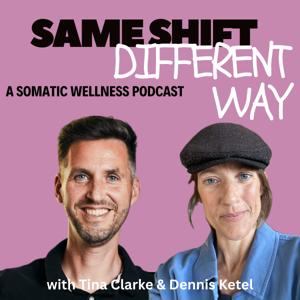

Dennis and Tina start today with being on time, 2am dog turds, a surprised husband and central heating. They qet into the topic and start talking about resistance and their initial thoughts on it, including through the lens of Tom Jones. They observe how our brains prefer same-ness and routine and why resistance can be a good thing, rather than a pathology. They notice how resistance can be something we bump up against and can feel uncomfortable or confronting, but can we then enquire what might it be that we need?
Dennis talks about knocking on the door of possibility and seeing how far we can go, and the meeting point of expansion and resistance and what dialogue can arise from that place.
They talk about how we might recognise resistance in ourselves or others, including how it can feel like rejection and how resistance is inter-relational. when we are curious about our resistance, we can notice patterns like whether we tend to push through it, or move away from it too soon.
They get into how our bodies show resistance and where their own resistance tends to show up (with the related beliefs that underpin the resistance) and the early years of programming which leads us into boundaries in relation to resistance: what is boundary and what is resistance? Dennis tells us about a childhood singing moment and how it showed up in adulthood. Is resistance a fear of rejection or is resistance rejection?
They dive a bit deeper into the enquiry around resistance and what resistance might be telling us. They discuss how resistance might be asking for more safety or time.
The vulnerable moment of change that we all have to face, like hermit crabs moving to bigger homes.
T and D go int the more somatic aspects and how resistance shows up in our body: the muscles, the skeletal structure, the digestive system, the fascia or body fluids. They look through an IFS (Internal Family Systems) lens at resistance, and what parts might be taking over in those moments. Dennis tells us the story of the loyal soldier to illustrate a part that might need reassurance that it can stop fighting and put down it's metaphorical weapon.
Come and join us in Arnhem for our One Day Retreat "Unfold to Grow" on April 25th! Learn more
For more information, coaching or to ask a listener question please go to:
 View all episodes
 By Dennis Ketel / Tina Clarke
Dennis and Tina start today with being on time, 2am dog turds, a surprised husband and central heating. They qet into the topic and start talking about resistance and their initial thoughts on it, including through the lens of Tom Jones. They observe how our brains prefer same-ness and routine and why resistance can be a good thing, rather than a pathology. They notice how resistance can be something we bump up against and can feel uncomfortable or confronting, but can we then enquire what might it be that we need?
Dennis talks about knocking on the door of possibility and seeing how far we can go, and the meeting point of expansion and resistance and what dialogue can arise from that place.
They talk about how we might recognise resistance in ourselves or others, including how it can feel like rejection and how resistance is inter-relational. when we are curious about our resistance, we can notice patterns like whether we tend to push through it, or move away from it too soon.
They get into how our bodies show resistance and where their own resistance tends to show up (with the related beliefs that underpin the resistance) and the early years of programming which leads us into boundaries in relation to resistance: what is boundary and what is resistance? Dennis tells us about a childhood singing moment and how it showed up in adulthood. Is resistance a fear of rejection or is resistance rejection?
They dive a bit deeper into the enquiry around resistance and what resistance might be telling us. They discuss how resistance might be asking for more safety or time.
The vulnerable moment of change that we all have to face, like hermit crabs moving to bigger homes.
T and D go int the more somatic aspects and how resistance shows up in our body: the muscles, the skeletal structure, the digestive system, the fascia or body fluids. They look through an IFS (Internal Family Systems) lens at resistance, and what parts might be taking over in those moments. Dennis tells us the story of the loyal soldier to illustrate a part that might need reassurance that it can stop fighting and put down it's metaphorical weapon.
Come and join us in Arnhem for our One Day Retreat "Unfold to Grow" on April 25th! Learn more
For more information, coaching or to ask a listener question please go to: