
Sign up to save your podcasts
Or


There will never be a Holy Saturday when I do not say that it’s the most honest day of the Church.
The pathos, angst, and grief of Good Friday gripped those around the cross and then scattered them in fear from it.
The reality of Good Friday is all-too-present now, as people are being plucked from streets, out of hospitals, and even small children from elementary schools; cuts to the arts, cuts to the care of creation, cuts to science, cuts to medical research, cuts to the most vulnerable are not raining down, they are hailing down with a ferocity that also cuts; educational institutions and media are being threatened because of exercising free speech and intellectual freedom; people’s financial security and the broader economic well-being of the country are in real question; 2SLGBTQIA siblings are living in fear simply by being who they are.
Those who engage in protected and peaceful protest are having to be trained in their rights, and taught to bring goggles and milk to protect their eyes from tear gas, and to remove biometrics from their phones.
Genocide in Palestine is occurring with both the past and the present administration’s blessings.
It’s so so much, and all of it apparently insurmountably true.
Equally true, though, is this: to plant your essence only in the joy of Easter commits you less to gladness and more to ignorance: ignorance of the reality of suffering, ignorance of the call to stand in solidarity with those who suffer, and ignorance of the holiness of lament.
To brim with “Life is Good,” or “Keep on the Sunny Side,” or to loop on repeat (to self or others) that there is no need for fear, no need for lament, no need for anger, no need for doubt, no need to change our ways or perspectives and definitely no need to act because God’s got this, God’s in control is, well, to keep up that mental and spiritual charade it’s exhausting in its own right, not to mention damaging, both to those who would benefit from some assistance, and damaging also to the self.
See, to live immersed, constantly cooking in the toxic stew of Good Friday is not a choice—you can’t just…opt in or out of the dire moments of our times, or of past and present trauma—but neither is it sustainable—the wear and tear of despair claims yet more life. We simply can’t cede death and hate more wins.
Paradoxically, then, both Good Friday and Easter are true, but left to themselves, they are patently false.
Holy Saturday, though, it straddles both, one foot in the truth of hate, hopelessness, and pain, and the other in the truth of love, trust, and life.
It integrates the integers of life.
Holy Saturday, then, isn’t just the most honest day in the life of the Church: it is the honesty, and the integrity, of every day in the life of a Christian.
~~~~~
I imagine that after Jesus’ burial, there was silence.
There often is silence after terribleness: shock, fear, unspeakable grief, they settle in, and quiet is all that comes.
But silence after death does, in fact, speak, it does tell: it reveals bewilderment, abandonment, and fear.
We forget, or do not know, that Jesus’ crucifixion wasn’t a religious one, it was a political one.
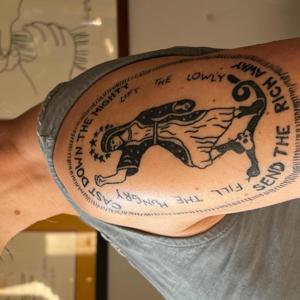
Jesus threatened the systems by redefining the notion of king as a servant rather than a dictator; by pressing narrow borders out to and beyond the margins; by announcing to the misfits, the dismissed, and the wounded that they had worth and were cherished by God; by condemning the values of the wealthy, the powerful, the privileged, for they had reduced their worth, and that of others, to the temporal and the base; and empowering his followers—commanding them, even—to act on behalf of the meek, the lowly, the poor, and the least of these.
Of course Rome killed him.
They needed hope and love silenced.
~~~~~
This past week, I was going back and forth with another person involved in fighting against the evil of this administration.
She said, “Sometimes that I think it is so hard to remember, especially right now, that there are a larger majority of people who do support marginalized communities than there are that do not. It's just that those that do not, seem to have the loudest voices.”
I responded: “Yep. They do have the loudest voices...unless they don't. That the administration and those who support it are actively trying to silence ours shows that they are scared.
Our code, so to speak, is love.
Where you see love, where you feel love, that's how you hear those voices that the frightened ones are trying to silence.”
That’s my story and I’m sticking with it.
The powers that be, Rome—both past and present—in all its apparent might, might believe, and even seek to get Christians to believe, that it commands silence.
Moreover, Rome, both past and present, believes that forced silence equals acquiescence.
But they are wrong.
Jesus was silenced, but that quiet tomb contained the beginning of a raucous word.
Love, you see, love is the truth of Holy Saturday.
Love is what is trespassed on that first Good Friday, and all consequent Good Fridays we experience.
And love is what is brewing when it seems that anything but love holds sway.
We are in a period right now where it’s all true: the brutality of the regime, and the subversive force of love.
We are living in a constant Holy Saturday.
And tomorrow, on Easter…well, I’ll leave you on the edge of your seat about tomorrow, but I’ll tell you this much:
Rome has a word.
But it ain’t the last one.
 View all episodes
 By Anna Madsen
There will never be a Holy Saturday when I do not say that it’s the most honest day of the Church.
The pathos, angst, and grief of Good Friday gripped those around the cross and then scattered them in fear from it.
The reality of Good Friday is all-too-present now, as people are being plucked from streets, out of hospitals, and even small children from elementary schools; cuts to the arts, cuts to the care of creation, cuts to science, cuts to medical research, cuts to the most vulnerable are not raining down, they are hailing down with a ferocity that also cuts; educational institutions and media are being threatened because of exercising free speech and intellectual freedom; people’s financial security and the broader economic well-being of the country are in real question; 2SLGBTQIA siblings are living in fear simply by being who they are.
Those who engage in protected and peaceful protest are having to be trained in their rights, and taught to bring goggles and milk to protect their eyes from tear gas, and to remove biometrics from their phones.
Genocide in Palestine is occurring with both the past and the present administration’s blessings.
It’s so so much, and all of it apparently insurmountably true.
Equally true, though, is this: to plant your essence only in the joy of Easter commits you less to gladness and more to ignorance: ignorance of the reality of suffering, ignorance of the call to stand in solidarity with those who suffer, and ignorance of the holiness of lament.
To brim with “Life is Good,” or “Keep on the Sunny Side,” or to loop on repeat (to self or others) that there is no need for fear, no need for lament, no need for anger, no need for doubt, no need to change our ways or perspectives and definitely no need to act because God’s got this, God’s in control is, well, to keep up that mental and spiritual charade it’s exhausting in its own right, not to mention damaging, both to those who would benefit from some assistance, and damaging also to the self.
See, to live immersed, constantly cooking in the toxic stew of Good Friday is not a choice—you can’t just…opt in or out of the dire moments of our times, or of past and present trauma—but neither is it sustainable—the wear and tear of despair claims yet more life. We simply can’t cede death and hate more wins.
Paradoxically, then, both Good Friday and Easter are true, but left to themselves, they are patently false.
Holy Saturday, though, it straddles both, one foot in the truth of hate, hopelessness, and pain, and the other in the truth of love, trust, and life.
It integrates the integers of life.
Holy Saturday, then, isn’t just the most honest day in the life of the Church: it is the honesty, and the integrity, of every day in the life of a Christian.
~~~~~
I imagine that after Jesus’ burial, there was silence.
There often is silence after terribleness: shock, fear, unspeakable grief, they settle in, and quiet is all that comes.
But silence after death does, in fact, speak, it does tell: it reveals bewilderment, abandonment, and fear.
We forget, or do not know, that Jesus’ crucifixion wasn’t a religious one, it was a political one.
Jesus threatened the systems by redefining the notion of king as a servant rather than a dictator; by pressing narrow borders out to and beyond the margins; by announcing to the misfits, the dismissed, and the wounded that they had worth and were cherished by God; by condemning the values of the wealthy, the powerful, the privileged, for they had reduced their worth, and that of others, to the temporal and the base; and empowering his followers—commanding them, even—to act on behalf of the meek, the lowly, the poor, and the least of these.
Of course Rome killed him.
They needed hope and love silenced.
~~~~~
This past week, I was going back and forth with another person involved in fighting against the evil of this administration.
She said, “Sometimes that I think it is so hard to remember, especially right now, that there are a larger majority of people who do support marginalized communities than there are that do not. It's just that those that do not, seem to have the loudest voices.”
I responded: “Yep. They do have the loudest voices...unless they don't. That the administration and those who support it are actively trying to silence ours shows that they are scared.
Our code, so to speak, is love.
Where you see love, where you feel love, that's how you hear those voices that the frightened ones are trying to silence.”
That’s my story and I’m sticking with it.
The powers that be, Rome—both past and present—in all its apparent might, might believe, and even seek to get Christians to believe, that it commands silence.
Moreover, Rome, both past and present, believes that forced silence equals acquiescence.
But they are wrong.
Jesus was silenced, but that quiet tomb contained the beginning of a raucous word.
Love, you see, love is the truth of Holy Saturday.
Love is what is trespassed on that first Good Friday, and all consequent Good Fridays we experience.
And love is what is brewing when it seems that anything but love holds sway.
We are in a period right now where it’s all true: the brutality of the regime, and the subversive force of love.
We are living in a constant Holy Saturday.
And tomorrow, on Easter…well, I’ll leave you on the edge of your seat about tomorrow, but I’ll tell you this much:
Rome has a word.
But it ain’t the last one.