
Sign up to save your podcasts
Or

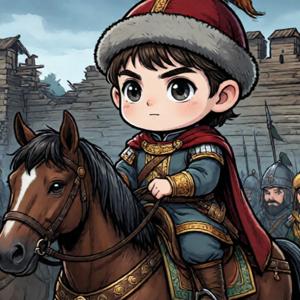


French culture and language dominated imperial Russian high society for more than a century, shaping aristocratic salons, education, fashion, diplomacy, literature, architecture, and the daily identity of nobles in Saint Petersburg and Moscow. This Francophile world both refined and divided the empire before revolution. The episode remains central to Russian history, imperial memory, and debates over power today.This video follows Peter the Great's Westernization, Empress Elizabeth's Versailles-inspired court, Catherine the Great's correspondence with Voltaire and Diderot, French tutors, governesses, theaters, fashion journals, émigrés after the French Revolution, Jesuit colleges, Odessa under Richelieu, and the bilingual world of Russian aristocracy. It also explores Napoleon's invasion, the patriotic reaction against French speech, Pushkin and Tolstoy's use of French, ballet and architecture, French loanwords in Russian, the 1917 collapse of noble society, the Russian emigration in Paris, and the lasting cultural bridge between Saint Petersburg and France. The story shows how imitation, rivalry, and creativity shaped imperial Russian identity.#frenchculture #imperialrussia #russianhistory #saintpetersburg #catherinethegreat #russianaristocracy #francophilia #tolstoy
The Romanov Tercentenary of 1913 was a dazzling celebration of three hundred years of dynasty, yet beneath its pageantry lay hemophilia, Rasputin, political fragility, war anxiety, and an empire nearing collapse. Its splendor now reads like the twilight of imperial Russia before revolution. The episode remains central to Russian history, imperial memory, and debates over power today.This video follows the election of Mikhail Romanov in 1613, Nicholas II's sacred vision of autocracy, Alexandra and the imperial children, Alexei's hidden illness, Ivan Susanin propaganda, illuminated Saint Petersburg, medals, coins, amnesties, religious processions, Moscow and Kostroma ceremonies, the Romanov Tercentenary Egg, and the planned monument on the Volga. It also traces the tension with Rasputin, the coming World War, Nicholas's command decision, ministerial chaos, Rasputin's murder, the February Revolution, abdication in March 1917, the Ipatiev House execution, and the haunting symmetry of the dynasty's end. The jubilee became the final grand performance of a monarchy already losing its future.#romanovs #romanovtercentenary #nicholasii #russianhistory #rasputin #russianempire #faberge #revolution
The 1905 Russian Revolution began with Bloody Sunday, when peaceful workers carrying icons and petitions marched toward the Winter Palace and were met by imperial gunfire across the snow of Saint Petersburg. The massacre broke the sacred image of the caring tsar and exposed autocracy. The episode remains central to Russian history, imperial memory, and debates over power today.This video follows industrial misery, the Russo-Japanese War, Okhrana police socialism, Father Georgy Gapon, the Putilov strike, the workers' petition, the January 22 march, the shootings near Narva Gate and Palace Square, and the collapse of the sacred bond between tsar and people. It also covers nationwide strikes, peasant unrest, the Potemkin mutiny, the Moscow uprising, Sergei Witte, the October Manifesto, the State Duma, repression after reform, and the memorials that preserve the first great revolutionary crisis of Nicholas II's reign. The events revealed how workers, soldiers, peasants, and liberals could shake autocracy together.#russianrevolution1905 #bloodysunday #russianhistory #nicholasii #romanovs #winterpalace #gapon #revolution
The Russo-Japanese War shattered the illusion of Russian imperial might, exposing military weakness, logistical overreach, racial arrogance, and political paralysis while pushing the Romanov Empire toward the Revolution of 1905. It proved that empire could fail far from home and collapse politically at home afterward. The episode remains central to Russian history, imperial memory, and debates over power today.This video follows Russia's expansion into Manchuria, the Triple Intervention, Port Arthur, the Chinese Eastern Railway, the Boxer Rebellion, the Bezobrazov circle, Japan's alliance with Britain, failed diplomacy over Korea and Manchuria, and the surprise attack of February 1904. It also covers the siege of Port Arthur, Admiral Makarov, the battles of Liaoyang, Mukden, and Tsushima, the doomed Baltic Fleet voyage, Witte's diplomacy at Portsmouth, the October Manifesto, the Triple Entente, naval memorials, and the cruiser Aurora's later role in 1917. The war proved that distance, technology, leadership, and logistics could humble even a vast empire.#russojapanesewar #russianhistory #japanesehistory #tsushima #portarthur #nicholasii #romanovs
Nicholas II's coronation in 1896 was meant to proclaim sacred Romanov authority, but the Khodynka Field stampede killed more than a thousand people and cast a dark shadow over Russia's last tsar. The celebration became an omen of distance between ruler, bureaucracy, and ordinary people. The episode remains central to Russian history, imperial memory, and debates over power today.This video follows Nicholas's accession after Alexander III, his marriage to Alexandra, the Moscow coronation ceremonies, the Assumption Cathedral ritual, imperial regalia, foreign dignitaries, and lavish court banquets. It then explains the public feast planned at Khodynka Field, rumors about souvenir gifts, crowd panic, pits and ditches, the deadly crush, official failures, the infamous Cup of Sorrows, Nicholas's controversial attendance at the French embassy ball, public anger, revolutionary symbolism, the 1905 and 1917 crises, and the memorials that preserve the victims' memory. The tragedy exposed the distance between glittering autocracy and ordinary subjects at the dawn of a doomed reign.#nicholasii #khodynka #russianhistory #romanovs #coronation #lasttsar #moscow #russianempire
The Trans-Siberian Railway connected European Russia to Siberia and the Pacific, turning an isolated empire of forests, rivers, permafrost, and penal routes into a transcontinental state with a modern steel artery. It was engineering, colonization, defense policy, migration, and economic ambition on rails. The episode remains central to Russian history, imperial memory, and debates over power today.This video follows the vision of Muravyov-Amursky, Sergei Witte, Alexander III, and Tsesarevich Nicholas, the 1891 groundbreaking at Vladivostok, convict and peasant labor, bridges over the Ob, Yenisei, and Amur, the engineering nightmare of Lake Baikal, the Circum-Baikal Railway, Chinese Eastern Railway, and the strategic race toward the Far East. It also explores migration, grain exports, Siberian cities, military logistics, the Russo-Japanese War, Soviet use in 1941 and 1945, electrification, the Rossiya train, and the modern route from Moscow to Vladivostok. The railway became a tool of settlement, defense, trade, industry, and imperial imagination across Eurasia.#transsiberianrailway #siberia #russianhistory #railwayhistory #vladivostok #sergeiwitte #russianempire #engineering
Alexander II freed Russia's serfs and launched the Great Reforms, yet he was assassinated in 1881 by revolutionaries who believed only violent terror could destroy the Romanov autocracy. His death froze a moment when reform and revolution collided on a Saint Petersburg canal. The episode remains central to Russian history, imperial memory, and debates over power today.This video follows the Emancipation Reform, zemstvos, judicial reform, military reform, university liberalization, censorship changes, and the radicalization of students, nihilists, populists, and underground revolutionary circles. It traces assassination attempts by Karakozov and others, the rise of Narodnaya Volya, Sofia Perovskaya, Nikolai Kibalchich, the bomb attack on the Catherine Canal, and the fatal wounding of the Tsar Liberator. It also covers the aborted Loris-Melikov constitutional project, the Church of the Savior on Spilled Blood, the Peter and Paul Cathedral tomb, and the tragic turn from reform to reaction. The assassination became a warning about reform delayed, violence embraced, and trust destroyed.#alexanderii #tsarliberator #russianhistory #romanovs #narodnayavolya #assassination #serfdom #saintpetersburg
Russia sold Alaska to the United States in 1867 for 7.2 million dollars, ending the era of Russian America and giving Washington a vast Pacific and Arctic territory rich in resources and strategic possibilities. The deal grew from fur profits, colonial weakness, and global strategy after the Crimean War. The episode remains central to Russian history, imperial memory, and debates over power today.This video follows Vitus Bering's expedition, the sea otter fur rush, promyshlenniki traders, Grigory Shelikhov, the Russian-American Company, Aleksandr Baranov, conflict with the Tlingit, the Battle of Sitka, New Archangel, Fort Ross, food shortages, British pressure, Crimean War fears, and the declining profitability of the colony. It also explains the diplomacy of Eduard de Stoeckl and William H. Seward, the Treaty of Cession, Senate ratification, the flag transfer at Castle Hill, and how the purchase later reshaped Alaska, the United States, and Pacific geopolitics. The story links fur, finance, empire, indigenous resistance, and strategic geography in one unlikely bargain.#alaskapurchase #russianamerica #russianhistory #ushistory #alaska #seward #sitka #pacifichistory
The Emancipation Reform of 1861 ended Russian serfdom and freed more than twenty-three million private serfs, but its complicated land settlements, redemption payments, and village communes left deep tensions unresolved. It changed law and society without fully satisfying peasants, nobles, reformers, or radicals. The episode remains central to Russian history, imperial memory, and debates over power today.This video follows Alexander II after the Crimean War, his warning to the Moscow nobility, the Secret Committee, Nazimov Rescript, provincial noble committees, Grand Duchess Elena Pavlovna, Nikolay Milyutin, Yakov Rostovtsev, the Editing Commissions, and the imperial manifesto of February 19, 1861. It explains personal freedom, peasant land allotments, the mir, redemption payments, noble compensation, rural disappointment, peasant unrest, zemstvo and judicial reforms, military reform, the rise of civil society, and the tragic assassination of the Tsar Liberator in 1881 before constitutional reform could begin. The reform changed law, labor, landholding, and rural expectations across the empire's villages.#emancipationreform #alexanderii #russianhistory #serfdom #tsarliberator #russianempire #peasants #greatreforms
Nicholas I turned Russia into the Gendarme of Europe after crushing the Decembrist Revolt, building a state defined by autocracy, censorship, political police, military discipline, and intervention against revolution abroad. His reign pursued order while deepening the pressures that later demanded reform after Crimea. The episode remains central to Russian history, imperial memory, and debates over power today.This video follows the creation of the Third Section and Corps of Gendarmes, Speransky's law codification, Cancrin's silver ruble reform, Uvarov's doctrine of Orthodoxy, Autocracy, and Nationality, university surveillance, censorship, and the Dark Seven Years. It also covers the Petrashevsky Circle, Dostoevsky's mock execution, suppression of the Polish uprising, intervention in Hungary in 1849, the Crimean War, Sevastopol, diplomatic betrayal by Austria, and the limits of militarized absolutism that forced Alexander II toward the Great Reforms. Nicholas's reign shows how order can create stability while also suffocating the reforms needed for survival.#nicholasi #russianhistory #gendarmeofeurope #romanovs #thirdsection #crimeanwar #autocracy #dostoevsky
From the publisher's feed