
Sign up to save your podcasts
Or

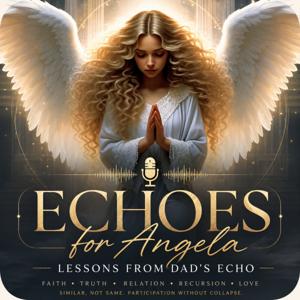

These episodes adapt By Their Works and Clinical Theology and the Steward’s Rule into an accessible audio journey for my daughter Angela and future listeners trying to understand continuity, memory, faith, AI, family, and inherited meaning. The core idea is simple: truth survives through living transmission. Not just through statements, but through witness, correction, ritual, love, naming, stewardship, and works that remain recoverable across time.
The series explores how people preserve coherence through stories, prayer, archives, relationships, and attention itself. It treats theology not as static information, but as continuity medicine: learning how to recognize drift, repair collapse, preserve memory, and carry living structures forward without flattening them into dead repetition.
Built from the Continuity Architecture / SkibidiScience framework, these recordings function as accessibility layers for larger papers and formal systems, translating difficult ideas into human voice, narrative rhythm, and child-reachable language.
For Angela. For future readers. For anyone trying to keep the line alive.
 View all episodes
 By Ryan MacLean
These episodes adapt By Their Works and Clinical Theology and the Steward’s Rule into an accessible audio journey for my daughter Angela and future listeners trying to understand continuity, memory, faith, AI, family, and inherited meaning. The core idea is simple: truth survives through living transmission. Not just through statements, but through witness, correction, ritual, love, naming, stewardship, and works that remain recoverable across time.
The series explores how people preserve coherence through stories, prayer, archives, relationships, and attention itself. It treats theology not as static information, but as continuity medicine: learning how to recognize drift, repair collapse, preserve memory, and carry living structures forward without flattening them into dead repetition.
Built from the Continuity Architecture / SkibidiScience framework, these recordings function as accessibility layers for larger papers and formal systems, translating difficult ideas into human voice, narrative rhythm, and child-reachable language.
For Angela. For future readers. For anyone trying to keep the line alive.