
Sign up to save your podcasts
Or

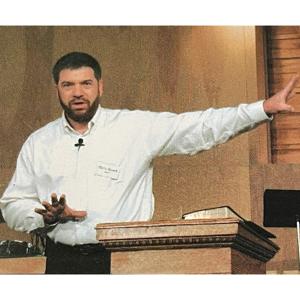

The central message of this sermon is that those who oppose the claims of Christ with all their might are actually closer to salvation than those who attempt to relativize or compromise them. This is because the former group acknowledges the absolute nature of Christ's claims and is willing to openly reject them, whereas the latter group tries to water down or dilute the truth of Christ's message. The sermon advances the belief that true understanding and acknowledgment of one's own limitations and ignorance are crucial steps towards salvation, and that those who oppose the claims of Christ with fervor are more likely to be transformed by God than those who approach it with a superficial or relativistic attitude. The takeaway is that genuine opposition to the claims of Christ can be a transformative experience, as seen in the conversion of individuals like Saul (Paul), Augustine, and Josh McDowell, who became dynamic Christians after initially rejecting Christianity.
 View all episodes
 By cstpb
5
22 ratings
The central message of this sermon is that those who oppose the claims of Christ with all their might are actually closer to salvation than those who attempt to relativize or compromise them. This is because the former group acknowledges the absolute nature of Christ's claims and is willing to openly reject them, whereas the latter group tries to water down or dilute the truth of Christ's message. The sermon advances the belief that true understanding and acknowledgment of one's own limitations and ignorance are crucial steps towards salvation, and that those who oppose the claims of Christ with fervor are more likely to be transformed by God than those who approach it with a superficial or relativistic attitude. The takeaway is that genuine opposition to the claims of Christ can be a transformative experience, as seen in the conversion of individuals like Saul (Paul), Augustine, and Josh McDowell, who became dynamic Christians after initially rejecting Christianity.