
Sign up to save your podcasts
Or

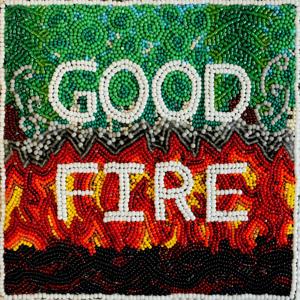

Season 2 | Episode 4 | Good Fire Podcast
Title: Cultural Safety with Joe Gilchrist and Natasha Caverley
In this episode of the Good Fire Podcast, hosts Amy Cardinal Christianson and Matthew Kristoff sit down with Joe Gilchrist and Natasha Caverley to talk about how Indigenous and Western ways of knowing can come together to bring cultural burning back on the land: a study exploring cultural safety of Indigenous wildland firefighters in Canada.
Takeaways
Sparking passion (04.16)
Joe began firefighting at age 15 and became a squad boss in 1991 in Merritt. He narrates the travels and training they did, and how his experience firefighting and cultural burning for plant health helped him.
Glowing embers (11.55)
Natasha is the President of Turtle Island Consulting and was part of a specialized team funded by the BC Ministry of Forests to work with First Nations that were dealing with the mountain pine beetle infestation.
Two-eyed seeing approach (18.28)
Joe outlines the wages and structure of the crews involved in firefighting, as well as the demanding schedules of firefighters. Natasha’s work has been to formally capture such anecdotes from a national perspective.
Cultural safety (31.37)
Joe wants to share his experience and lessons learned as a firefighter but has always been a doer more than a talker. Natasha realized that Indigenous peoples do not feel safe accessing quality services in wildland firefighting as well.
Systemic racism (41.06)
Joe looks back at the systemic racism he faced as a firefighter and recounts instances when the Indigenous firefighters were tested through difficult tasks and their firefighting style was mocked.
The best way to work is to have fun (50.20)
Joe was diagnosed with PTSD in 1994 from the exhaustion of always having to be available or on standby as a firefighter. He informs that PTSD can affect anyone, can be hard to fight on one’s own, and warrants professional help, as difficult as it is to ask for.
Wildland firefighting as a career choice (01.05.05)
Joe believes knowledge of the land, its inhabitants, the wind patterns on the land, and the way fire burns through it are important requirements to be a firefighter. He is working with some universities to add an Indigenous perspective to the learning.
Cultural burning needs to come back (1.14.30)
Natasha is working with Amy in Saskatchewan to curate promising practices to bring fire back on the land by interviewing Elders and fire-keepers. Joe is inspired to continue making connections with knowledge keepers and Elders and share his knowledge in firefighting with others.
Have comments or want to give feedback? Send it to the hosts of this podcast via email at: [email protected] or yourforestpodcast@gmail.com.
Resources
Joe Gilchrist describes how fire has changed the landscape
Natasha Caverley of Turtle Island Consulting
Giving Voice to Cultural Safety of Indigenous Wildland Firefighters in Canada
Revitalizing Cultural Burning
Sponsor
The Canadian Partnership for Wildland Fire Science
Support from
California Indian Water Commission
Firesticks Alliance Indigenous Corporation
 View all episodes
 By Indigenous Leadership Initiative
5
5050 ratings
Season 2 | Episode 4 | Good Fire Podcast
Title: Cultural Safety with Joe Gilchrist and Natasha Caverley
In this episode of the Good Fire Podcast, hosts Amy Cardinal Christianson and Matthew Kristoff sit down with Joe Gilchrist and Natasha Caverley to talk about how Indigenous and Western ways of knowing can come together to bring cultural burning back on the land: a study exploring cultural safety of Indigenous wildland firefighters in Canada.
Takeaways
Sparking passion (04.16)
Joe began firefighting at age 15 and became a squad boss in 1991 in Merritt. He narrates the travels and training they did, and how his experience firefighting and cultural burning for plant health helped him.
Glowing embers (11.55)
Natasha is the President of Turtle Island Consulting and was part of a specialized team funded by the BC Ministry of Forests to work with First Nations that were dealing with the mountain pine beetle infestation.
Two-eyed seeing approach (18.28)
Joe outlines the wages and structure of the crews involved in firefighting, as well as the demanding schedules of firefighters. Natasha’s work has been to formally capture such anecdotes from a national perspective.
Cultural safety (31.37)
Joe wants to share his experience and lessons learned as a firefighter but has always been a doer more than a talker. Natasha realized that Indigenous peoples do not feel safe accessing quality services in wildland firefighting as well.
Systemic racism (41.06)
Joe looks back at the systemic racism he faced as a firefighter and recounts instances when the Indigenous firefighters were tested through difficult tasks and their firefighting style was mocked.
The best way to work is to have fun (50.20)
Joe was diagnosed with PTSD in 1994 from the exhaustion of always having to be available or on standby as a firefighter. He informs that PTSD can affect anyone, can be hard to fight on one’s own, and warrants professional help, as difficult as it is to ask for.
Wildland firefighting as a career choice (01.05.05)
Joe believes knowledge of the land, its inhabitants, the wind patterns on the land, and the way fire burns through it are important requirements to be a firefighter. He is working with some universities to add an Indigenous perspective to the learning.
Cultural burning needs to come back (1.14.30)
Natasha is working with Amy in Saskatchewan to curate promising practices to bring fire back on the land by interviewing Elders and fire-keepers. Joe is inspired to continue making connections with knowledge keepers and Elders and share his knowledge in firefighting with others.
Have comments or want to give feedback? Send it to the hosts of this podcast via email at: [email protected] or yourforestpodcast@gmail.com.
Resources
Joe Gilchrist describes how fire has changed the landscape
Natasha Caverley of Turtle Island Consulting
Giving Voice to Cultural Safety of Indigenous Wildland Firefighters in Canada
Revitalizing Cultural Burning
Sponsor
The Canadian Partnership for Wildland Fire Science
Support from
California Indian Water Commission
Firesticks Alliance Indigenous Corporation

90,994 Listeners

43,898 Listeners

37,636 Listeners
223 Listeners

25,143 Listeners

24,554 Listeners
95 Listeners

9,399 Listeners

3,355 Listeners
16,399 Listeners

2,995 Listeners
13,636 Listeners

306 Listeners

647 Listeners

12,143 Listeners