
Sign up to save your podcasts
Or

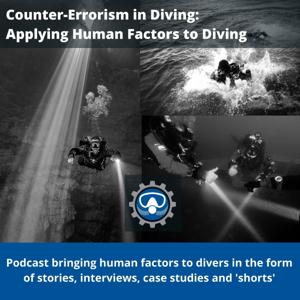

This episode explains why the diving industry struggles to learn from fatalities and argues that the problem is not one bad decision or one person, but the whole system. Using the death of 18-year-old diver Linnea Mills as an example, it shows how normal people, doing what made sense at the time, can be caught by gaps in training, supervision, equipment, communication, and emergency planning. The focus is on moving beyond neat, blame-based “first stories” and instead telling messier “second stories” that explore context, pressure, trade-offs, and gradual drift away from safety margins. The episode looks at ideas like normalisation of deviance, weak feedback loops, authority gradients, and the gap between what rules say should happen and what really happens on dives. The key message is that safety improves when we change conditions, not just criticise people: by building psychological safety, matching supervision to the real task, checking equipment properly, planning for emergencies that fit the location, learning from near misses, and raising standards above the bare minimum. Learning from tragedy requires courage, honest stories, and system-level change, but it is possible—and it starts before the next dive.
Original blog: https://www.thehumandiver.com/blog/we-don-t-learn-from-diving-fatalities-and-here-s-why
Links: Webinar about Linnea Mills: https://www.youtube.com/watch?v=lu4tc8gtNio&t=3s
No learning focused investigation process in diving: https://www.thehumandiver.com/blog/learning-reviews-in-diving
Compliance can give an illusion of safety: https://www.youtube.com/watch?v=VNhmxz2_adc
What conditions made it harder to do the ‘right’ thing and easier to do the ‘wrong’ thing?
Creating the conditions and space for speaking up: https://www.thehumandiver.com/blog/top-tips-for-diving-instructors-leadership-creating-the-space-for-others-to-be-heard
Having difficult conversations as an instructor: https://www.thehumandiver.com/blog/top-tips-for-diving-instructors-communication-the-difficult-kind
TEDS open question acronym: https://www.thehumandiver.com/blog/communications-ask-better-questions
Psychological safety blogs: Blog 1. Blog 2. Blog 3. Blog 4. Blog 5.
Debrief model: https://www.thehumandiver.com/debrief
Diving Talks video: https://www.youtube.com/watch?v=VNhmxz2_adc
Child welfare changes: https://www.collaborative-safety.com/collaborative-safety-reading-packet
Tags: - english gareth lock safety safety culture system safety
 View all episodes
 By Gareth Lock at The Human Diver
5
1111 ratings
This episode explains why the diving industry struggles to learn from fatalities and argues that the problem is not one bad decision or one person, but the whole system. Using the death of 18-year-old diver Linnea Mills as an example, it shows how normal people, doing what made sense at the time, can be caught by gaps in training, supervision, equipment, communication, and emergency planning. The focus is on moving beyond neat, blame-based “first stories” and instead telling messier “second stories” that explore context, pressure, trade-offs, and gradual drift away from safety margins. The episode looks at ideas like normalisation of deviance, weak feedback loops, authority gradients, and the gap between what rules say should happen and what really happens on dives. The key message is that safety improves when we change conditions, not just criticise people: by building psychological safety, matching supervision to the real task, checking equipment properly, planning for emergencies that fit the location, learning from near misses, and raising standards above the bare minimum. Learning from tragedy requires courage, honest stories, and system-level change, but it is possible—and it starts before the next dive.
Original blog: https://www.thehumandiver.com/blog/we-don-t-learn-from-diving-fatalities-and-here-s-why
Links: Webinar about Linnea Mills: https://www.youtube.com/watch?v=lu4tc8gtNio&t=3s
No learning focused investigation process in diving: https://www.thehumandiver.com/blog/learning-reviews-in-diving
Compliance can give an illusion of safety: https://www.youtube.com/watch?v=VNhmxz2_adc
What conditions made it harder to do the ‘right’ thing and easier to do the ‘wrong’ thing?
Creating the conditions and space for speaking up: https://www.thehumandiver.com/blog/top-tips-for-diving-instructors-leadership-creating-the-space-for-others-to-be-heard
Having difficult conversations as an instructor: https://www.thehumandiver.com/blog/top-tips-for-diving-instructors-communication-the-difficult-kind
TEDS open question acronym: https://www.thehumandiver.com/blog/communications-ask-better-questions
Psychological safety blogs: Blog 1. Blog 2. Blog 3. Blog 4. Blog 5.
Debrief model: https://www.thehumandiver.com/debrief
Diving Talks video: https://www.youtube.com/watch?v=VNhmxz2_adc
Child welfare changes: https://www.collaborative-safety.com/collaborative-safety-reading-packet
Tags: - english gareth lock safety safety culture system safety
545 Listeners
258 Listeners
69 Listeners
10 Listeners
40 Listeners

51 Listeners