
Sign up to save your podcasts
Or

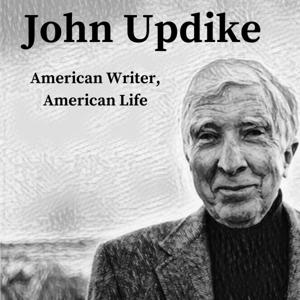

In a 1968 Paris Review interview, John Updike said something that unlocks his entire career: "I am drawn to southeastern Pennsylvania because I know how things happen there, or at least how they used to happen. Once you have in your bones the fundamental feasibilities of a place, you can imagine there freely."
In your bones. That's what Shillington, Pennsylvania, was to John Updike.
This episode explores the small town where Updike was born in 1932 and lived until he left for Harvard at eighteen—the place he returned to again and again in his fiction for more than 50 years. Not just as setting. As foundation. As the bedrock truth he carried inside him.
Shillington sits in southeastern Pennsylvania, about an hour from Philadelphia. Population in 1940: 5,147. The town had everything a Depression-era kid needed to learn how the world worked—the hierarchies, gossip, and textures of ordinary middle-class American life.
But here's the paradox Updike lived with: Shillington was both an ideal world for a child to grow up in and the place he had to flee to become the artist he was. The state represented safety, nostalgia, the source of everything. It was also the trap.
Updike never really left. Even after moving to Massachusetts, even after decades in Ipswich, his imagination flew back to southeastern Pennsylvania constantly. The Rabbit novels. The Olinger stories. Late-career collections like My Father's Tears. Pennsylvania wasn't just where Updike grew up—it was the "Pennsylvania sensibility" he embodied in his characters.
What does that mean? It's not the descriptions of the state itself, though those are beautiful. It's the characters themselves. Coaches like Marty Tothero from Rabbit, Run—types you recognized if you grew up there. Small-town basketball stars like Harry Angstrom. The texture of lives lived in brick row houses with people who knew your business.
Updike wrote in a 1995 essay about being "created out of the sticks and mud of my Pennsylvania boyhood." That mud—literal and metaphorical—stuck to everything he wrote. The Depression-era textures. The street names. The 117 Philadelphia Avenue address where his grandparents lived.
In his final month, dying of cancer, Updike wrote a poem praising two Shillington classmates. He admitted the thought of Pennsylvania "brings tears less caustic than those the thought of death brings."
Shillington made Updike. And Updike, in turn, made Shillington immortal.
 View all episodes
 By Bob Batchelor
5
55 ratings
In a 1968 Paris Review interview, John Updike said something that unlocks his entire career: "I am drawn to southeastern Pennsylvania because I know how things happen there, or at least how they used to happen. Once you have in your bones the fundamental feasibilities of a place, you can imagine there freely."
In your bones. That's what Shillington, Pennsylvania, was to John Updike.
This episode explores the small town where Updike was born in 1932 and lived until he left for Harvard at eighteen—the place he returned to again and again in his fiction for more than 50 years. Not just as setting. As foundation. As the bedrock truth he carried inside him.
Shillington sits in southeastern Pennsylvania, about an hour from Philadelphia. Population in 1940: 5,147. The town had everything a Depression-era kid needed to learn how the world worked—the hierarchies, gossip, and textures of ordinary middle-class American life.
But here's the paradox Updike lived with: Shillington was both an ideal world for a child to grow up in and the place he had to flee to become the artist he was. The state represented safety, nostalgia, the source of everything. It was also the trap.
Updike never really left. Even after moving to Massachusetts, even after decades in Ipswich, his imagination flew back to southeastern Pennsylvania constantly. The Rabbit novels. The Olinger stories. Late-career collections like My Father's Tears. Pennsylvania wasn't just where Updike grew up—it was the "Pennsylvania sensibility" he embodied in his characters.
What does that mean? It's not the descriptions of the state itself, though those are beautiful. It's the characters themselves. Coaches like Marty Tothero from Rabbit, Run—types you recognized if you grew up there. Small-town basketball stars like Harry Angstrom. The texture of lives lived in brick row houses with people who knew your business.
Updike wrote in a 1995 essay about being "created out of the sticks and mud of my Pennsylvania boyhood." That mud—literal and metaphorical—stuck to everything he wrote. The Depression-era textures. The street names. The 117 Philadelphia Avenue address where his grandparents lived.
In his final month, dying of cancer, Updike wrote a poem praising two Shillington classmates. He admitted the thought of Pennsylvania "brings tears less caustic than those the thought of death brings."
Shillington made Updike. And Updike, in turn, made Shillington immortal.